

A quick note: a few links below are affiliate links. Buy through one and we may earn a small commission. It never costs you more, and we only point to gear we'd actually put in front of our own dogs. As an Amazon Associate I earn from qualifying purchases.
Moving wears everyone down. You feel it, your family feels it, and the boxes never seem to end. The part most people skip over is the dog. Your dog has no idea why the couch is gone and why the whole place suddenly smells like cardboard, and that confusion lands harder than you would think.
The noise alone is a lot. Add a downsize from a house to an apartment and the change gets sharper. A dog that had a fenced yard to patrol is now reading a building full of strangers through a thin door.
Smaller yard, or no yard at all. Footsteps in the hallway. Smells from four other units. It piles up fast, and an overwhelmed dog tends to make moving day messier for everyone, not easier.
Good news: most of this is manageable if you plan a little. Think about three windows of time, because each one calls for a different move on your part.
- What can you do before moving with your dog to your new home?
- What can you do to help your dog during the moving process?
- What can you do after moving in to help your dog adjust to apartment life?
What Can You Do Before Moving with Your Dog to Your New Home?
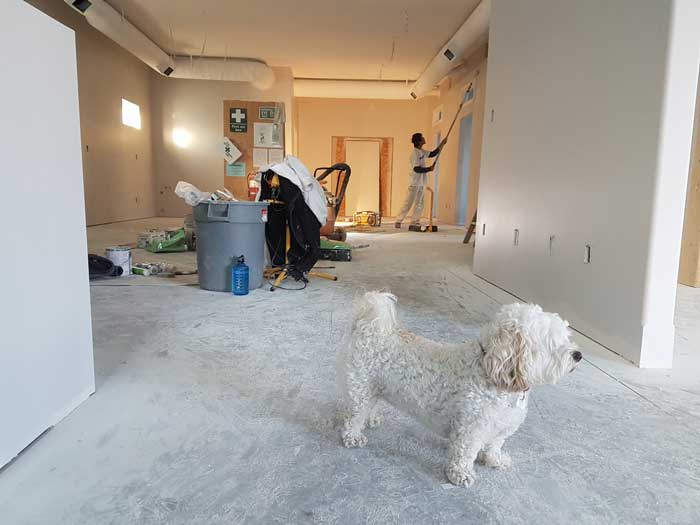
Groundwork pays off. It seems odd that anything you do weeks ahead of time would shape how your dog handles the actual move, but it does. The closer you can get your dog to apartment-style life before the keys change hands, the softer the real transition feels.
Visit the New Apartment First
If the new place is close enough, bring your dog over once you can get into the unit freely. Let him sniff the corners, hear how sound carries, and clock the smells of the building. Ten minutes of real exploring teaches a dog more than anything you could plan.
Once the apartment is a known quantity, even a little, it stops being a threat. He has been here. He remembers. That memory takes a lot of the panic out of moving day.
Introduce Your Dog to the New Neighbors
If you and your neighbors are up for it, handle introductions before the boxes show up. You may end up asking the person next door to grab a door for you, or they may offer. Either way, you do not want your dog reading them as an intruder while you have your hands full of furniture.
A dog that is not busy guarding against every stranger in the stairwell is a dog you can actually keep an eye on. Calm is easy to manage. That frees you up to focus on the move instead of refereeing.
What If You Can’t Visit the Apartment Beforehand?
Sometimes a pre-move visit just is not in the cards. Long-distance moves, a landlord who hands over keys on day one, a tight timeline. You can still get your dog used to upheaval and the fear of unfamiliar ground without ever setting foot in the new place.
Sometimes the simplest solutions are the best.
Explore New Places with Your Dog
Walk him somewhere unfamiliar. Loop a block of apartment buildings you have never visited, a different park, a friend’s neighborhood. It is not the new home, sure, but it chips away at the idea that every strange place is dangerous. The lesson stacks up over a few weeks of short outings.
By the time the move actually lands, the novelty has worn thin. A dog who has met a dozen new sidewalks is a lot harder to spook than one who has only ever known the backyard.
Stay Over at a Friend’s House
Got a friend willing to host? An overnight does two useful things. Your dog practices sleeping somewhere that is not home, and he learns that he cannot simply bail when a place feels off. That second lesson matters more than the first.
Read the room, though. If your dog tips past his usual nerves into real distress, pacing for an hour, refusing water, shaking, cut it short. There is no prize for forcing it. A bad night teaches the wrong thing.
Pack the good treats for these trips. The ones he would sell you out for. They take the edge off a tense moment and nudge him to keep exploring even when the first few minutes feel uncertain.
What Can You Do to Help Your Dog During the Moving Process?
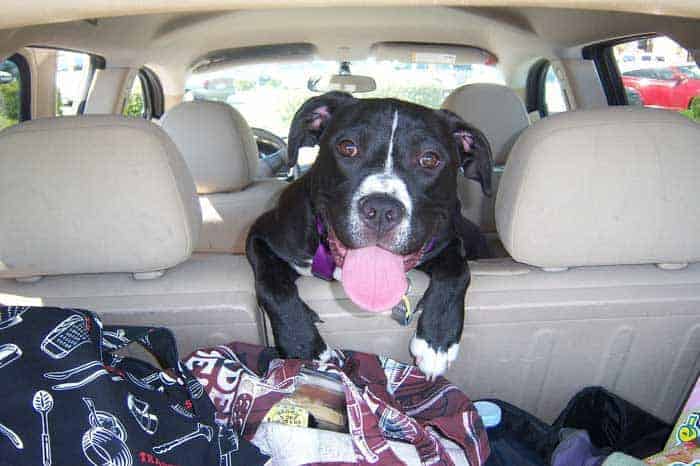
Moving day is the chaos peak. For you and for the dog. Here is the trap: dogs read your stress and mirror it right back, so a frazzled owner makes a frazzled dog, who then makes you more frazzled. The whole thing feeds itself if you let it.
You can break that loop. Hold the routine where you can and keep him occupied, and your dog will settle into apartment life faster than the chaos of the day suggests.
Keep Your Routine as Stable as Possible
Dogs run on habit, same as us. The clock in their head is real. Moves blow holes in every schedule, but protect the parts you can.
If the 7 a.m. walk is sacred, keep it sacred, on moving day and the day after. That one fixed point tells your dog the world has not actually ended, no matter what the living room looks like.
Keep Your Dog Entertained
Add to the toy pile, and lean toward specifically puzzle toys, that your dog can play with. A stuffed Kong or a treat puzzle buys you a solid stretch of quiet, which means less time underfoot while movers carry boxes. It also gives him a job, and a dog with a job worries less about the front door swinging open every two minutes.
Focus is the whole point. A dog chewing his way into a puzzle is not cataloging every strange noise in the building. He adjusts to the changes without really noticing he is doing it.
What Can You Do After Moving in to Help Your Dog Adjust to Apartment Life?
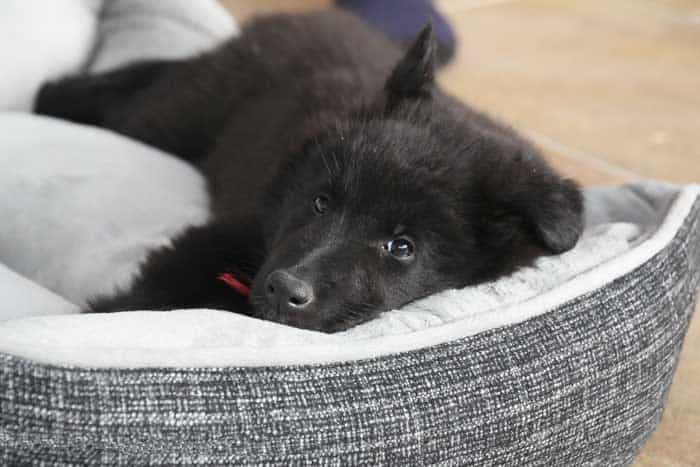
The boxes are in. Now the real work starts. This stretch, the first week or two in the new place, is where a dog either settles or stays on edge, and most of that comes down to what you do early.
Create a Safe Area for Your Dog
Give your dog one spot that is clearly his. Size it to the dog and the apartment. For a Chihuahua that might be a corner of the bedroom with a crate; for a Lab it might be the whole second bedroom. The point is a place he can retreat to when the rest of the home still feels foreign. Plenty of owners in this exact spot also look into crate training an adult rescue dog in a small apartment.
Stock it with the basics. Food, water, a few toys, a puzzle, treats, and here is the part owners skip, blankets that still smell like the old place. Wash those last. If he has a ratty comfort toy, that goes in the safe zone too, not in the laundry.
That old smell does the heavy lifting. It tells your dog he is home even though nothing looks right yet.
Want him to actually use the spot? Tuck a few treats around it so he keeps drifting back on his own, sniffing them out whenever curiosity beats nerves.
Introduce Your Dog to His New Home
Once he has settled into the safe zone, open up the apartment slowly. One room at a time. Keep the other doors shut so there is nothing behind them to fixate on or worry about. A dog who can only access one new room cannot get overwhelmed by five.
If there is a set bathroom spot, that is the first room you show him. Lead with the thing that prevents accidents.
As he wanders, scatter treats ahead of him. Each find rewards the exploring and pulls him a little deeper into the apartment. Most dogs will trade a lot of nervousness for a kibble jackpot on the kitchen floor.
Keep Your Dog’s Daily Routine
The routine you guarded during the move? Keep guarding it now. If anything it counts for more once you are unpacked, because this is the schedule he is going to live by from here on.
Your dog is hunting for something familiar to grab onto. Anything.
It can be as plain as filling the food bowl at the same hour and heading out for the walk on the same clock. Predictable beats fancy.
If you want to go further, pin down the rest of it too: playtime, the evening cuddle on the couch, the after-dinner exercise. The more of his day that runs on rails, the more familiar the whole place feels, and the stress keeps draining off week by week.
Cover Your Dog’s Potty Needs
This is the one that bites people. Where, exactly, is your dog supposed to relieve himself now?
No yard in a lot of apartments. And when your unit sits five floors up, “just let him out” is not a thing anymore. That changes the math fast.
Show him the spot on day one, and expect to walk back through some potty training for the dog while he relearns the rules. Make it one of the very first things you handle, not an afterthought you sort out after the third accident.
How Can These Things Help Your Dog Adjust to Apartment Living?
Take care of your dog before, during, and after the move, and the whole thing stops being a crisis. He still has to adjust, but he does it with a net under him instead of in freefall.
Moving is no fun for people or dogs. You are both stressed, just about completely different things.
Before the move, get him comfortable with new places and longer car rides. Build that tolerance early so the real day does not turn into a panic that slows everyone down.
During the move, a good puzzle toy keeps him busy and keeps you both off the stress spiral.
Holding the daily routine as steady as you can manage carries a lot of the rest.
And once you are in for good, let him explore at his own pace while a familiar safe zone waits in the corner. That balance, freedom plus a fallback, is the strongest thing you can offer a dog who is still figuring the place out.
Pair that with a routine he can set his clock by, and apartment life clicks into place sooner than you would expect. Give it a week or two and watch him claim the couch like he picked the place himself.
Resources
Frequently asked questions
Can big dogs really live in an apartment?
Yes. Energy level matters far more than size. A calm Great Dane settles into a flat better than a wound-up terrier, as long as it gets a proper walk twice a day.
Which dog breeds bark the least in apartments?
Greyhounds, Basenjis, Bulldogs and Cavaliers are among the quietest. Any dog can learn to be calm, but these simply start at a lower volume.
How much exercise does an apartment dog need?
Most do well on 30 to 60 minutes a day split into two walks, plus a little indoor play. Cut that short and the barking and chewing usually start.
Google lets you pick which sites come up first in your own results.