

A quick note: a few links below are affiliate links. Buy through one and we may earn a small commission. It never costs you more, and we only point to gear we'd actually put in front of our own dogs. As an Amazon Associate I earn from qualifying purchases.
Watching a dog get old is a strange kind of grief that arrives while they’re still here.
You’ve seen the whole arc. Puppy zoomies, the prime years, and now the gray muzzle and the slower mornings. You know you did right by him, and that knowledge sits right next to the ache of watching him fade.
The deterioration is hard. There’s no way around that part.
Comfort for a senior dog usually comes down to a few practical fixes: getting him to drink enough water even when he’s not that thirsty anymore, coaxing him back to the bowl if he’s gone off his food, and making the apartment easier on stiff joints with a set of ramps or steps for the couch and the car.
What you can control is the comfort. Learning how to make an old dog comfortable comes down to a handful of small changes you start making before he actually needs them.
Keep Your Senior Dog Moving
Movement is the thing most people get wrong.
Once the hard play and long runs are clearly off the table, it’s tempting to let your dog rest all day. Don’t. He still needs to move, just less, and gently.
It’s a nasty loop. An older dog doesn’t want to move because his joints hurt, and the less he moves, the stiffer and sorer those joints get. Stillness feeds the pain it’s trying to avoid.
So plan a little light activity, enough to keep him loose for the basics like walking to his bowl and standing to drink.
A short, slow walk works well. Carry him for a stretch if you notice the movement is hurting, and watch how he’s doing the whole time. Even five minutes outside lets him read all the scents in the yard, and for an old dog that sniffing is half the point of the walk.
If there are stairs he uses every day, inside or out, get a ramp or a set of pet steps. It takes a lot of the strain off the hips and knees that ache in old age.
That same ramp makes loading him into the car for vet trips far less of a struggle.
Put His Essentials Within Easy Reach
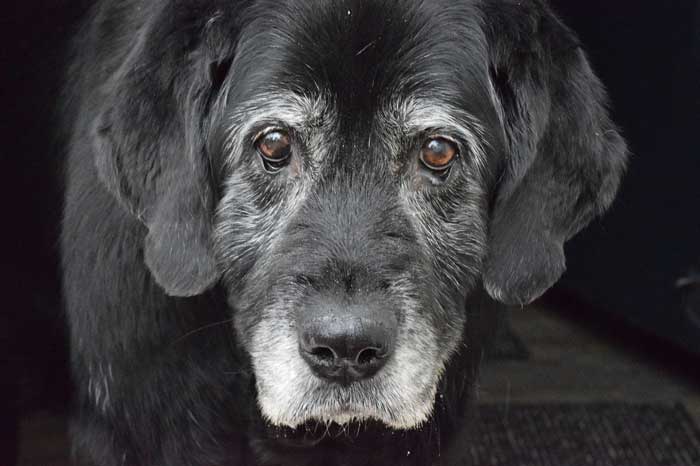
Bending all the way down to a floor bowl gets harder as a dog ages. The neck and shoulders don’t fold the way they used to.
How much this matters depends on the size of your dog. An elevated feeder raises the food and water so he isn’t craning down just to eat a meal.
Keep his things in predictable spots, too.
Don’t tuck his bed into the far corner of a cluttered room. Pick one place for his bed, his bowls, his toys, and leave them there.
A senior dog’s memory slips the same way ours does, and a familiar layout means he can still find what he needs without wandering and worrying.
Make the House Safer
Older dogs lose some spatial awareness along with the memory. They clip doorframes, misjudge corners, knock a lamp off the side table without meaning to.
Cut down on the sharp corners and hard objects he could walk into.
Foam guards and corner covers on furniture and low walls turn a painful bump into a harmless one. He’ll still misjudge the occasional turn. Now it just won’t leave a bruise.
Clear the tripping hazards while you’re at it. Extension cords are the usual culprit, along with any cable strung across a path he takes.
Then there’s the invisible stuff. A senior dog’s immune system has lost a step, so the germs he shrugged off at three can knock him sideways at twelve.
Wipe down his areas more often, and keep a pack of dog-safe antibacterial wipes around for his paws and face.
This is also the wrong moment to bring home a puppy, however badly you’ve been wanting one. A bouncing newcomer is exhausting for a dog who needs calm.
His mental state deserves as much thought as his body when you’re working out how to make an old dog comfortable.
Senior dogs spook and stress more easily than young ones. Skip the unfamiliar places, and don’t push him to greet strangers he didn’t ask to meet.
Keep Him Warm, Rested, and at Ease
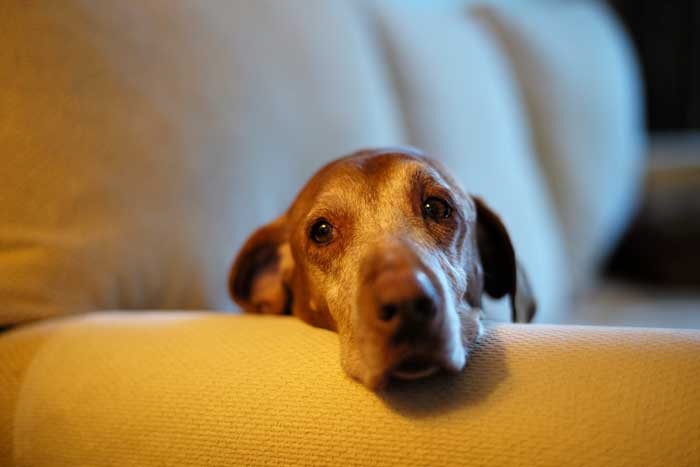
Old dogs thin out. The coat sheds and doesn’t fill back in the way it once did, so he holds heat worse than he used to.
Unless you live somewhere it never drops below room temperature, get a sweater and a couple of warm blankets for winter.
Flip that in summer. Extra water, a fan, a cool tile floor to stretch out on.
Take a hard look at his bed. He may have slept on the same one for ten years, but orthopedic beds built for senior dogs do something his old cushion can’t.
The memory foam supports stiff joints and the low edge means he can step in without a climb. A bed like that is the difference between him sleeping through the night and shifting around for hours trying to get comfortable.
Some older dogs lose track of their internal clock, too. Day and night start to blur, and a dog who’s up at 3 a.m. is a dog who isn’t resting.
Keep the house quiet during his sleep windows so he gets a real chance to settle into that new bed.
Expect a Few Accidents
At some point, bladder and bowel control slip. It happens to the best-trained dog alive once the years pile up, and it isn’t anything he’s choosing to do.
Keep a stack of puppy pads near his bed and by the doors to catch the worst of it.
And never scold him for an accident. He doesn’t understand why his body let him down, and your frustration only piles confusion on top of his. Clean it up, say nothing, move on.
Adjust His Diet
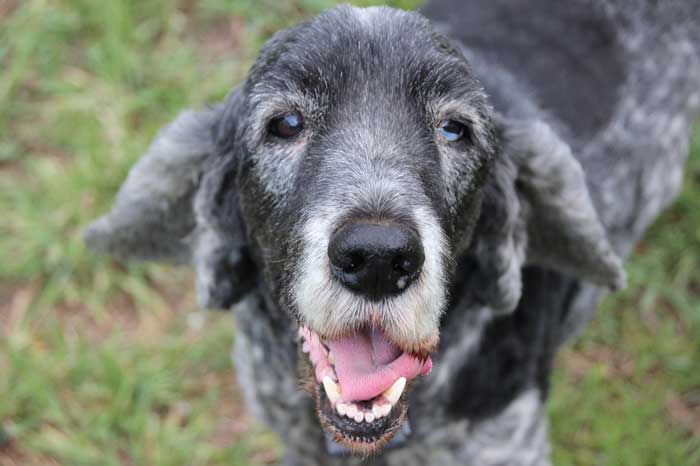
An aging dog needs a different bowl than the one he ate from in his prime. Start with your vet, who can match the food to his weight, his teeth, and whatever’s going on with his kidneys or joints.
Once you’ve got that recommendation, build his meals around it.
If you can’t get to the vet right away, move him toward softer food in the meantime. His teeth and gums are probably not what they were, and a bowl of hard kibble can turn dinner into a chore he’d rather skip.
Soft food, or kibble soaked in warm water, lets him get the nutrition without the ache of crunching.
Swap his treats over to softer ones, too, so you can still reward him without making him pay for it with sore teeth.
Ask the vet about supplements as well. Glucosamine and chondroitin, fish oil, and similar joint supports can take some of the daily stiffness out of his step.
For a lot of senior dogs, that one change is what gets the tail wagging again.
Groom Him More Than You Used To
Most dogs handle their own grooming for years. The odd bath after a mud roll, sure, but a senior dog isn’t out there rolling in much of anything anymore.
He also can’t twist around to reach the spots he used to.
When you take over the brushing and cleaning, you handle the itch he can no longer reach and spare him that small, constant frustration.
It keeps him looking sharp despite the gray, which matters more to his dignity than people give dogs credit for.
And running your hands over him every week is a quiet home checkup. You’ll feel a new lump or a sore spot early, while there’s still time to ask the vet about it.
The Years That Matter Most
An old dog needs a hand with nearly everything that used to be automatic. Crossing the room, eating, getting clean, settling down to sleep.
Filling those gaps slowly becomes your job, and it’s a job worth doing well.
Pick one thing this week. A ramp by the back step, an orthopedic bed, a softer dinner. Stack the small fixes one at a time and you’ll hand your old friend the most comfortable stretch of his whole life, right at the end, when he’s earned it most.
Resources
Google lets you pick which sites come up first in your own results.