

A quick note: a few links below are affiliate links. Buy through one and we may earn a small commission. It never costs you more, and we only point to gear we'd actually put in front of our own dogs. As an Amazon Associate I earn from qualifying purchases.
Quick answer
Yes: a well-raised Golden Retriever is one of the steadiest family dogs around, tolerating noise and grabby hands better than most breeds and rarely showing aggression when properly socialized. They stay bouncy and busy until about age two or three, which suits active households with kids who want a playmate that will not run out of steam first. Most Goldens also get along with cats and smaller pets, though early training still keeps their mild prey drive in check.
The Golden Retriever started out as a hunting dog, bred in Scotland to bring back waterfowl without a mark on them.
These days you see far more of them on living room floors than in duck blinds. Sweet, patient, and bonded hard to their people.
So, are Golden Retrievers good with kids?
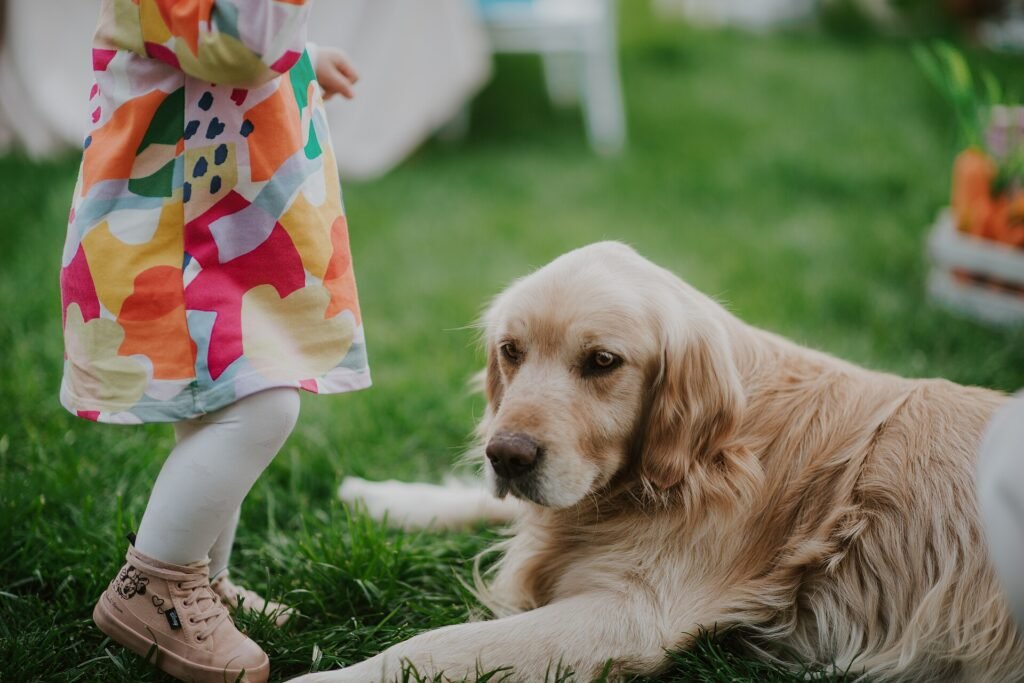
Yes. A well-raised Golden is one of the steadiest family dogs you can bring home. They tolerate noise, grabby hands, and chaos better than most breeds, and a properly socialized one rarely shows aggression. Train them with patience and you get a dog that follows the kids around all day and asks for nothing but company.
That said, no breed fits every household. A dog this size and this needy comes with trade-offs worth thinking through before you sign anything.
Be honest about your space, your schedule, and how much exercise you can actually deliver day after day.
Golden Retriever Temperament
Anyone who has raised a Golden puppy knows the deal. Bright, busy, and into everything until somewhere around age two or three, when they finally settle.
That energy is exactly why they suit active homes with kids who want a playmate that never runs out of steam first.
Most Goldens get along fine with cats, rabbits, and other pets too. They carry a prey drive, but it’s mild, and with early training they learn to share the house instead of chasing the cat up the curtains.
Teach a small child to be calm around the guinea pig and the hamster, and the dog usually takes its cue from that calm.
They’re athletic, which makes them a blast outdoors.
A grown Golden weighs roughly 55 to 75 pounds and can cover serious ground, so a securely fenced yard saves you a lot of grief.
That same drive means they’ll happily play fetch until your arm gives out, swim laps in a lake, or tow you across the park if you ask them to.
Why Make a Golden Retriever Your Family Dog
Here’s what puts Goldens near the top of nearly every list of good dogs for families with kids:
Affectionate By Nature
Goldens want to be touching you. They lean on your leg, flop across your feet, and follow you from room to room.
They also read a bad mood. When someone in the house is upset, the dog tends to drift over and park itself nearby, even if it has no clue what’s wrong.
For a kid, that steady presence is gold.
The dog gets something out of it too. A Golden left without attention turns mopey fast, so the constant company of children suits both sides.
Gentle Disposition
This is a soft-mouthed, low-drama breed that barks less than most and almost never snaps.
Kids running through the house don’t wind a Golden into a frenzy the way they might a more reactive dog, so you get fewer knocked-over toddlers and a lot less startled barking at every doorbell.
Intelligent and Easy To Train
Goldens are sharp and they want to please, which is a useful combination.
Sit, stay, leave it, the basics click in a few short sessions because the dog is actually watching your face for the next cue.
They work for praise and treats, not corrections, so even a ten-year-old can run a training session and get real results.
Affectionate Towards Kids
The gentleness and the affection aim straight at children.
A Golden picks up on the small signals, a wobbling lip, a change in voice, a kid going quiet, and often responds by moving in close or licking a hand to settle things down.
Plenty of parents notice the dog clocking an upset child a beat before they do. If a baby is on the way, it still pays to plan how you’ll introduce your dog to the newborn well before the due date.
Great Companions for Outside Activities
This is a dog built to move, which makes it a natural for families that hike, run, swim, or live at the park on weekends.
They were bred to retrieve from water, so most take to swimming without a second thought, handy for beach days or an afternoon on the boat with the kids.
Their double coat sheds water and keeps them warm, so a little rain doesn’t end the outing.
Extremely Social
Goldens like people and other animals, and that openness means they usually warm to children without a fuss.
They’re curious by default, so they travel well to grandma’s house or a friend’s place and tend to mix easily with the other pets, the other adults, and your own kid in the middle of it all.
Still, supervise the early meetings until you’ve seen for yourself how your dog and your child handle each other.
Low-Maintenance
Grooming a Golden is straightforward, even if it isn’t zero effort.
Brush a few times a week, bathe every month or so, and the coat stays in good shape. Skip the brushing and you’ll be living with mats and a fur-covered couch.
Daily walkers may need to bathe a touch more often, though too much bathing dries the skin out, so let the weather and how dirty the dog actually gets be your guide.
One honest warning: Goldens shed, and twice a year they blow that undercoat in clumps. They are not a hypoallergenic breed, so if anyone in the house reacts to dog dander, meet a few adult Goldens before you commit.
Cheerful and Happy-Natured
The breed runs sunny. Tail going, ready for whatever’s next.
They love a trip to the park or a swim with the family, and they bring that same upbeat energy home.
For a child, that’s a built-in partner for backyard games and rainy-day silliness.
Just keep the exercise coming. A Golden stuck inside all day with nothing to do gets restless, and a bored Golden finds its own entertainment, usually your shoes.
Friendly With Strangers
That open, friendly streak extends to new faces, which is reassuring in a house full of kids and their friends.
A Golden is far more likely to greet a visitor with a wagging tail than a growl.
So you can let your child pet, hug, and lean on the dog without bracing for a snap.
When a kid brings a friend over for the first time, a quick introduction on neutral ground, say a walk around the block, helps everyone relax before the door even opens.
Loyal Companions
A Golden picks its pack and sticks.
They attach themselves hard to the whole family, kids included, and treat the children as theirs to look after.
That loyalty cuts both ways, so teach your child to handle the dog kindly and never to push a patient dog past its limit.
Gentle Nature
The softness goes both directions, and that’s worth understanding.
Goldens aren’t aggressive, but a sensitive one can get shy or overwhelmed when a kid is shrieking and bouncing off the walls nonstop.
If your child runs at full volume from morning to night, a sturdier, more bombproof breed like a Labrador Retriever might be the better match.
Great With Kids of All Ages
From crawlers to teenagers, Goldens take it in stride.
They’re patient enough to sit through a baby grabbing a fistful of fur without flinching or grumbling about it. We’ve written a full guide on introducing your dog to a new baby for owners dealing with this.
Once your child is old enough to learn the rules, no pulling ears, no yanking the tail, no climbing on the dog, you can relax about the Golden tipping into overexcitement or anything worse.
Why Shouldn’t You Make a Golden Retriever Your Family Pet
Great as they are, a few things might steer you away from a Golden if you’ve got young kids.
The big ones to weigh:
Large and Strong
A full-grown Golden carries real size, and that’s a mixed bag depending on what you want.
The bark alone can give a stranger pause, even though the dog itself is a marshmallow.
The flip side shows up at full sprint. A 70-pound dog tearing across the yard after a ball doesn’t always see the toddler in its path, so keep a close eye when the dog and the little ones play in the same space.
Clumsy
Goldens can be goofy and graceless, especially as gangly adolescents.
It’s not about brains. It’s a big body that hasn’t quite figured out where all the corners are.
They’ll clip a lamp, skid into the coffee table, and bowl over a chair mid-zoomie, usually right when everyone’s roughhousing.
Funny until a small child is standing in the wreck zone, so think about the room layout and where the kids are when the dog gets the zoomies.
Intelligence
The smarts are a double edge.
A bright dog that craves attention also gets bored, and a bored Golden invents its own projects, none of which you’ll enjoy.
They’re hopeless guard dogs, by the way. A Golden would rather show a burglar where the treats are than chase him off.
All that brainpower stays pointed at you, so the dog notices when the routine breaks and when you leave without the usual goodbye.
Left understimulated, that need can curdle into anxiety, chewing, and a generally miserable dog.
Separation Anxiety
Separation anxiety shows up often in this breed.
They’re so tied to their people that long stretches home alone can genuinely distress them.
The result is chewed baseboards, hours of barking, or a withdrawn, depressed dog.
If your house empties out for eight or nine hours a day, build in a dog walker, a midday visit, or a plan to ease the dog into alone time before you bring one home.
Costly Maintenance
A big dog eats like a big dog, so budget more for food than a small breed would ever cost you.
Vet care stacks up too, so plan for it.
Goldens carry a known risk for hip and elbow issues and certain cancers, on top of routine vaccines, deworming, and yearly checkups, so pet insurance is worth pricing out early.
Remember the coat is built for fieldwork.
That long feathering snags burrs, brambles, and mud on every walk, so plan on regular trimming around the ears, feet, and tail to keep the tangles down.
Exercise Needs
This is the part people underestimate. A Golden needs room and a job.
Figure on at least an hour of real activity a day, and they’re happiest with regular access to water for a swim.
Hikes and jogs help burn the energy, but go easy on a puppy’s joints while they’re still growing. Skimp on exercise long-term and you risk weight gain and stiff joints down the road, a real concern given how prone the breed is to arthritis as it ages.
Final Thoughts
For a family ready to put in the walks, the training, and the grooming, a Golden Retriever is hard to beat with kids.
You get a patient, affectionate dog that genuinely loves having children around.
Go in clear-eyed about the exercise, the shedding, and the strong need for company, and a Golden will give your family ten or more good years in return.
Frequently asked questions
Is this breed actually safe around small children?
Temperament and tolerance for clumsy handling matter far more than breed or size. A patient 60-pound dog is a safer bet with a toddler than a nervous small one that has nowhere to retreat to.
At what age can a child be left alone with the dog?
Not before about ten, and even then only with a dog that has never guarded food or toys. Young kids miss the early warning signals, so supervision is about them as much as the dog.
How do I introduce a dog to a toddler?
Let the dog approach on its own, keep the first meetings short, and give it an escape route it can take without being followed. Forced greetings are where most bites start.
Google lets you pick which sites come up first in your own results.