

A quick note: a few links below are affiliate links. Buy through one and we may earn a small commission. It never costs you more, and we only point to gear we'd actually put in front of our own dogs. As an Amazon Associate I earn from qualifying purchases.
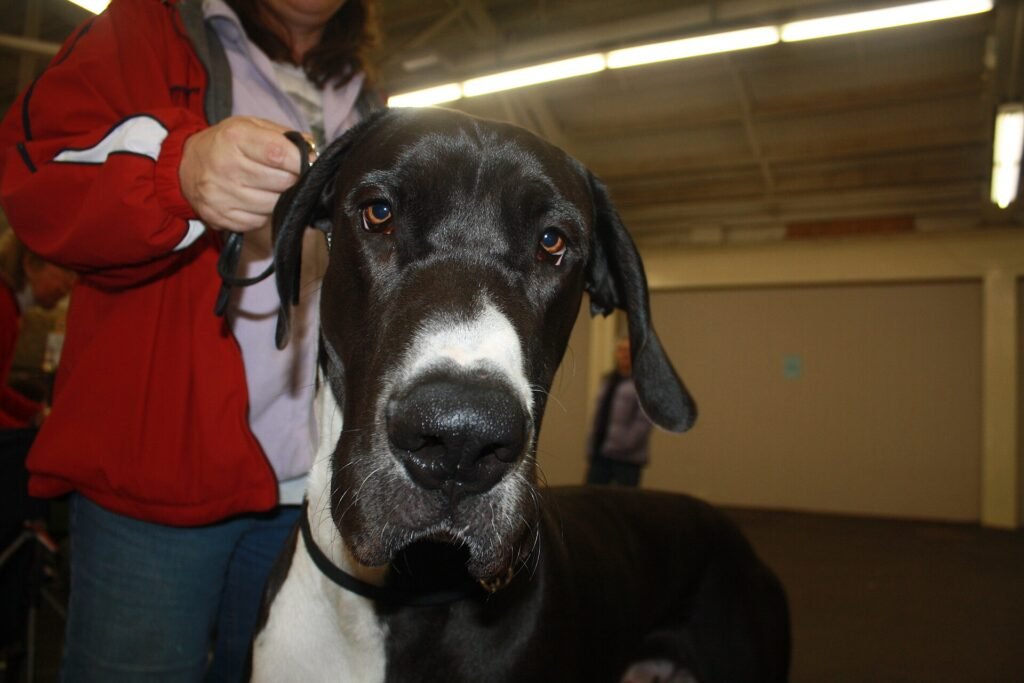
The Great Dane is a big dog in every sense. Size, presence, and personality all run large.
People call them “gentle giants” for good reason. With the people they trust, they are soft, affectionate, and a little goofy. Around strangers or unfamiliar animals, that easygoing nature can turn cautious until they read the situation.
So, are Great Danes good with kids?
For the most part, yes. Few breeds are this patient. A well-raised Dane is calm, steady, and confident, the kind of dog that lets a toddler clamber around without flinching. They genuinely enjoy children, and they will tolerate a lot before they ever get grumpy.
Here is the catch. That gentle temperament works best with older kids who already understand how to behave around a dog. Danes are not the bouncy, scrappy “kid dog” you might picture. They are kid-friendly in a quieter, more deliberate way.
A Great Dane can absolutely be a wonderful family dog. There are just a handful of real factors worth weighing before one moves in.
Why Great Danes Fit Well With Families
Plenty of breeds struggle in homes with young children. The Dane is not one of them. Affection and gentleness are baked into the breed.
Yes, they are enormous. They are also remarkably friendly. The nickname “gentlest of the giants” gets thrown around constantly, and it fits.
They bond hard with their people, which makes them a natural in a busy, close-knit household.
Their sheer build is a bonus too. Not much bothers a dog standing 30 inches at the shoulder, and that calm confidence tends to keep trouble at a distance (for the dog and for the family).
If you are adding a new member to the household, this breed delivers loyalty, warmth, and a quiet protective streak toward the humans it loves.
Where Great Danes and Small Kids Can Clash
“Gentle giant” does not automatically mean “perfect for a house full of toddlers.” The temperament is sweet. The physics are not always on your side.
An adult Dane often clears 100 pounds, and some males push well past 150. That kind of mass next to a small child is the main concern, even when the dog has the best intentions.
A toddler can get knocked flat by a happy tail or an excited spin. Stepped-on toes happen too.
None of that comes from aggression. It is usually just a large, enthusiastic dog forgetting how big it is in a small space.
The scenario you want to avoid is a startled dog and a startled child colliding, where nobody meant any harm but somebody still gets hurt.
This is why slow, patient raising matters so much. Give the dog time and consistency to settle into its personality before you mix small children into the daily routine.
Once a Dane has been raised right, few breeds are better company for kids tearing around the living room.
How a Family With Children Can Get Ready for a Great Dane
You will not find many breeds better suited to family life than a Great Dane. Even so, a little groundwork goes a long way toward raising a dog that grows up gently alongside your kids.
Here is what to focus on.
1. Socialize and raise your Great Dane the right way
Take your time with this one. Let the puppy adjust at its own pace and meet new people, sounds, and situations gradually, so the unexpected stuff later in life does not rattle it.
Pour on the love and attention while you do it. A Dane raised that way turns into exactly the dog you hoped for.
2. Enroll them in puppy school
Obedience training comes first with any new dog, and a Dane is no exception.
It helps the kids as much as the dog, so pick a trainer with real credentials rather than the cheapest class nearby.
Good training shapes your Dane into a companion the whole family respects, children included.
3. Be firm but kind
Stay calm and consistent without bullying the dog or letting the kids do it either, especially early on.
Affection is great. Just hand it out once you have set clear, gentle boundaries, not before.
If you have owned dogs before, this part will feel natural, particularly when a little correction is needed in front of the children.
4. Walk them every day, together
Regular outings keep a Great Dane healthy and content, and they burn off energy that would otherwise find an outlet indoors.
Make it a family thing, kids and all.
Walking as a group does double duty. Everyone gets fresh air, and the kids build a real bond with the dog instead of treating it like furniture.
Those walks are also a quiet chance to ask your kids how things are going with the new dog and sort out any worries early.
5. Give them room to roam in the backyard
Nothing about a Dane is small, so they need space to stretch out and reset.
Usually that means the yard, which you will want plenty of anyway (especially if you ever end up with more than one Dane).
Whether they are loping around solo or playing fetch with the kids, more room is always better.
Time outside keeps their minds busy too, which is a far better outlet than boredom and a chewed-up couch.
6. Teach your children how to act around Great Danes
Training the dog is only half the job. The kids need to learn the rules too, so the whole household grows up happy together.
Cover the basics with them:
- What are good things to feed them
- How are kids supposed to play with them
- What are appropriate games that are safe for the dog
- What are some games that are not appropriate
Above all, show your kids how to approach and greet the dog calmly.
Let them come close for a pat, and make it clear that pulling ears or tails, or jumping on the dog mid-play, is never okay.
7. Get familiar with vet costs
Danes are generally healthy, but vet visits still come around.
Depending on where you live, the bills can catch you off guard. Giant breeds often mean giant-breed pricing.
Before you bring a dog home, call around to local vets and get a feel for their costs, both routine checkups and the heavier stuff.
If something does not add up, talk to a couple of clinics before deciding, especially with a condition you have not dealt with before.
What to Keep in Mind When Introducing a Great Dane to Your Family
Giant breeds are popular for a reason, but their size can read as intimidating to a small child.
Kids sometimes get spooked by a dog this tall and back away fast. A sudden retreat can startle or overexcite the dog, and a startled Dane is harder to predict.
Learn how your Dane reacts to children before you put it in a house with a little one.
Most dogs are patient with the kids in their own family, but accidents do happen during rough play, often when other pets get added to the mix.
Smaller pets can get bumped or hurt simply because a Dane has no idea how much it outweighs them.
Planning to have kids soon? Get to know the Great Dane temperament first, well before the dog and a baby share the same room. You’ll find more detail in our guide to introducing your dog to a new baby.
Great Dane Puppies for Families With Kids
If you want a puppy, the Dane is one of the safer bets for a household with children.
Their naturally calm disposition, their affection, and how readily they take to leash training young all make a Dane puppy a strong fit for families with kids.
A few things are worth keeping front of mind when you bring one home.
Expectations
Make sure the whole family understands what owning a dog really involves, and a Dane raises the stakes a notch.
If you are picturing a tireless hiking buddy or a hard-edged guard dog, this is the wrong breed for that job.
Danes are sensitive and a bit clingy. They shine with families who just want to hang out with their dog around the house and yard.
Food
A dog this size needs a thoughtful feeding routine, and that matters even more if you have other pets close by at mealtime.
Portions depend on age and weight, so follow your vet’s guidance and the feeding chart on a quality food rather than guessing.
Go for a high-quality diet that keeps your Dane at a healthy weight without setting off squabbles with the other animals in the house.
Health
Every breed carries its own hereditary risks. For Danes, the big one is bloat, also called gastric dilatation and volvulus, or GDV.
Bloat happens when the stomach fills with gas and can twist on itself. It is fast, it is serious, and it can be fatal.
Smaller meals spread through the day help lower the odds, and so does keeping your dog quiet for an hour or two after eating instead of letting it sprint around.
A slow-feeder bowl is worth a look too. It stops a Dane from inhaling its food, which is one of the things that can trigger bloat in the first place.
Activity and Exercise
Danes are not high-energy dogs, which fools people into thinking they are lazy or a poor family pick. That is a mistake.
They are tall and heavy, but most of that frame is muscle, and muscle at rest does not demand much fuel.
Give a Dane enough exercise and you get a warm, playful, affectionate dog.
Remember, the breed was originally developed to hunt boar. There is real drive under that mellow surface, so do not assume you can leave one home all day with nothing to do.
For most adults, a couple of moderate daily walks does the trick. Puppies are a different story, since their joints are still growing.
Go easy while they are young. Too much hard exercise on developing bones can lead to lasting joint problems that no one wants to deal with.
Life Outdoors
Danes have thin coats and not much fat, so cold weather hits them hard. They are far happier living indoors with the family.
Heat is the bigger danger, though. The breed struggles to cool itself, and overheating comes on quickly, so keep your Dane inside through the hottest stretches of summer.
If you are heading out to a park or on errands, wait for cooler conditions, ideally under 80 degrees Fahrenheit, and bring water along.
Great Dane Rescues Are a Favorite Among Families With Kids
If you would rather adopt than buy, several rescue groups focus entirely on Great Danes.
Many of their dogs are already house-trained and settled, which means a smoother landing for your family.
Adopt through one of these nonprofits and you give a dog a second chance while bringing a great companion home.
These groups usually share helpful resources too, including vet referrals and sometimes discounts for families watching their budget.
Final Thoughts
Still weighing which breed suits your family? It pays to dig into every option before you commit.
Pay attention to breed-specific health issues, energy needs, and how much of your time a dog will ask for week to week.
If kids are part of your plan, a Great Dane makes a genuinely strong family dog.
Plenty of breeds are cautious around children. Danes lean the other way, gentle and patient with the youngest members of the house.
They train easily, move with surprising grace for their size, and stay playful for years, which is exactly what makes them such good company for kids.
Frequently asked questions
Is this breed actually safe around small children?
Temperament and tolerance for clumsy handling matter far more than breed or size. A patient 60-pound dog is a safer bet with a toddler than a nervous small one that has nowhere to retreat to.
At what age can a child be left alone with the dog?
Not before about ten, and even then only with a dog that has never guarded food or toys. Young kids miss the early warning signals, so supervision is about them as much as the dog.
How do I introduce a dog to a toddler?
Let the dog approach on its own, keep the first meetings short, and give it an escape route it can take without being followed. Forced greetings are where most bites start.
Google lets you pick which sites come up first in your own results.