

A quick note: a few links below are affiliate links. Buy through one and we may earn a small commission. It never costs you more, and we only point to gear we'd actually put in front of our own dogs. As an Amazon Associate I earn from qualifying purchases.
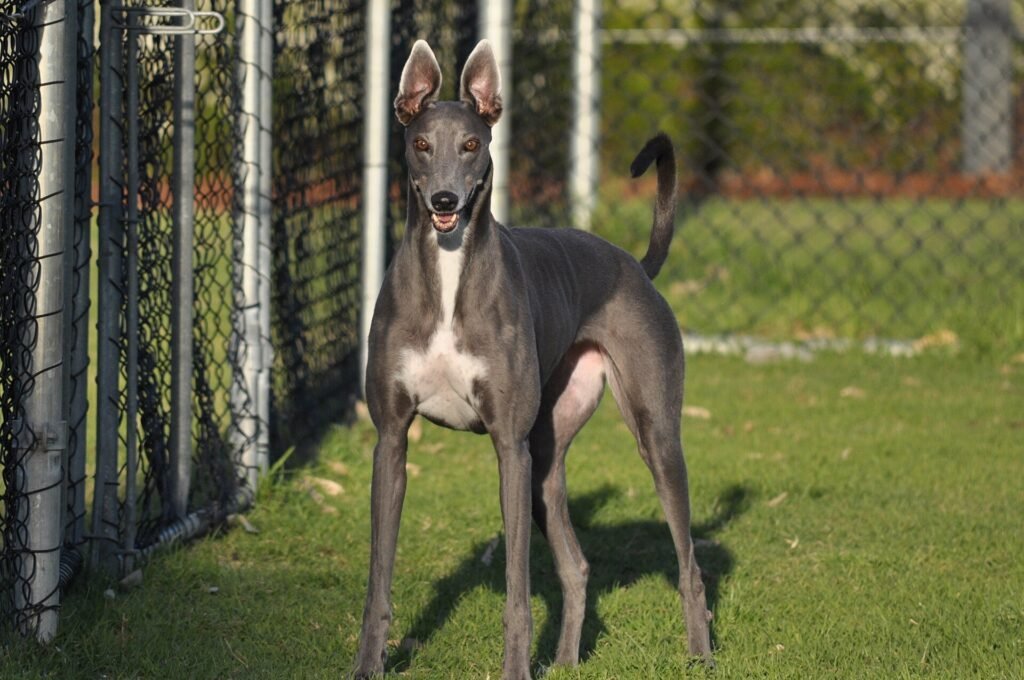
Few breeds surprise new owners the way a Greyhound does. People picture a hyper racer and end up with a dog asleep on the couch by noon.
They cost little to feed for their size, ask for almost nothing in grooming, and tend to be patient with kids.
There are real trade-offs, though, and you want to know them before you bring one home for your children.
Here is the honest rundown of the pros and cons of living with a Greyhound, so you can decide whether one belongs in your family.
Greyhounds and Families with Kids
Yes, this is a racing breed. On a track a Greyhound hits close to 40 miles per hour. At home that same dog turns into one of the gentlest animals you can own, calm with children and slow to get worked up.
A big reason families look at retired racers is exactly that easygoing nature around children.
They are affectionate without being clingy, which suits a house full of young kids and noise.
Most Greyhounds are quiet. They rarely bark at every passing sound, and they do not tear through the living room knocking lamps off tables the way some terriers will.
For parents already stretched thin, that calm means fewer headaches and a lot less cleanup.
They are also about as low-maintenance as a dog gets.
A Greyhound is content to nap alone for hours and does not fall apart when no one entertains it all day.
That independence is a gift when you have school runs, a job, and a toddler to juggle.
Benefits of Owning a Greyhound for Families With Children
Gentleness is the trait that lands this breed on most family shortlists.
If you want a dog that stays calm with children and is easy to care for, a Greyhound fits.
If you want a high-energy dog that runs the backyard ragged all afternoon, look elsewhere.
They Are Gentle
Many Greyhounds are a little shy, especially with strangers. Faced with a loud or sudden situation, most will back away rather than square up to it.
That soft temperament means they rarely react with aggression when a child does something clumsy or startling.
Have Few Requirements
Day to day, a Greyhound asks for little.
They pick up basic manners fast, get by on a couple of short walks plus one good sprint in a fenced space, and their short coat takes seconds to wipe down. A solid everyday kibble keeps them happy.
Are Unlikely To Hurt Children
Biting is rare with this breed.
Around kids they stay calm. A fed-up Greyhound is far more likely to walk off or give a low grumble than to snap, because the urge to bite a person just is not strong in them.
Have Long Life Spans
Greyhounds tend to live 10 to 14 years, which is long for a dog their size.
Plenty of large breeds slow down by eight or nine. A Greyhound often stays steady well past that, so the dog your kids meet as preschoolers can still be around when they hit their teens.
Are Not Too Active
Bored dogs get destructive. A pet that needs hours of exercise and mental work can wreck a house when those needs go unmet.
Greyhounds sit at the easy end of that scale. Give them a daily walk and the odd chance to run flat out, and they are satisfied.
They burn energy in short bursts and then crash. Your kids will tire long before the dog gets demanding, so neither side ends up frantic.
Aren’t Too Needy
Unlike a terrier that trails you barking from room to room, most Greyhounds are quiet and undemanding. There are exceptions, but constant attention-seeking is not the norm.
When the baby is crying and dinner is burning, a dog that is fine being left alone for a while is worth a lot.
They Are Obedient
Because they bark little and are happy with simple company, basic training stays low-effort. You will not have to fight the dog to teach sit, stay, and leash manners.
Compared with a working breed that needs a job and hours of drilling, a Greyhound is a relief. The one catch is recall. A moving squirrel can override everything you taught, so off-leash freedom in open areas is risky.
They Adapt Well to Apartments
Here is the part that catches people off guard. Greyhounds are tall, often 60 to 70 pounds and standing up near your hip, yet they make excellent apartment dogs. They sleep most of the day and fold up surprisingly small on a single dog bed.
You do not need a yard. A few walks and a soft corner to curl up in, and a Greyhound settles into a small flat better than many dogs half its weight.
Their Coats Are Easy To Maintain
The coat is short, thin, and almost flat to the skin. They shed, but lightly, and you will not be vacuuming clumps off the sofa every morning.
A quick once-over with a rubber grooming mitt each week covers it. No daily brushing, no standing appointment with a groomer for trims.
Drawbacks of Owning a Greyhound for Families With Children
Greyhounds are not for every family. If your kids want a tireless playmate, this is the wrong dog.
Indoors they are couch potatoes. They will not chase a ball around the living room for an hour the way a Lab might.
Outside, in a fenced field where they can open up, you see a different dog, but those bursts last only a minute or two.
May Not Be the Best For Small Children
Calm as they are, they are still big animals, and taller at the shoulder than most breeds.
With a small child in the house, that height matters.
A Greyhound spinning around in play can bowl a toddler straight over, and a mouthy nip that means nothing to an adult can scare or scratch a little one. Watch those moments closely.
Can’t Be Left Unsupervised With Kids
Same reason as above. A tall dog backing up or turning fast can flatten a child who is still wobbly on their feet.
Supervision protects the dog too. Young kids do not always know how to handle a pet gently, and an adult in the room keeps both sides safe.
Can’t Be Left Unsupervised With Small Pets
This is the big one. Greyhounds are sighthounds, bred for centuries to spot and run down small moving animals.
If you keep rabbits, hamsters, guinea pigs, or even a small cat, think hard. That chase instinct can switch on in a second.
Without steady separation or close supervision, the danger to the smaller animal is real, and a vet bill or worse is not worth the gamble.
May Not Make Great Guard Dogs
Do not expect a guard dog. Their soft, retiring nature makes them about as intimidating as a houseplant.
A stranger at the door is more likely to get a curious sniff than a warning bark.
If part of your reason for getting a dog is home security, a Greyhound will not fill that role.
They simply are not wired to defend territory, so look to a different breed if protection sits high on your list.
May Not Be the Best For People With Allergies
No dog is completely hypoallergenic, and a Greyhound is no exception. They shed lightly and still produce dander, the flakes of skin that set off most dog allergies.
If someone at home has a mild allergy, a short-coated breed like this can be manageable, sometimes with the help of antihistamines. If the allergy is severe, spend real time around one before you commit.
Can’t Swim
Most Greyhounds are poor swimmers. With so little body fat and such lean muscle, they tend to sink rather than float.
For a lot of families this never comes up, since a normal indoor dog never needs to swim.
But if your idea of family time is the lake or the pool, keep a close eye on the dog near water, or pick a breed that is built for it.
Not Always Good With Other Pets
Already have another dog? It can work, though some Greyhounds do better as the only pet and squabble when left alone with another dog.
They are not big on roughhousing with cats either, and that same prey drive turns mixed households into a gamble that needs slow, careful introductions.
In Short, Are Greyhounds Good With Kids?
Yes. For most families they do well with children, thanks to that steady, well-mannered temperament and their low-key energy.
They like being near their people and tend to be sweet with kids, good company through the long stretches when you are at work or out running errands. If this sounds familiar, our piece on whether pugs are good with kids covers exactly that.
The flip side is the lazy streak. A Greyhound is not the dog that races your kids around the yard for hours on end.
And their height is a genuine consideration if you have a toddler underfoot.
How To Introduce Your Children to a Greyhound
Before the dog ever comes home, get the kids ready. Sit down with them, show them photos of Greyhounds, and talk through what this dog is actually like.
Read a book or two together about the breed. Grounding their expectations in facts beats whatever they have dreamed up on their own.
It also gets them genuinely excited, and a kid who understands the dog is a kid who treats it well from day one.
Final Thoughts
A Greyhound makes a fine family dog, whether you adopt a retired racer or start with a puppy.
They are gentle, quiet, and unbothered by the chaos kids bring, with none of the jumpy, hyper edge you get from a lot of breeds.
If you want a calm companion rather than a barking dynamo, this breed delivers.
Just keep the two rules that matter most in mind: supervise them around small kids and small pets. Do that, and a Greyhound will spend the next decade as the quiet, devoted shadow of your household.
Frequently asked questions
Is this breed actually safe around small children?
Temperament and tolerance for clumsy handling matter far more than breed or size. A patient 60-pound dog is a safer bet with a toddler than a nervous small one that has nowhere to retreat to.
At what age can a child be left alone with the dog?
Not before about ten, and even then only with a dog that has never guarded food or toys. Young kids miss the early warning signals, so supervision is about them as much as the dog.
How do I introduce a dog to a toddler?
Let the dog approach on its own, keep the first meetings short, and give it an escape route it can take without being followed. Forced greetings are where most bites start.
Google lets you pick which sites come up first in your own results.