

A quick note: a few links below are affiliate links. Buy through one and we may earn a small commission. It never costs you more, and we only point to gear we'd actually put in front of our own dogs. As an Amazon Associate I earn from qualifying purchases.
Small dogs aren’t for everyone. Some people want a dog that comes up past their knee and leans its full weight against their leg. The size scares off a lot of beginners, though. They picture one bad pull on the leash turning into a disaster on the sidewalk.
Here’s the part nobody tells you. A good chunk of giant breeds are basically couch cushions with legs. Below are the best large dog breeds for first-time owners, with the honest trade-offs on each one.
1. Bernese Mountain Dog
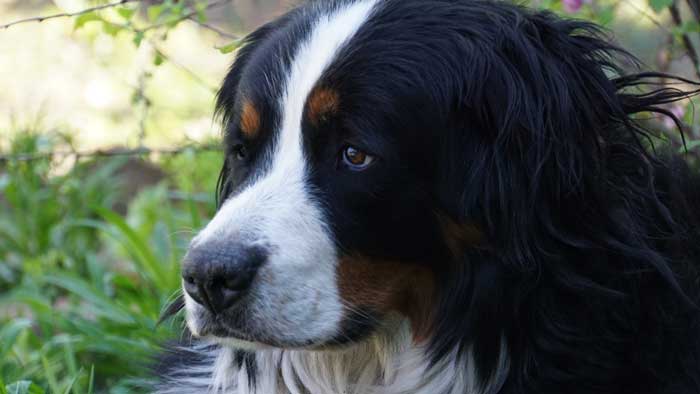
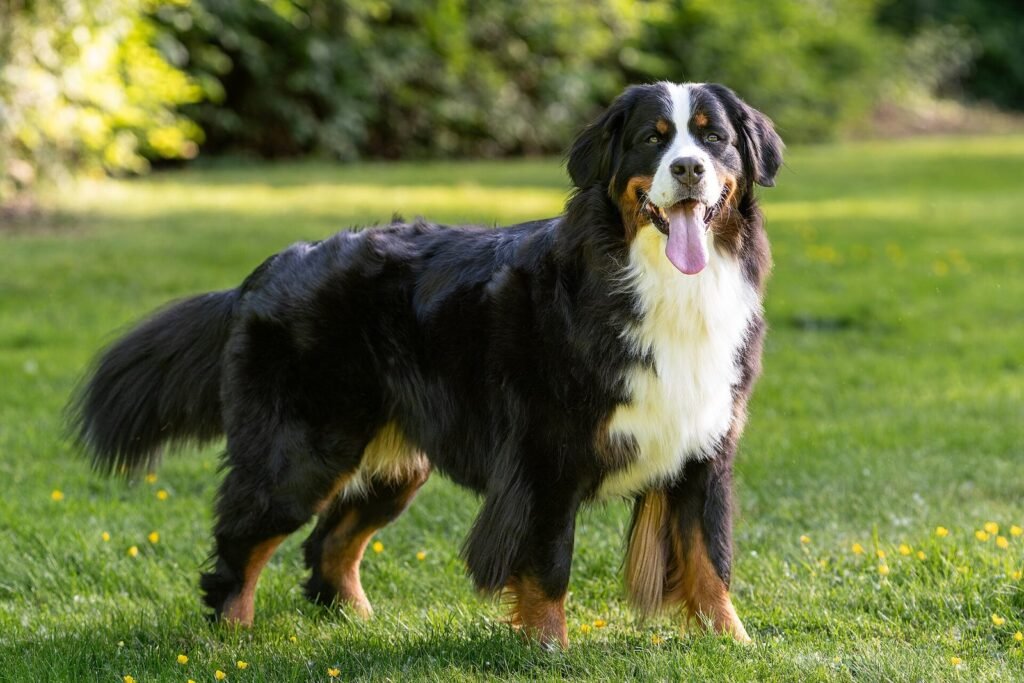
The Berner usually looks half asleep. That relaxed face is the real dog, not an act. A male runs 80 to 115 pounds and carries it like a gentle giant, so you get the size without the wired, snappy energy you find in some working breeds. They’re handsome too, and they like a bit of adventure.
Short on time? Jump straight to the Rocco & Roxie enzyme cleaner
Boredom won’t be your problem. Take one on a slow hike and it’s happy for hours. Berners love the outdoors but they’re not built for distance running, which honestly works in your favor. You set the pace and the dog is fine with it.
The coat is long, a mix of black, brown, and white. It looks like a grooming nightmare and it isn’t. A thorough brush a couple of times a week keeps it from matting, and that’s most of the job. Plan for heavy shedding twice a year.
They pick up commands fast. A first-timer can teach sit, stay, and loose-leash walking without a trainer, as long as you stay consistent. The one hard truth: this breed often doesn’t make it past 8 or 9 years. Going in knowing that matters.
Why This Breed Is Suitable for First-Time Owners
- Medium-level energy
- No frequent grooming required
- Calm with no temper
- Not running enthusiasts
- Quick learners
2. Clumber Spaniel
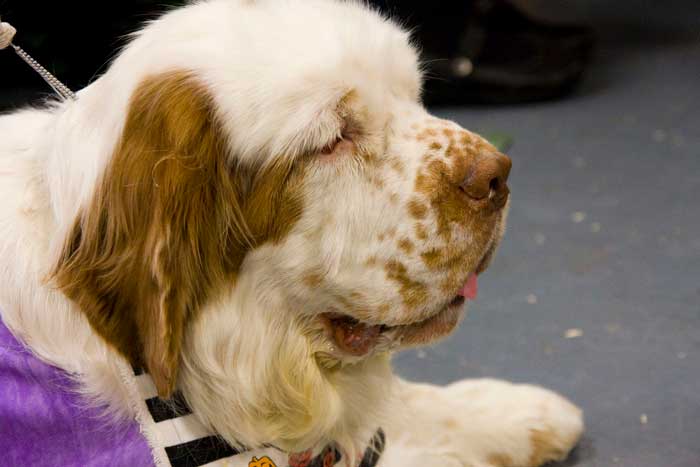
The Clumber is a softie. Easy-going, a little goofy, sweet right through. The breed was built to push through cover and flush game birds for hunters, never to bite, which is why these dogs act like such gentlemen at home.
They’re low-maintenance, and that helps when it’s your first dog. Watch the food, though. A Clumber will eat itself round, and the extra weight wrecks those short, heavy-boned legs and the hips. At 55 to 85 pounds it should feel solid, not soft.
Most Clumbers are ruled by their stomach. Use that. A few pieces of chicken and you’ve got their full attention for a training session. They take well to repetition and they’re quiet, so the barking only starts when something is actually wrong.
Why This Breed Is Suitable for First-Time Owners
- Gentle and funny
- Easy to take care of
- Food-oriented
- They don’t bark often
- Good respondents to commands
3. Great Dane
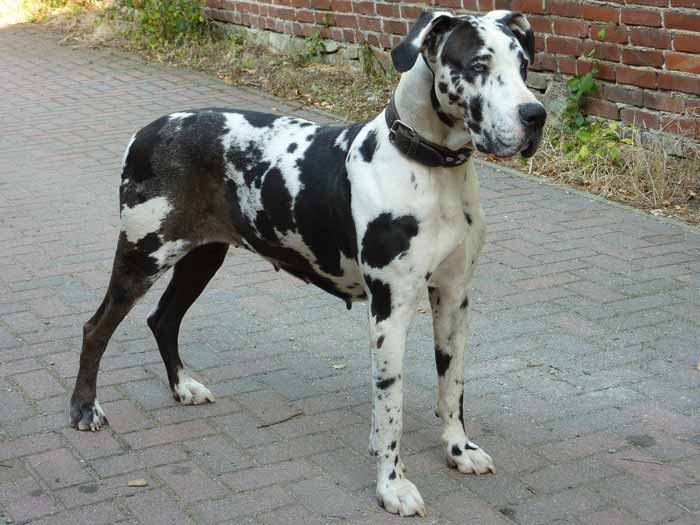
A Great Dane looks like it belongs in a portrait. The name suggests something regal. The dog is the opposite. Most are clowns who think they’re lap-sized at 110 to 175 pounds, and they’re patient and gentle in a way that surprises people who only see the height.
This is your lazy-day companion. Danes don’t tear around the yard. A short walk, a long stretch, back to the couch, day done. The coat is short, so grooming is a quick wipe-down rather than a project. New owners usually get away with two 20-minute walks a day.
They learn fast and answer to commands once you’ve put the reps in. A Dane will also step between you and trouble, and at that size the bluff alone usually ends things. They’re trustworthy around kids, though a happy tail at toddler height knocks over more than a few cups.
Why This Breed Is Suitable for First-Time Owners
- Goofy and patient
- Relaxed and laid-back
- They don’t move much
- No frequent grooming needed
- Brave and protective
- Safe with kids
4. Greyhound
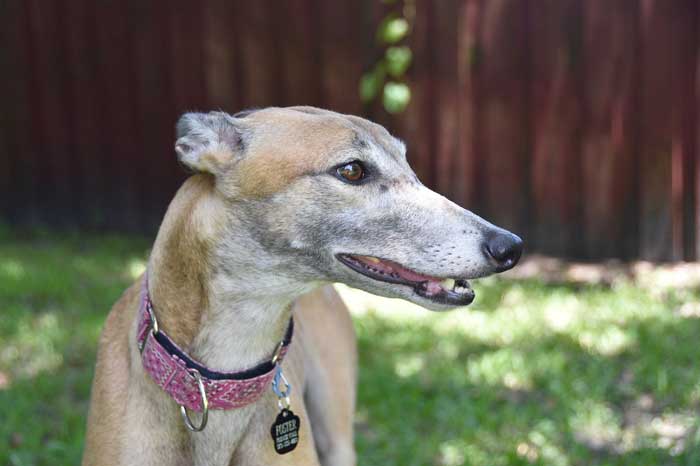
Greyhounds are cheeky and warm, which throws people who expect a high-strung racer. They’re affectionate and calm at home despite the track in their blood. Keep the leash on outdoors, because the sprint instinct is real and a squirrel can pull a beginner off their feet. Past that, they’re easy.
One fast lap and they’re done. The rest of the day a Greyhound is a 60 to 70 pound blanket draped over the nearest soft thing. That mellow streak makes them safe around kids. They’re sharp, too, so training rarely takes much pushing.
The coat is paper-thin, which cuts your grooming to almost nothing. There’s a catch in winter. These dogs have next to no body fat, so a fitted coat or sweater isn’t a fashion thing for them, it’s how they stay warm on cold walks.
Why This Breed Is Suitable for First-Time Owners
- Smart and aware of their surroundings
- Short coat
- Medium energy level
- Affectionate
- Safe with kids
5. Irish Wolfhound
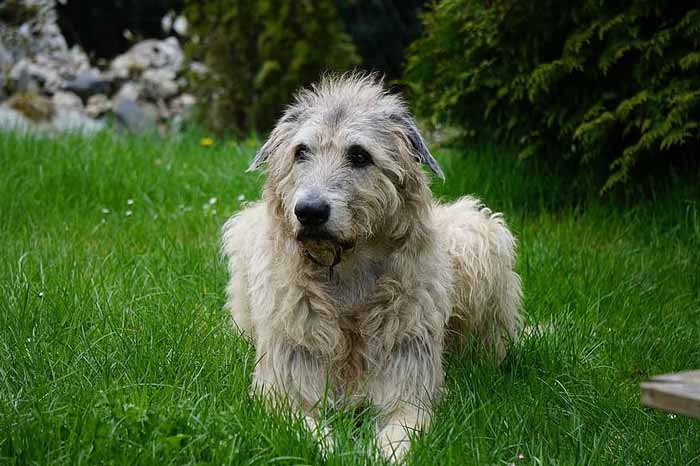
The Irish Wolfhound is the tallest dog breed in the world. Standing up, one can rest its paws on your shoulders. You’ll want real floor space and a car that fits it. The payoff is a dog that’s loyal to the bone and openly affectionate.
These are gentle giants who do nothing in a hurry. They take their time, sprawl across the room, and stay easy around children. A Wolfhound can get pushy for attention because it genuinely wants yours, but a quiet word and it backs off.
They’re smart and well-mannered, so training rarely turns into a battle. They’re quiet indoors, which people don’t expect from a dog that size. The hard part is the same as the Berner: lifespans of 6 to 8 years are common. You love them knowing the clock runs fast.
Centuries ago this breed was used to pull wounded men down off their horses in battle. That history tells you everything about the strength and the loyalty wrapped up in one dog.
Why This Breed Is Suitable for First-Time Owners
- Quiet and relaxed
- Highly intelligent
- Extremely loyal
- Affectionate
- Well-behaved with kids
6. Leonberger
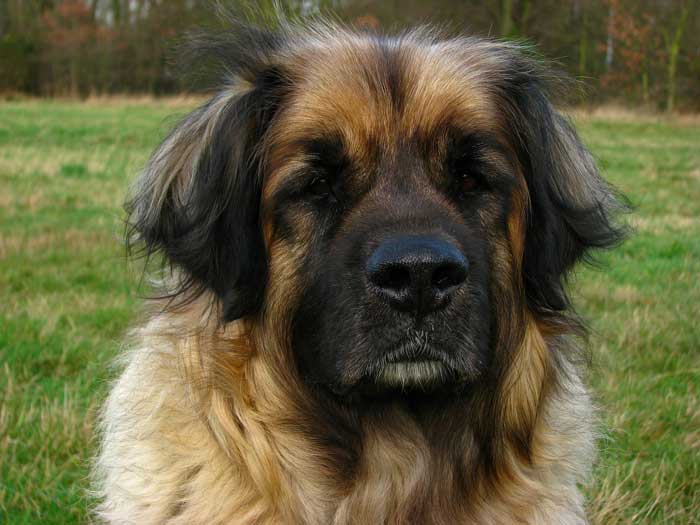
The Leonberger sits right between brains and play. Well-mannered, social, the kind of dog that wants to greet everyone at the door.
Walk a Leon through the park and expect to get stopped. People want to know what it is, and a male at 110 to 170 pounds with a lion-colored mane draws a crowd.
They look intimidating and they’re nothing of the sort. Friendly, laid-back, soft with kids. They’re also natural watchdogs, so a Leon will sound off and plant itself by the door when something feels off, then go right back to leaning on you.
Leons are obedient, which makes the early training smoother than you’d guess. They’re bright and answer to commands. The coat is the cost. That long double coat needs brushing several times a week, and during the seasonal blowout you’ll find tumbleweeds of fur in every corner.
One real warning. Leons need company. Leave one alone in the yard all day and you’ll create problems. Give it your time and it asks for very little else.
Why This Breed Is Suitable for First-Time Owners
- Gentle and patient
- Watchdogs by nature
- Obedient
- Smart
7. Newfoundland
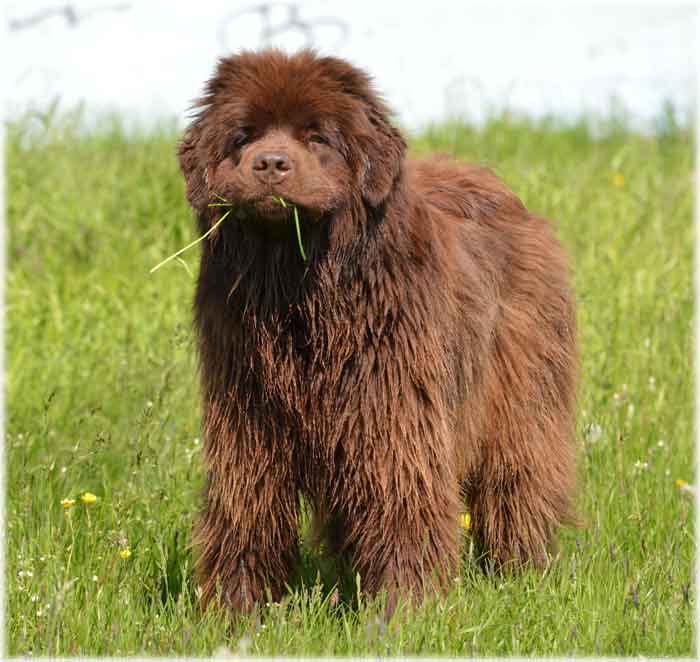
The name is odd. The dog is wonderful. A Newfoundland has more patience than just about any breed alive, which is exactly why families with small kids keep coming back to it. These dogs were bred to haul nets and pull people out of cold water, and that steady nature shows.
The temperament is the headline. A Newfie stays calm when the house is chaos. Doorbell, toddlers, dropped pans, none of it rattles a well-raised one.
They’d rather be indoors near you than running laps. A half hour of activity a day keeps a 100 to 150 pound Newf in good shape. Beyond that, having one in the room just lowers the temperature.
That thick coat looks like a chore and mostly isn’t. A weekly brush keeps it from tangling. Two things to budget for, though: the drool, and the wiry fur that ends up on everything you own.
Why This Breed Is Suitable for First-Time Owners
- Gentle and patient
- Protective and brave
- They don’t move a lot
- No frequent brushing needed
8. Old English Sheepdog
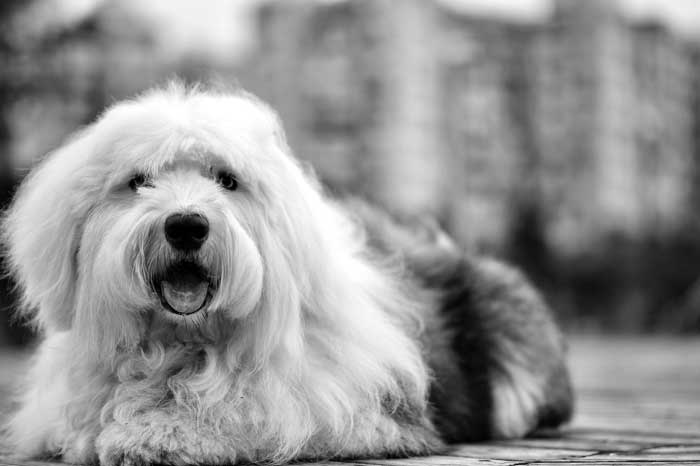
You know one the second you see it. That shaggy, eyes-hidden coat is the calling card, and behind it sits a friendly, funny dog that loves an audience.
Old English Sheepdogs are clowns. They live to goof off and pull you into the joke.
They’re also more athletic than the bulk suggests. At 60 to 100 pounds they don’t run often, but when one breaks into that rolling, bear-like gallop, it’s genuinely graceful to watch.
They settle in fast. Move one into an apartment and within a few days it acts like it grew up there.
The whole family gets the affection, kids included. They’re a joy to live with. Be honest about the coat, though. It needs brushing two or three times a week to stay mat-free, and the shedding will keep a broom in your hand. Many owners just book a groomer every few weeks and call it even.
Why This Breed Is Suitable for First-Time Owners
- Funny and humorous
- Gentle
- Fast adapters to the apartment life
- Highly affectionate
9. Otterhound
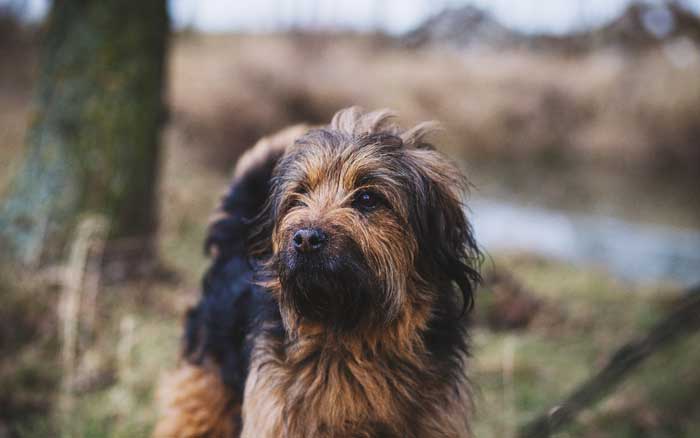
The Otterhound was bred to hunt otters in cold rivers, hence the name and the dense, oily coat. You almost never meet one, which is a shame, because they suit beginners well. Part class, part comedian, and affectionate to a fault.
They’re independent in the easy way. An Otterhound doesn’t hang on your every move and doesn’t pace the house. You’ll mostly find it asleep on the couch. Give it room, though. These dogs hit 80 to 115 pounds and they sprawl bigger than the number sounds.
Kids and Otterhounds get on famously. The dogs are bouncy and playful without a mean bone, and they’ll wrestle a toy around the living room for a while. Then they crash again. That’s the rhythm: bursts of play, long naps.
Keep the vacuum handy. An Otterhound sheds more than most, and the rough coat traps water and mud, so wipe-downs after wet walks become routine. Worth it, in my book.
Why This Breed Is Suitable for First-Time Owners
- They don’t move around a lot
- Active and fun to be around
- Fairly well-behaved with kids
- Affectionate and lovely
10. Rough Collie
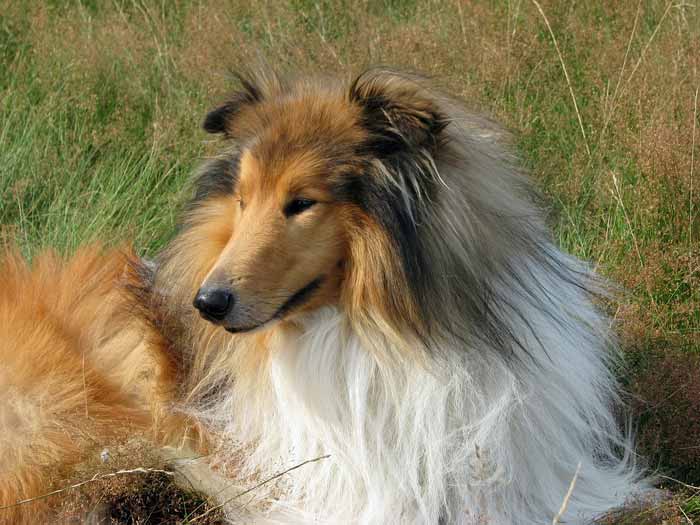
The Rough Collie sits on the smaller end of this list, roughly 50 to 75 pounds. Think Lassie. The standout trait is how quickly it slots into your routine. They’re smart and straightforward, and they read you well.
There’s a price for that brain. Collies have a stubborn streak and need more training time than most breeds here, plus a herding instinct that can show up as nipping at moving heels. They also crave attention, so build that into your day.
Only pick this breed if you actually like an active dog.
Rough Collies are gentle, but they want to move. Daily walks aren’t optional, and a tired Collie is a well-behaved one. Skip the exercise and the barking starts.
Around children they shine. Friendly, joyful, endlessly tolerant of noise and crowds. A Collie wants to be in the middle of whatever the family is doing, not watching from the next room.
Why This Breed Is Suitable for First-Time Owners
- Happy and bouncy
- Gentle with children
- Remarkably fast adaptability
11. Broholmer
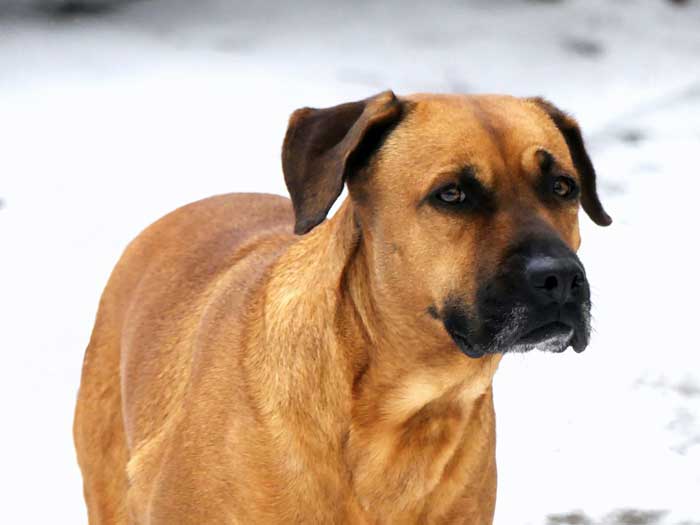
The Broholmer is a Danish mastiff, noble and even-tempered. Nothing much rattles it. That calm sits alongside a strong protective streak, so it’s devoted to its people and naturally wary of strangers at the gate. It also wants real affection, so plan to give a chunk of your day to it.
For a mastiff, the Broholmer is surprisingly springy and loves to play. If you’re out hiking or at the park often, it’s glad to tag along. Flip side, a dog this size that gets cooped up turns restless, so regular outings aren’t a nice-to-have.
Get ready for a lot of dog in your lap. Broholmers run heavy, well over 100 pounds, and they’ll still try to climb on like nothing’s changed since puppyhood. They love to cuddle, they’re easy to please, and parking next to you on the couch is their idea of a perfect evening.
Why This Breed Is Suitable for First-Time Owners
- Affectionate and loyal
- Calm and relaxed
- Easy to deal with
- Very well-behaved
12. Scottish Deerhound
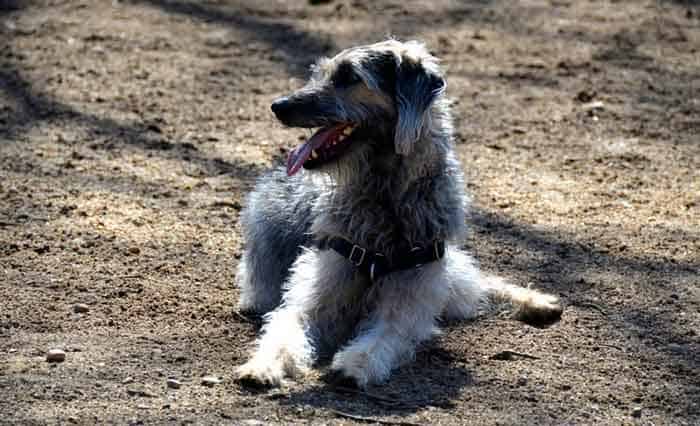
If a Scottish Deerhound could talk, it would rank naps, play, and food in that order. They’re easy to please. A few treats and a spot to stretch out, and you’re in its good graces for life.
Don’t pick one expecting a lazy dog, though. Deerhounds were bred to chase deer across open country, and that engine is still under the hood. They need space to run and real play time. A fenced yard or a long daily outing isn’t optional with this breed.
They’re deeply affectionate. A Deerhound is polite with strangers, gentle with kids, and loyal in the quiet, constant way that earns the friend-for-life cliche. At 75 to 110 pounds it’s a lot of dog leaning into you for a scratch.
They’re called the royal dogs of Scotland, and the build backs it up: lean, athletic, elegant. Meet their exercise needs and the company is hard to beat.
Why This Breed Is Suitable for First-Time Owners
- Friendly and affectionate
- Fun to be around
- Active and energetic
- Well-behaved and obedient
13. Standard Poodle
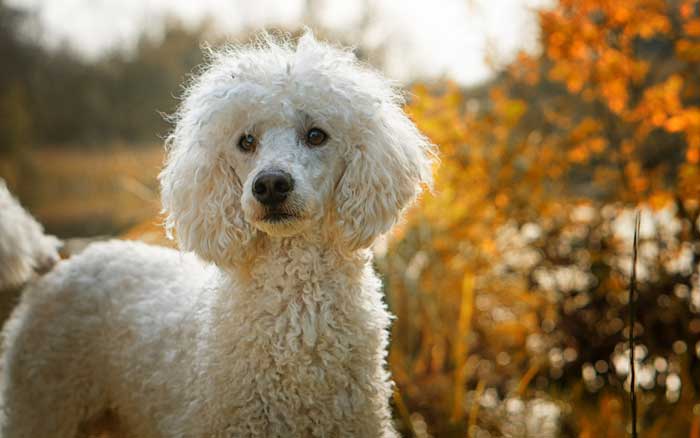
The Standard is the big one of the Poodle family, 45 to 70 pounds, and it might just have the curliest coat going.
These dogs are peaceful and gentle. A Standard Poodle won’t snap even when a kid plays too rough, which is a big reason families love them. The coat is another draw: it sheds very little, a real plus if anyone in the house reacts to dander.
Poodles are quick studies and well-mannered. Training barely feels like work. They learn their limits and respect them, and they’re not temperamental, which spares a first-timer the moodiness some breeds bring. Calm and composed is the default setting.
Don’t read laid-back as lazy. A Standard Poodle is an athlete under the haircut, so it needs daily runs and games to stay happy. Skimp on that and the smarts turn into mischief. Keep it busy and it’s a joy.
Why This Breed is Suitable for First-Time Owners
- Extremely loyal
- Peaceful and gentle
- Laid-back
- Safe to leave with children
Final Thoughts
So the options are there. A large dog can absolutely be a first dog, whatever the skeptics at the dog park tell you.
Size is one line on a long list. Half the breeds here act like overgrown puppies, and the slow, deliberate way big dogs move often makes them easier to live with than a wound-up small one.
Pick for your space, your schedule, and how much grooming and exercise you’ll really commit to. Match those three honestly and any breed on this list will give you years of loyalty back.
Frequently asked questions
What is the easiest dog for a first-time owner?
Breeds that are eager to please and forgiving of beginner mistakes, like a Labrador, Poodle or Cavalier, tend to be the smoothest first dogs.
Should a first-time owner get a puppy or an adult dog?
An adult is often easier. What you see is what you get on temperament and energy, and most are already house-trained.
How much does a first dog cost in the first year?
Budget roughly 1,500 to 3,000 dollars once you add food, vet visits, gear, training and the unexpected. The adoption fee is the small part.
Google lets you pick which sites come up first in your own results.