

A quick note: a few links below are affiliate links. Buy through one and we may earn a small commission. It never costs you more, and we only point to gear we'd actually put in front of our own dogs. As an Amazon Associate I earn from qualifying purchases.
Exercise and real social time rank near the top of what your dog actually needs from you. Not optional extras. The basics.
People go a little stir-crazy without other people, and dogs are wired the same way. They are social animals at heart, even the aloof ones.
Here is the catch. Your dog cannot just let himself out and go find a friend. That part falls on you. You decide when he gets to run loose, burn energy, and read the news off every other dog in the area.
Getting to the park is its own logistics puzzle if you don’t have a car, a lot of city owners end up relying on a proper carrier for the walk or the subway ride there.
Sure, you can let your dog say hello to the neighbors’ dogs on a walk. A dog park does more. It is built around what dogs want to do, with the room to do it, which is why so many owners make it a weekly habit.
Before that first visit, do a little prep on both ends of the leash.
Start with age and temperament. Is your dog old enough? Can he keep it together when a wall of noise, smell, and forty other dogs hits him at once?
Then there is the human side. Some owners watch their dogs like hawks, others scroll their phones while their dog bulldozes yours. Knowing the posted rules and the unwritten etiquette saves you a lot of grief.
The short version: pay attention to which dogs are around, how old they are, and how you handle your own dog in the mix. Those three things decide how the visit goes.
One more thing worth checking ahead of time. Know what kind of park you are walking into, because they are not all built the same, and that changes how you prep your dog for the day.
When Can You Bring Your Puppy to the Dog Park?
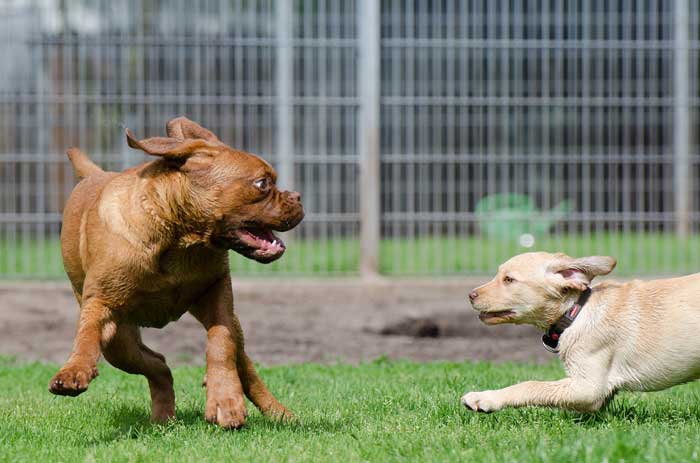
You would not drop a newborn into the middle of a busy playground, and the same logic applies here. A puppy who has not finished his shots can pick up parvo or kennel cough from ground every other dog has used. That is a vet bill and a scare nobody signs up for.
There is a physical risk too. A nine-pound pup and a happy seventy-pound Lab in mid-sprint do not mix. The Lab is not being mean. He just does not see the little guy until it is too late.
Best case, your puppy gets a fright and shakes it off. Worst case, he limps away hurt and spooked, and now the park itself reads as scary to him for months.
So hold off until your puppy is at least four months old. That is roughly when the final round of core vaccines is done and actually protecting him, not a day before.
Until then, keep the fun closer to home and playing with your dog in the safety of your own home.
Policies vary by park. A few want pups to hit a certain size first. Others let small dogs use the little-dog side early, as long as the shots are current.
Types of Dog Parks
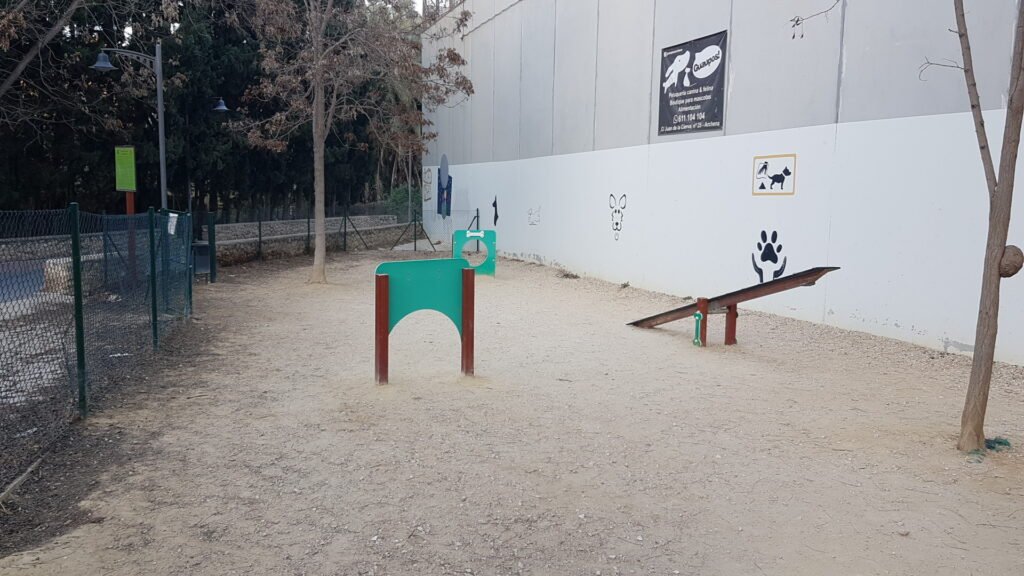
Walk into most dog parks and you will see the same bones. Open ground to run, room to play, other dogs to meet. The good ones wrap a solid fence around an area where dogs can go off-leash without anyone holding their breath.
Parks that think about the humans throw in a few extras. Benches, some shade if you are lucky, a water spigot for you and the dog, a bag-and-scooper station by the gate.
Most parks split into a leashed section and an off-leash section. The names tell you exactly what they mean.
In a leashed zone, keep the leash clipped on. There is no upside to letting go. These areas usually are not fenced, so it breaks the rules and turns into a real problem the second your dog spots a squirrel and bolts.
Off-leash zones tend to be smaller and fenced, though still big enough for a good run and a hard nap afterward.
Bigger parks often split the off-leash side by size, small dogs on one side and large on the other. That keeps your dog from getting steamrolled, or from doing the steamrolling, depending on which end of the scale he sits on.
Dog Park Rules and Etiquette
Every park has rules, posted and unposted. Dog parks lean harder on the unposted ones, because you are juggling other people and a yard full of dogs who each have their own agenda.
Stick to the rules and the basic courtesy and most visits stay boring, in the best possible way.
A lot of it just comes down to being decent to the people and dogs sharing the space with you.
Clean up After Your Dog Does His Business
If your dog squats, you grab a bag. No debate. Most parks stock a station with bags, scoopers, and a bin right by the entrance, so there is no excuse to leave a pile for the next person to step in.
Make Sure Your Dog Is up to Date on His Vaccines
Current shots protect your dog and everyone else’s. Think of it the way schools handle it. One unvaccinated dog can pass something nasty to the whole crowd, and a single bad afternoon can spread for weeks.
Never Take Your Dog If She Is in Heat
A dog in heat does not belong at the park, full stop. Every intact male in the place will fixate on her, and that kind of tension flips to snapping and shoving fast.
This is not the playful roughhousing you want to see. A dog in this state should sit the trip out.
Keep Your Dog in a Collar at All Times
Collar on, ID tag attached, every single visit. Bring the leash even to a mostly off-leash park, and keep it on you instead of in the car.
That collar does two jobs. It gives you a handle when things heat up, and if your dog ever slips out a gate, the tag is what gets him home instead of into a shelter.
Don’t Bring Babies or Little Kids
Leave the infants and toddlers at home. The other owners will thank you, even if they never say it out loud.
A big dog at a dead run does not look where he is going. A toddler is exactly the right height to take the hit, and that is a phone call no parent wants to make.
Don’t Bring Toys, Treats, or Food
Keep the squeaky ball and the treat pouch in the car. Anything worth fighting over usually starts a fight.
One dog guards the ball, another wants it, and now two owners are pulling collars apart. Easier to just leave it out of the equation.
Taking Your Dog to the Dog Park for the First Time
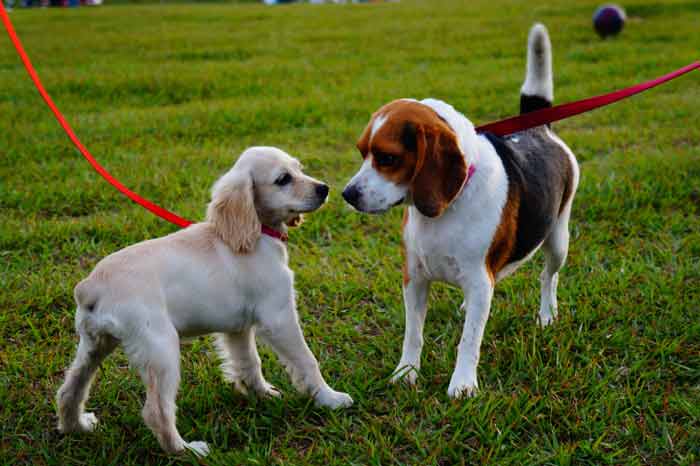
A dog park can flood a dog’s senses. New smells everywhere, dogs barking, gates clanging, and the big one, a dozen strangers who all want to sniff him at once.
If your dog has shaky leash manners and a weak recall, you are signing up for an afternoon of either hauling him around or getting hauled around yourself.
So before that first trip, run through a few things.
How to Introduce a Dog to the Dog Park
- Start with a small dog park. A smaller park means fewer dogs and fewer things to overload your dog on day one. It is also a lot easier to actually keep track of him when the place is not packed.
- Pick a quiet time. Go when it is nearly empty, early morning on a weekday is gold. Your dog gets to learn the layout and meet a dog or two calmly, and those first impressions tend to stick.
- Walk the outside first. Loop the fence line before you ever go in. Let him sniff the perimeter and watch the other dogs from a distance where he still feels in control.
- Keep the leash on at first. It reminds your dog who is calling the shots, and it gives you something to grab the moment he gets too wound up over a new friend.
- Read your own dog. Be honest about how he handles other dogs and unfamiliar people. A dog who tenses up around strangers needs a slower introduction than a social butterfly.
- Talk to the other owner first. Before your dog dives into play, swap a few words with the other person. Ask if their dog plays nice. You sort out trouble before it starts, and you might walk away with a regular playmate for your dog and a coffee buddy for yourself.
Dog Park Safety Tips
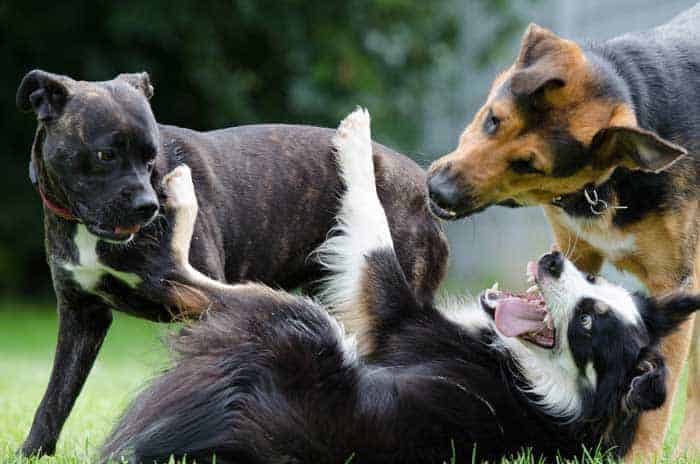
A handful of habits keep your dog out of trouble once you are inside the gate.
Keep Your Eyes on Your Dog
Watch your dog, watch the dogs near him, watch the people. Trouble usually telegraphs itself a few seconds early, and you only catch it if you are looking up instead of down at your phone.
Make Sure Your Dog Comes When You Call
A reliable recall is the one command that matters most here. In an off-leash area, your voice is the only leash you have left.
It also keeps him close enough to see what he is up to before the mischief turns into a problem.
Skip the Crowded Days
If you pull up and the place is jammed, come back later. No shame in it.
A packed park runs hot. Excitement and stress feed off each other, and that is rough on a big dog, a pushy one, or a small one who can get lost in the shuffle.
It hits hardest on dogs who are wary of strangers or have never set foot in the place before.
Learn to Read Aggressive Behavior
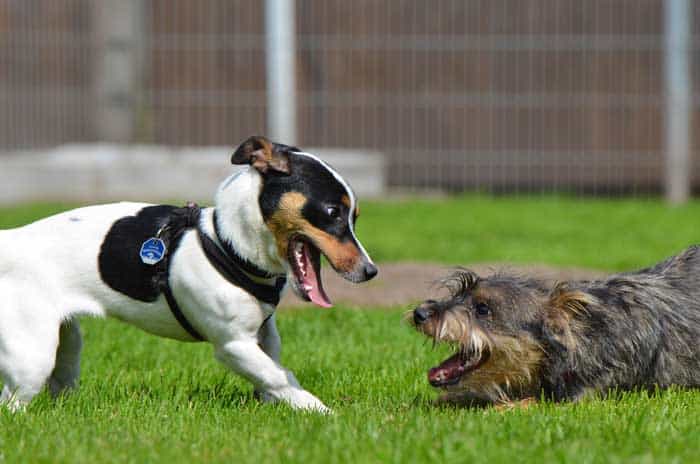
Learn the line between rowdy play and a real threat, because they look similar for about two seconds.
Growling and mouthing during play is normal, and dogs trade roles, chasing then getting chased. Watch for the stiff legs, the high arched neck, the tail flagged straight up and barely moving. That is a dog spoiling for an actual fight, and it is your cue to step in.
Final Thoughts
Keeping your dog safe at the park matters. Knowing the rules and the etiquette matters just as much, maybe more, because that is what stops the trouble before it starts.
Get those habits down and the dog park stops being a gamble. It turns into the best forty-five minutes of your dog’s day, and the reason he flops down happy and tired the second you get home.
Resources
Frequently asked questions
What is the easiest dog for a first-time owner?
Breeds that are eager to please and forgiving of beginner mistakes, like a Labrador, Poodle or Cavalier, tend to be the smoothest first dogs.
Should a first-time owner get a puppy or an adult dog?
An adult is often easier. What you see is what you get on temperament and energy, and most are already house-trained.
How much does a first dog cost in the first year?
Budget roughly 1,500 to 3,000 dollars once you add food, vet visits, gear, training and the unexpected. The adoption fee is the small part.
Google lets you pick which sites come up first in your own results.