

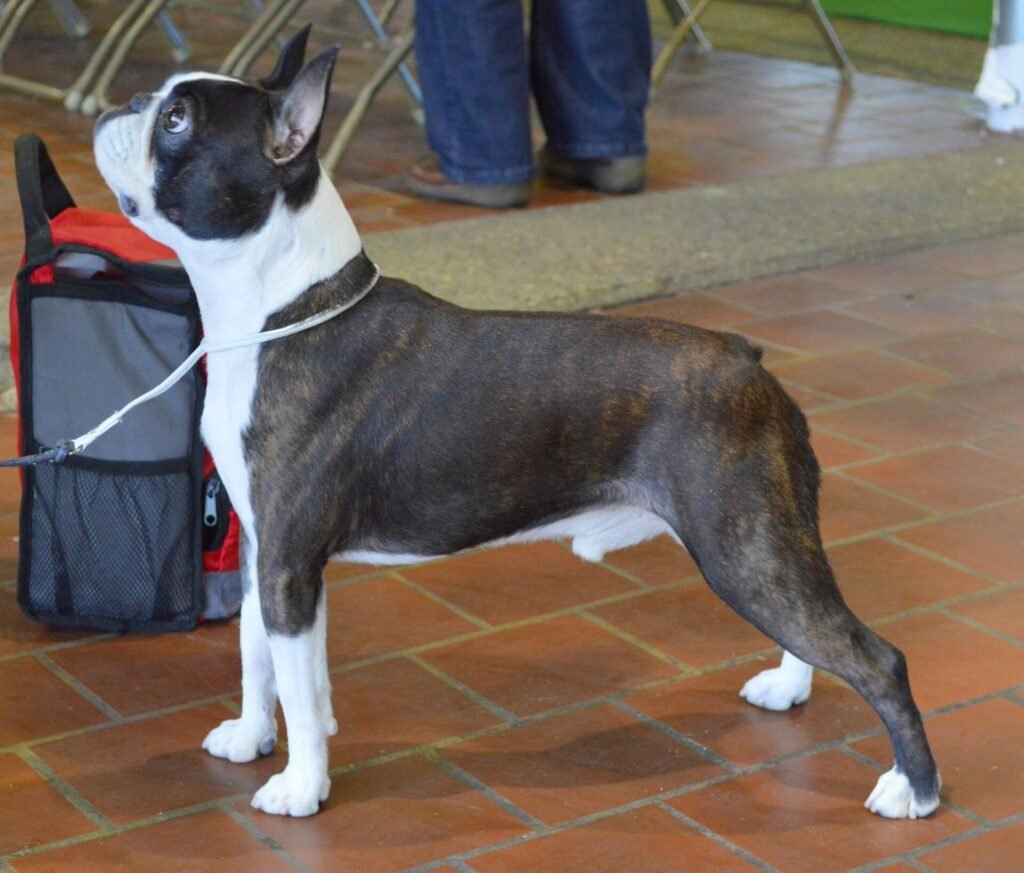
A quick note: a few links below are affiliate links. Buy through one and we may earn a small commission. It never costs you more, and we only point to gear we'd actually put in front of our own dogs. As an Amazon Associate I earn from qualifying purchases.
Boston Terriers earned the nickname “American Gentleman” for a reason. They show up at the door, greet your guests, and act like they own the lease.
They’re sharp, they notice everything, and they have a goofy streak that wins people over fast. So the real question for anyone in a small space: are Boston Terriers good apartment dogs?
Boston Terriers are great dogs for apartment living. The AKC calls them sturdy but portable, people-oriented, and always up for a brisk walk to the park or an outdoor cafe, which is why it considers them an excellent urban pet.
Living With a Boston Terrier, the Honest Version

The AKC lists Bostons at 10 to 12 inches tall and 12 to 25 pounds, which already tells you a lot about how they fit into a one-bedroom. They’re even-tempered. Gentle, mostly. The kind of dog that reads the room and settles when you settle.
They want to be near you. On the couch, on your lap, halfway under a blanket while you work. This is a velcro breed, and people who want an aloof, independent dog usually pick the wrong one here.
They make decent little watchdogs too. The AKC describes them as ever alert to their surroundings.
Are Boston Terriers Good Family Dogs?
Few breeds slot into family life this easily. The outgoing temperament means they get along with kids, the cat, the neighbor’s dog, basically anyone who gives them attention.
They’re loyal in a clingy, lovable way. A Boston wants to be in the middle of whatever the family is doing, whether that’s dinner or a Saturday cleanup.
They’re playful and happy by default, and that energy clicks well with children who are old enough to play back.
Fetch is the classic. A Boston will chase a ball down the hallway until one of you gives up, which makes them solid playmates for older kids who can keep up.
Here’s the catch. These are sensitive dogs. Rough handling, even by accident, can rattle a Boston and make him wary, and that trust is slow to rebuild. Teach young kids how to handle the dog before there’s a problem, not after.
Treat him gently and you get the full package: loyal, funny, affectionate, glued to your side.
Do Boston Terriers Need a Lot of Exercise?
The AKC says a Boston’s need for exercise varies from individual to individual. For some, a brisk walk once or twice a day will be enough. Others need more time to run and play every day.
Letting him out into the backyard does not count as exercise, the AKC warns: he will probably just sit at the door waiting to be let back in.
The daily walk is non-negotiable. It’s not only about the legs. The smells, the sounds, the other dogs on the block all give his brain something to chew on, and a tired brain is a calm dog.
If you can find a fenced spot for some off-leash time, even better. Let him sprint and sniff and do his own thing for a while.
Throw him a ball or a toy and he will happily play with you. The AKC lists agility, obedience, flyball and rally as good outlets for the breed’s energy.
Are Boston Terriers High Maintenance?
Grooming a Boston is about as low effort as dog ownership gets. The AKC says the sleek coat does shed somewhat, though not a lot, and that weekly brushing with a soft-bristle brush, a rubber grooming mitt or a hound glove removes the loose hair.
Bostons need to be bathed only occasionally, unless they get into something messy, according to the AKC.
The rest is basic upkeep. Trim the nails regularly, because overly long nails can cause pain and problems walking and running. Check the eyes daily for redness or irritation, as the AKC advises for this breed’s prominent eyes.
Are Boston Terriers Easy to Train?
They’re smart and they want to please you, so the basics come quickly. The flip side is a stubborn streak that shows up at the worst moments. Some days he’ll nail every cue. Other days he’ll look at you like he’s never heard the word “sit” in his life. Patience wins.
One thing in your favor: most Bostons are food-driven. A pocket of treats makes the whole process go faster.
Keep it positive. These dogs are sensitive enough that harsh corrections backfire, and a scared Boston shuts down instead of learning. Reward what you want, ignore what you don’t.
People skip training with small dogs because the dog is cute and the personality is sweet. Big mistake. Training and early socializing are what give a Boston a steady temperament and good manners as an adult.
Stay consistent, bring the treats, keep sessions short. Done right, training a Boston is genuinely fun.
Are Boston Terriers Hard to Potty Train?
What it takes is patience, a consistent routine, and a lot of supervision in the early weeks.
When living in an apartment we can potty train a Boston to go outside, or indoors on a puppy pad or a grass pad.
Pads are a fair backup when you can’t get him out on a regular schedule, say a long workday or a high-rise with a slow elevator.
Outdoor potty breaks are still the better call. More trips outside mean more movement, more sniffing, more stimulation, all of which a Boston needs anyway.
Start by picking one spot, indoors or out, and commit to it. Switching the location every few days just confuses the dog and stretches the whole process out.
Once the spot is set, the job is simple. Take him there often, every single time.
Puppies have small bladders, so expect frequent trips at first.
Start the routine the day the puppy walks through the door. In the beginning, take him to the potty spot:
- Hourly.
- After each meal.
- When he wakes up in the morning or after a nap.
- After he has been alone for a relatively long period.
Every time he goes in the right place, praise him and hand over a treat. Make a small celebration of it.
Accidents will happen. Scolding does nothing useful. If you catch him mid-accident, make a quick sound to interrupt, scoop him to the right spot, let him finish, then praise him for it.
Find the mess after the fact and there’s nothing to do but clean it thoroughly, enzyme cleaner and all, so no scent lingers and tempts him back to the same corner.
Give it time. Sooner than you’d think, your Boston will start telling you when he needs to go out.
Can Boston Terriers Be Left Alone During the Day?
The AKC warns that a Boston left alone for long periods tends to become frustrated and develop undesirable behaviors, so this is not a dog to ignore all day.
Build up to it slowly. Start with short absences and stretch them out a little at a time. Rushing this is how you end up with a dog who panics the second the door clicks shut.
A few things that make the alone hours easier on him:
- Take your dog for a walk before he will stay alone and right after you return. This allows him to burn off his energy and will most likely spend much of his time sleeping.
- Leave his favorite dog toys at hand. Interactive and puzzle toys can keep him busy for long periods, in addition to keeping him mentally stimulated.
- Take your dog to a doggie daycare where he can spend the day playing with other dogs instead of being alone in the apartment.
- Ask a friend or neighbor to come to visit your Boston in the middle of the morning and, if possible, take him on a short walk. There are also professional Dog Walkers and Dog Sitters services that you can turn to.
Keep an eye on how he’s actually coping. In these cases, Pet Cameras are a great way to see if your dog is fine when you are not at home. Catching the pacing or the whining early lets you fix it before it becomes a habit.
Do Boston Terrier Dogs Bark a Lot?
Barking varies by dog, and the AKC profile gives no barking rating for the breed, so judge your own dog before you count on thin walls.
A bored, under-exercised dog is more likely to bark, so exercise and attention come first.
The usual reasons a Boston speaks up:
- To alert his owner that something unusual is happening. They are territorial and protective dogs and often bark to alert their family and protect their territory.
- Bostons often bark when they play. It’s a way of expressing their joy and excitement. This bark is usually different from the protective bark.
Is a Boston Terrier a Good Apartment Dog?
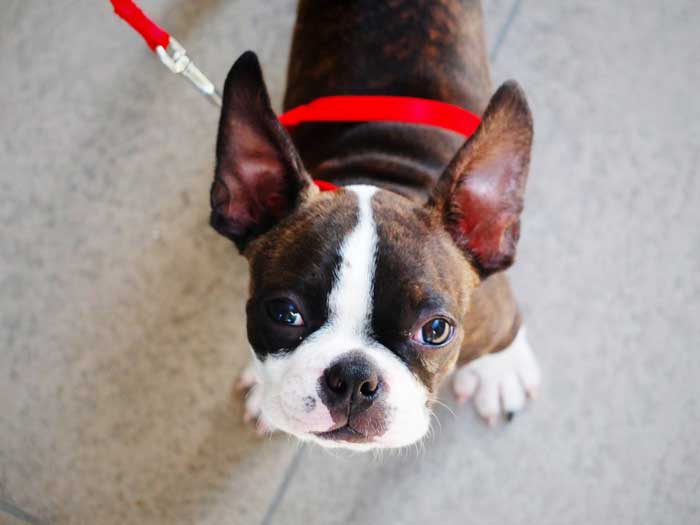
Add it all up and the Boston Terrier is one of the better apartment dogs out there. The coat is easy to keep up, and the exercise he needs is a brisk daily walk or more, depending on the dog.
He fits a family with young kids and he fits a retiree living alone. Few breeds flex that wide.
Tips for Raising a Boston Terrier in an Apartment

1. Socialize Your Boston Terrier Early
Every dog needs socializing, and the Boston is no different. Although it’s never too late to start socializing a dog, the AKC recommends early socialization and puppy training classes for the breed.
Socializing means introducing your dog to new things in a calm, positive way. New sounds, new sights, new smells, plus learning to read other dogs and meet new people across different places and situations.
Put the work in early and you head off a long list of behavior problems. A well-socialized dog grows up confident and knows how to act when life gets unpredictable.
This matters double in an apartment. You’re passing neighbors in the hallway every day, sharing elevators, crossing paths in the lobby. A socialized Boston takes all of that in stride.
2. Give Your Boston Terrier Time and Attention
This is a people dog through and through. A Boston needs daily time with his family or he gets anxious, sometimes withdrawn. Leave him emotionally on his own too much and it shows.
Some easy ways to give him that time:
- Sped some playtime daily with your Boston Terrier. They enjoy games like fetching or chasing around the apartment. Here you can find some fun indoor activities ideas.
- Spend some time of the day training your Boston Terrier. In addition to being fun, training time helps strengthen the bonds between you and your dog.
- The Boston love affection and to cuddle. A time for petting and resting with his owner makes a Boston very happy.
- Taking a walk outside is not only for exercising your dog. It’s a time to spend time together exploring the neighborhood.
3. Balcony Potty Training
Outdoor potty breaks are always the gold standard. Reality gets in the way, though, and some days getting outside on schedule just isn’t going to happen.
Dogs are cleaner than people give them credit for. They’d rather not relieve themselves where they live, which is exactly why some refuse to use a puppy pad indoors.
If you’ve got a balcony, a real grass pad out there gives him a spot to go without a full trip downstairs. It’s a fair middle ground for rainy days and busy mornings.
One serious caveat. Any small dog can slip through or over a railing.
So secure the balcony before he ever sets foot on it. Make sure he can’t slip through or hop over the railing. Pet-safe balcony guards exist for exactly this, and on an upper floor they’re worth every cent.
4. Puppy Proof Your Apartment
Think of it like baby-proofing. Your job is to make the apartment a place where a curious Boston can’t get himself into trouble.
The main things to handle:
- Keep toxic things like medications and cleaning products out of your dog’s reach.
- Bostons are curious and are known for eating everything they can find. Trash cans should be kept closed and out of reach.
- Dogs explore their surroundings with their mouths, either licking or chewing. Make sure they cannot bite or lick electric cords, power cables, and chargers using special covers.
- We must make sure that we don’t have poisonous plants for our puppy. Here you can find a list of toxic plants for pets.
5. Keep Your Dog’s Vaccinations up to Date
Before your Boston walks the block or plays in the building’s common area, his shots need to be current. Apartment life means constant contact with other dogs, and that raises the stakes.
A dog who goes out without full coverage picks up illness easily.
Sniffing another dog’s waste, mingling in the lobby, a puppy with a weak immune system can catch something serious that way, and with the worst diseases it can be fatal.
So as soon as your puppy comes home, book the vet. Get him dewormed, and if he hasn’t had his shots yet, start that schedule right away.
Final Thoughts
Bostons make excellent roommates. The small size helps them fit a tight floor plan, sure, but the easygoing personality is what really seals it.
Light grooming, a daily walk at least, and equally at home with a houseful of kids or a single senior. That’s a rare combination in one dog.
Just go in clear-eyed. A Boston lives 11 to 13 years on average according to the AKC, so plan for that, and a Boston in particular needs your company more than your square footage. Give him the time and the apartment becomes a detail.
Resources
- Boston Terrier breed profile by the American Kennel Club
- Boston Terrier Temperament & Personality by Canna-Pet
- How to Care for a Boston Terrier by WikiHow
Frequently asked questions
Can big dogs really live in an apartment?
Yes. Energy level matters far more than size. A calm Great Dane settles into a flat better than a wound-up terrier, as long as it gets a proper walk twice a day.
Which dog breeds bark the least in apartments?
Greyhounds, Basenjis, Bulldogs and Cavaliers are among the quietest. Any dog can learn to be calm, but these simply start at a lower volume.
How much exercise does an apartment dog need?
Most do well on 30 to 60 minutes a day split into two walks, plus a little indoor play. Cut that short and the barking and chewing usually start.
Google lets you pick which sites come up first in your own results.