

A quick note: a few links below are affiliate links. Buy through one and we may earn a small commission. It never costs you more, and we only point to gear we'd actually put in front of our own dogs. As an Amazon Associate I earn from qualifying purchases.
Quick answer
Square footage matters far less than temperament and noise level. The breeds that settle into a flat best are the Cavalier King Charles Spaniel, Bichon Frise, French Bulldog, Havanese, Pug, Boston Terrier, Maltese, Shih Tzu and Poodle, plus two that surprise people, the Greyhound and the Great Dane, both of which sleep most of the day. What sinks apartment life is a barker or a dog left alone too long, not the size of the dog.
An apartment is not a dealbreaker, but the right breed depends on how much exercise it needs, how it copes with being alone and how much coat care you will do. This list covers 31 breeds, and every size, lifespan, exercise and grooming detail comes from the American Kennel Club breed pages listed at the bottom. For help with the size question first, see our small, medium and large dog size guide.
Short answer: the AKC says outright that Havanese, Shih Tzu, Japanese Chin and Mastiff do well in apartments, and calls the Affenpinscher and other toy breeds ideal for them. For most of the others it describes city-friendly traits but gives no apartment verdict, so read the exercise and alone-time notes under each breed against your own routine.
If you want more narrowly sorted lists, see small breeds for apartments, medium breeds, large breeds and apartment dogs that do not shed. Breeds to think twice about are in worst dogs for apartments.
Short on time? Jump straight to the Fresh Patch real-grass pad
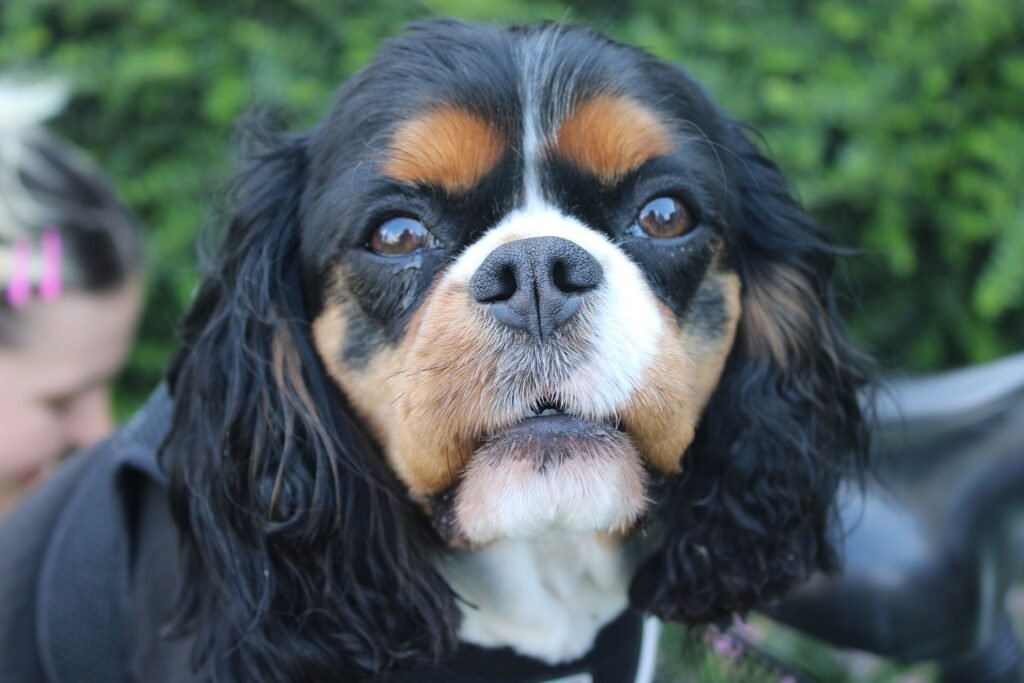
1. Cavalier King Charles Spaniel

The AKC lists the Cavalier at 12 to 13 inches, 13 to 18 pounds and a life expectancy of 12 to 15 years. It describes a breed that combines the gentle attentiveness of a toy dog with the athleticism of a sporting spaniel, and says adaptable Cavaliers do equally well with active owners and homebodies, either upbeat athletes or couch potatoes depending on the owner’s lifestyle.
Exercise is moderate: the AKC says the Cavalier enjoys walks and outdoor activity but is just as glad to stay on the sofa all day. It should not be allowed off leash, because it keeps its scenting and hunting instincts and may not come back when it finds an interesting trail. The silky coat needs regular brushing and an occasional bath, with ears checked weekly and nails trimmed at least monthly.
- Moderate exercise, happy on the sofa the rest of the day, per the AKC.
- Described as friendly with strangers and other animals, and able to do very well with children.
- Keep it leashed outside, since it may follow a scent and not come when called.
- The AKC lists eye conditions, patella luxation, hip dysplasia, mitral valve heart disease and syringomyelia as concerns, so ask the breeder about health testing.
2. Bichon Frise

The AKC lists the Bichon at 9.5 to 11.5 inches, 12 to 18 pounds and 14 to 15 years. Its breed page calls the confidence and size of Bichons ideal for city dogs, and says they are adaptable companions that get on well with other dogs and children. It also calls them alert and curious, nice little watchdogs.
Grooming is the main job. The AKC says to brush at least two or three times a week, though every day is best, with a bath and clipping at least once a month. Most pet owners go to a groomer every four to six weeks. The breed sheds very little because shed hair is caught in the undercoat, but that hair has to be brushed out or mats form. On exercise, the AKC says daily play sessions are required in addition to walks, and that a Bichon needs to be with his family: undesirable behavior is likely if he is regularly left alone for long periods.
- Sheds very little, but brushing at least two or three times a week keeps mats away.
- Daily play sessions plus walks, per the AKC.
- The AKC says Bichons have a reputation for being difficult to housebreak.
- Dental care matters: the AKC warns of early tooth loss if teeth brushing is neglected.
3. French Bulldog

The AKC lists the French Bulldog at 11 to 13 inches, under 28 pounds and 10 to 12 years. Its breed page calls the Frenchie one of the world’s most popular small breeds, especially among city dwellers, and says Frenchies do not bark much, do not require a lot of outdoor exercise, and adapt to life with singles, couples or families.
The AKC advises a short walk or outdoor play session each day. As a flat-faced breed it is prone to breathing difficulties and should never be allowed to exert itself in hot or humid weather. The short coat sheds minimally and needs weekly brushing, and the facial folds should be kept clean and dry. Because of the front-heavy build, the AKC says Frenchies cannot swim and should never be left unattended near a tub, pool or body of water.
For a deeper look, see is the French Bulldog a good apartment dog.
- A short daily walk or play session is enough exercise, per the AKC.
- Does not bark much, and the AKC calls it an excellent watchdog.
- Flat-faced: avoid exertion in hot or humid weather, and note that flat-faced breeds are more sensitive to anesthesia.
- Clean and dry the facial folds; weekly brushing handles the minimal shedding.
4. Havanese

The AKC lists the Havanese at 8.5 to 11.5 inches, 7 to 13 pounds and 14 to 16 years. It calls them the only dog breed native to Cuba and says their small but sturdy bodies, adaptable nature and social skills make them an ideal city dog. It adds that they are excellent watchdogs that take the job seriously but usually keep the barking to a minimum.
The AKC states that Havanese do well in both houses and apartments, but are not happy left alone for hours at a time. Exercise needs are moderate: a brisk daily walk or playtime, and romping inside the home can be enough. The long silky coat must be groomed daily to stay free of mats, and many owners clip it short to cut grooming time. The corners of the eyes should be cleaned gently every day to prevent tear stains on the lighter hair.
- The AKC says they do well in apartments, but not when left alone for hours.
- Moderate exercise: a brisk walk or indoor play can be enough.
- Daily coat care, or a short clip to reduce grooming time.
- Training should use only positive methods, because the AKC calls the breed sensitive.
5. Greyhound

The AKC lists the Greyhound at 28 to 30 inches and 65 to 70 pounds for males, and 27 to 28 inches and 60 to 65 pounds for females, with a life expectancy of 10 to 13 years. It describes a gentle, noble, sweet-tempered companion with an independent spirit that is perfectly happy to lounge around the house all day.
The same page says Greyhounds require a regular schedule of exercise and chances to run full-out safely, and must only be allowed off leash in a securely fenced area, since they may not resist chasing perceived prey. The short, smooth coat needs little beyond regular baths and weekly rubdowns. Our separate guide looks at the breed in more depth.
For a deeper look, see is the Greyhound a good apartment dog.
- Lounges indoors, but needs regular chances to run in a securely fenced space.
- Leash required everywhere else because of prey drive.
- The AKC says it becomes bored easily in training and needs a gentle approach, never harsh.
- Deep-chested: the AKC names bloat as a risk and says to seek medical attention immediately if symptoms appear.
6. Pug

The AKC lists the Pug at 10 to 13 inches, 14 to 18 pounds and 13 to 15 years. It calls the Pug the ideal house dog in the view of owners, happy in the city or country, with kids or old folks, as an only pet or one of several, and says that given the chance a Pug will happily spend much of the day on the sofa.
That, combined with a fondness for eating, makes obesity a real possibility, so the AKC recommends daily moderate exercise such as walks or yard play. As a short-faced breed the Pug is not tolerant of hot weather and should not do strenuous exercise when it is warm or humid. The short coat needs weekly brushing and does shed. The AKC also says a Pug wants to be with his family and will be unhappy if regularly left alone for long periods.
For a deeper look, see is the Pug a good apartment dog.
- Daily moderate exercise and a watched diet, since the AKC warns of obesity.
- Sheds despite the short coat; weekly brushing removes loose hair.
- Avoid strenuous activity in warm or humid weather.
- Easy to train in the AKC’s description, but feelings are easily hurt, so no harsh methods.
7. Bulldog

The AKC lists the Bulldog at 14 to 15 inches, about 50 pounds for males and 40 pounds for females, and 8 to 10 years. It calls Bulldogs docile, loyal companions that adapt well to town or country, and says they enjoy brisk walks and need regular moderate exercise along with a careful diet to stay trim.
The AKC says very warm days are best spent in front of an air conditioner because the short muzzle can make breathing difficult in heat and humidity, and that stairs and pools are major safety hazards. Grooming means brushing for about 10 minutes two or three times a week, regular checks of the facial wrinkles to keep them clean and dry, clean ears and nails trimmed every two weeks or so.
For a deeper look, see is the Bulldog a good apartment dog.
- Mellow, with regular moderate exercise, per the AKC.
- Heat and humidity are a real risk because of the short muzzle.
- Stairs and deep water are hazards: the AKC says never more than elbow-deep unless closely supervised.
- Teach early to release items on command and to accept someone taking food from the bowl.
8. Chinese Crested

The AKC lists the Chinese Crested at 11 to 13 inches, 8 to 12 pounds and 13 to 18 years, in two varieties: the hairless and the coated ‘powderpuff’. It calls them playful, loving and devoted, attentive housemates totally in tune with their family. For the hairless variety it notes there is no doggy odor and shedding is not much of a problem.
Exercise needs can usually be met with short daily walks and play sessions. The AKC says the hairless variety is prone to skin irritation, allergies and sunburn, so sunscreen or protective clothing is needed outdoors, along with skin treatments suited to the dog. The powderpuff needs daily brushing and its coat can mat quickly. The AKC calls the breed very sensitive, to be trained with gentle patience.
- Short daily walks and play sessions are usually enough.
- Hairless skin needs sunscreen or protective clothing outdoors.
- The powderpuff coat needs daily brushing to prevent matting.
- The AKC lists inherited eye problems, epilepsy and patellar luxation among concerns.
9. Boston Terrier

The AKC lists the Boston Terrier at 10 to 12 inches, 12 to 25 pounds and 11 to 13 years. It reasons that a breed named for a city will make an excellent urban pet and calls Bostons sturdy but portable, people-oriented, and always up for a brisk walk to the park or an outdoor cafe.
Exercise varies by individual: for some a brisk walk once or twice a day is enough, others need more time to run and play. The AKC adds that left alone for long periods a Boston tends to become frustrated and develop undesirable behaviors. The sleek coat sheds somewhat, though not a lot, and weekly brushing removes loose hair. Eyes are the main health point: the AKC says to check them daily for redness or irritation, and that, like all flat-faced breeds, Bostons can have trouble breathing without shelter from heat and humidity.
For a deeper look, see is the Boston Terrier a good apartment dog.
- Needs vary from one brisk walk to a lot of play; the AKC says time in the backyard alone does not count as exercise.
- Weekly brushing is enough for the coat.
- Check the prominent eyes daily and see the vet for redness or irritation.
- Many Bostons are sensitive, so the AKC suggests gentle corrections followed by warmth and praise.
10. Maltese

The AKC lists the Maltese at 7 to 9 inches, under 7 pounds and 12 to 15 years. It calls them affectionate, playful and adaptable toy dogs that are low-shedding and make alert watchdogs, and says they require only occasional exercise: daily walks, bouncing around a fenced yard, or even indoors will usually suffice.
The long white coat needs daily gentle brushing and combing down to the skin to prevent mats, plus regular baths and conditioning. The AKC says to check the ears weekly and brush the teeth frequently, ideally each time you brush the coat, since Maltese are prone to dental disease as they age. It describes them as sometimes stubborn and willful but responsive to rewards-based training, and says consistency matters.
- Low-shedding, but the long coat needs daily brushing to the skin.
- Occasional exercise is enough, per the AKC.
- Dental disease is a concern as they age: the AKC recommends daily brushing with dog toothpaste plus vet cleanings.
- The AKC says the breed has few health issues; it also reports encephalitis (GME) cases with no screening test.
11. Shih Tzu

The AKC lists the Shih Tzu at 9 to 10.5 inches, 9 to 16 pounds and 10 to 18 years. It says that as a small dog bred to spend most of its day inside royal palaces, the breed makes a great pet if you live in an apartment or lack a big backyard, and that it requires minimal exercise: short daily walks and indoor playtime satisfy its activity needs.
The AKC notes that Shih Tzu with long coats need daily brushing, a bath about every three or four weeks, daily combing of the mustache and topknot, and gentle cleaning at the corners of the eyes. A professional ‘puppy trim’ is the alternative if you do not want to spend the time. Because of heavy coats and short faces they do not tolerate heat well and are not good swimmers. Housetraining and spoiling are the training risks: the AKC says the breed tends to charm its owner into letting it have its own way. Our guide on the breed goes further.
For a deeper look, see is the Shih Tzu a good apartment dog.
- Minimal exercise: short walks and indoor play, per the AKC.
- Long coat needs daily brushing, or a clip by a groomer.
- Does not tolerate heat well because of the heavy coat and short face.
- Praise and reward training works best; the AKC says harsh corrections should not be used.
12. Great Dane

The AKC lists the Great Dane at 30 to 32 inches and 140 to 175 pounds for males, and 28 to 30 inches and 110 to 140 pounds for females, with a life expectancy of 7 to 10 years. It calls the breed easygoing and a joy to live with, but says that owning a dog of such imposing size, weight and strength is a commitment not to be entered into lightly. Danes are patient with kids and people pleasers.
Danes may seem sedate but need daily exercise appropriate to their age. The AKC says a brisk walk two or three times a day can be enough, that rigorous exercise should be avoided around mealtimes because of bloat risk, and that jogging or hiking should wait until the dog is 2 years old to avoid damaging growing joints. They tend to follow their nose, so keep them on leash and only loose in areas with a tall fence. The AKC calls bloat the number-one killer of Danes.
For a deeper look, see is the Great Dane a good apartment dog.
- Daily exercise: a brisk walk two or three times a day can be enough.
- Obedience training is a must for a dog this size, per the AKC.
- Bloat is the leading danger; the AKC says to learn the signs, and some owners consider a preventive gastropexy.
- No jogging or hiking until age 2, to protect growing joints.
13. Yorkshire Terrier

The AKC lists the Yorkshire Terrier at 7 to 8 inches, about 7 pounds and 11 to 15 years. It calls them favorites of urbanites the world over, long-lived, hypoallergenic in the sense that the coat is more like human hair than fur, and fine little watchdogs. It also warns that Yorkies are feisty, brave and sometimes bossy, with all the traits of a true terrier.
A short walk twice a day will likely be enough exercise, according to the AKC, plus occasional short bursts of activity. A long coat needs brushing daily and a bath every week or so, and the hair on the upper head should be trimmed short or put in a topknot to avoid eye irritation. On health, the AKC says to limit jumping height, especially in puppies, to help avoid luxating patella. It describes Yorkies as eager to please and says praise and treats work far better than harsh corrections.
For a deeper look, see is the Yorkshire Terrier a good apartment dog.
- A short walk twice a day, per the AKC.
- Long coat: daily brushing and a weekly bath.
- Limit jumping height, especially for puppies.
- Socialize early to strange situations, people and other dogs.
14. Poodle

The AKC says Poodles come in three sizes: Standards are more than 15 inches at the shoulder, Miniatures are 15 inches or under, and Toys are no more than 10 inches. For the Standard it lists 60 to 70 pounds for males and 40 to 50 pounds for females, and 10 to 18 years across the breed. It calls Poodles eager, athletic and wickedly smart, and says they can all be trained with great success.
The AKC says Poodles of any size are very active dogs that need good exercise every day, whether fetch, swimming, jogging or long walks. The coat is relatively non-shedding, which the AKC says makes the breed a good choice for people with allergies, but it needs daily brushing unless clipped short, and many owners go to a professional groomer every four to six weeks. We found no AKC statement ranking the sizes for apartments, so pick the size by the space and exercise you can give.
- Needs good exercise every day, whatever the size.
- Relatively non-shedding coat; groomer visits every four to six weeks are typical.
- The AKC calls them extremely intelligent and easily trained.
- Health notes differ by size: Toy and Miniature are more prone to luxating patella, Standards to bloat.
15. Basenji

The AKC lists the Basenji at 16 to 17 inches, 22 to 24 pounds and 13 to 14 years. It calls them compact, sweet-faced hunters of intelligence and poise, and notes that they do not bark but make an odd sound between a chortle and a yodel. It also says they groom themselves like cats, with no ‘doggy’ smell.
The AKC calls the Basenji energetic, inquisitive and very active, requiring lots of regular exercise to avoid boredom, which can lead to destructive behavior. Long play sessions in a well-fenced yard or securely on lead are required, and it should never run loose because the hunting instinct is very strong. Training is a necessity, with sessions of no more than five or ten minutes.
For a deeper look, see is the Basenji a good apartment dog.
- Short coat: a weekly once-over with a soft brush or mitt; baths are rarely needed.
- Lots of regular exercise; boredom can lead to destructive behavior.
- Never off lead outside a secure area, per the AKC.
- Breeders screen for hypothyroidism, IPSID and hip dysplasia; gene tests exist for Fanconi syndrome and PRA.
16. Dachshund

The AKC lists the Dachshund at 8 to 9 inches and 16 to 32 pounds for the standard, 5 to 6 inches and 11 pounds or under for the miniature, and 12 to 16 years. It describes a smart, vigilant dog with a big-dog bark, brave to the point of rashness and a bit stubborn, in three coat types: smooth, wirehaired or longhaired.
Many owners think a Dachshund needs no more than running around the house. The AKC disagrees: regular exercise builds the muscles that protect the back, and two walks a day of moderate length should be sufficient. To avoid injury, never allow the dog to run up and down stairs or jump on or off furniture. To prevent disc damage, keep weight down and watch activity. Dachshunds are moderate shedders with little body odor.
For a deeper look, see is the Dachshund a good apartment dog.
- Two moderate walks a day, per the AKC.
- No stairs and no jumping on or off furniture, to protect the back.
- Smooth coats need a wipe-down; wirehaired ones brushing once or twice a week.
- Independent and often stubborn; the AKC says positive, reward-based training works best.
17. Pomeranian

The AKC lists the Pomeranian at 6 to 7 inches, 3 to 7 pounds and 12 to 16 years. It says Poms are active but can be exercised with indoor play and short walks, so they are content in both the city and suburbs, and that they are alert, easily trained and make fine watchdogs.
The profuse double coat needs a pin brush and slicker brush down to the skin once a week, and the AKC recommends a groomer for a full groom every four to six weeks if you are not comfortable doing it at home. It advises jumping limits on and off couches and beds, since Poms can injure joints or break a bone, and warns that they are notorious for escaping through small gaps in fencing. Housebreaking can be a challenge.
For a deeper look, see is the Pomeranian a good apartment dog.
- Indoor play and short walks, per the AKC.
- Weekly brushing to the skin; a groomer every four to six weeks.
- Do not let a Pom jump on and off furniture.
- Breeders screen for luxating patella, collapsing trachea, hypothyroidism and heart disease among others.
18. Brussels Griffon

The AKC lists the Brussels Griffon at 7 to 10 inches, 8 to 10 pounds and 12 to 15 years. It calls the Griffon a smart, devoted and comically self-important toy dog with a big personality in a small body, and says it is a poor choice as a roughhousing playmate for kids because of its small size and sensitive nature.
The AKC says Griffons need at least a half-hour of moderate exercise a day. They bond strongly and follow their person from room to room, and undesirable behaviors can result if one is regularly left alone for long periods. The smooth coat takes weekly brushing, daily in the shedding seasons; the rough coat does not shed. As with all flat-faced breeds, breathing problems can appear in sunny, hot or humid weather.
- At least half an hour of moderate exercise a day, per the AKC.
- Low threshold for loneliness; avoid long stretches alone.
- Sensitive: harsh corrections do not work, and housebreaking may take extra time.
- Flat-faced: breathing trouble in heat and humidity, and usually snoring.
19. Chihuahua

The AKC lists the Chihuahua at 5 to 8 inches, not exceeding 6 pounds and 14 to 16 years. It calls them compact and confident, ideal city pets, adding that they are too small for roughhousing with kids and need special care in cold weather.
The AKC says the Chihuahua can usually get enough exercise in a very small space, and that simply trotting around following its people is usually enough, plus short, slow walks. If a dog is panting and working hard to keep up, it is time to pick him up and carry him home. Training matters even for tiny dogs: the AKC says without it this clever scamp will rule your household. Smooth coats need occasional brushing, long coats weekly.
- Gets enough exercise in a very small space; short, slow walks keep weight in check.
- Needs training and a firm but gentle hand, per the AKC.
- Dental care is necessary, including brushing the teeth.
- Breeders screen for heart problems, eye disease and patellar luxation.
20. Basset Hound

The AKC lists the Basset Hound at up to 15 inches, 40 to 65 pounds and 12 to 13 years. It calls the breed low-slung and low-key, sometimes stubborn but always charming, and notes that the Basset barks in a loud, ringing voice, mild and agreeable at home.
Bassets are not as active as some breeds but require regular, moderate exercise: usually a daily walk at a moderate pace, which also helps keep weight down. The AKC says the short hair can shed profusely and should be gone over with a soft brush or shedding tool at least once a week. The long, droopy ears need frequent checks for infection. Training takes time, consistency and persistence.
- A daily walk at a moderate pace, per the AKC.
- Sheds profusely: brush at least once a week.
- Check the long ears often; head shaking or scratching can mean an infection.
- Very independent; the AKC advises treats and early socialization.
21. Coton de Tulear

The AKC lists the Coton de Tulear at 9 to 11 inches, 8 to 15 pounds and 15 to 19 years. It calls it a bright, happy-go-lucky companion whose favorite activities include clowning and following its person around the house. The bond is described as so tight that owners discuss it in human terms.
The Coton is a fairly active dog requiring a moderate amount of exercise: slow daily walks with its human, or chasing a ball in the yard. A bored and unhappy Coton can become destructive. Unless it is kept in a short puppy clip, the profuse coat needs a great deal of brushing, all the way to the skin and daily, or it will mat. The AKC says known health incidences are usually in the one to five percent range.
- Moderate exercise: slow daily walks, plus attention and toys.
- Daily brushing to the skin, or a short puppy clip.
- Naturally territorial and alert; early socialization is advised.
- Eye problems and hip dysplasia occasionally occur, per the AKC.
22. Japanese Chin

The AKC lists the Japanese Chin at 8 to 11 inches, 7 to 11 pounds and 10 to 12 years. It describes a bright and amusing lapdog, fastidious, graceful and generally quiet, and states plainly that the breed is an excellent choice for apartment living.
It is a fairly active little dog that enjoys slow walks or exploring a fenced backyard. Because of its stubborn nature the AKC says it is never a good idea to let a Chin outdoors off lead. The long silky coat looks high-maintenance but is surprisingly easy: weekly brushing and a bath about once a month. The nails grow very fast. Training must stay positive, because Chins shut down at the first hint of harshness.
- The AKC calls it an excellent choice for apartment living.
- Slow walks or a fenced yard; never off lead outside a secure area.
- Weekly brushing, a monthly bath and frequent nail trims.
- Breeders screen for luxating patella, cataracts, epilepsy and heart murmurs; a DNA test exists for GM2 gangliosidosis.
23. Mastiff

The AKC lists the Mastiff at 30 inches and up and 160 to 230 pounds for males, 27.5 inches and up and 120 to 170 pounds for females, with a life expectancy of 6 to 10 years. It calls them docile and dignified, and says acquiring a powerful giant-breed dog is a commitment not to be taken lightly.
On exercise the AKC is direct: Mastiffs have comparatively low exercise requirements and can live happily in an apartment, with daily walks of a mile or two for adults. Growing puppies must not be overtaxed, and Mastiffs are notorious for plopping down when tired or overheated, so the rule of thumb is not to walk them farther than you can carry them back. The coat takes a quick brushing every few days, and Mastiffs drool.
- Low exercise needs; a mile or two a day for adults, per the AKC.
- Do not let puppies run stairs, jump from heights or take long walks.
- Drools; owners keep cloths at hand.
- Bloat is a risk; owners should learn the symptoms.
24. Lhasa Apso

The AKC lists the Lhasa Apso at 10 to 11 inches for males, 12 to 18 pounds and 12 to 15 years. It calls Lhasas smart, confident family comedians, regally aloof with strangers, and says they are adept at self-exercise: they will race around an apartment to run off energy, entertain themselves in a fenced yard, or take their owners on a brisk walk.
Mental stimulation matters as much as physical exercise. The AKC says the Lhasa will learn what a trainer makes interesting enough, on its own terms, and can become uncommonly stubborn if bullied. For the coat, a long coat means bathing at least every two weeks with a brushing between baths; a puppy cut still needs regular brushing. The most serious health problem it names is hereditary kidney dysfunction, with no reliable test for carriers.
- Self-exercises indoors, but is not a couch potato, per the AKC.
- Long coat: bathe at least every two weeks and brush between; a puppy cut is the alternative.
- Willful: avoid repetitive drills and bullying.
- Ask breeders about kidney dysfunction, dry eye, PRA and cherry eye.
25. Miniature Pinscher

The AKC lists the Miniature Pinscher at 10 to 12.5 inches, 8 to 10 pounds and 12 to 16 years. It calls the breed the King of Toys, proud, fearless and fun-loving, with a big-dog personality and a high-stepping gait.
Unlike several breeds above, the AKC says the Min Pin is very active and athletic and requires ample exercise, a couple of good walks every day, though it enjoys relaxing on the sofa too. The short, hard coat needs only a weekly once-over with a soft brush or hound glove. Min Pins can be independent and test their owner’s limits, so the AKC recommends obedience training and early socialization.
- A couple of good walks every day, per the AKC.
- A weekly brush keeps the coat shiny.
- Independent: obedience training is recommended.
- Breeders test for patellar luxation, Legg-Calve-Perthes disease, epilepsy, thyroid, heart and eye problems.
26. American Hairless Terrier

The AKC lists the American Hairless Terrier at 12 to 16 inches, 12 to 28 pounds and 14 to 16 years, in hairless and coated varieties. It calls the breed smart, inquisitive and playful, a fine choice for allergy sufferers, and says the hairless variety is as hypoallergenic as a dog can get. The coated variety hardly sheds.
Exercise needs are moderate: brief daily sessions in a fenced yard or regular walks, though the AKC notes they have to go outside several times a day. Hairlessness brings its own challenges: sunburn is a concern, and cold weather requires special precautions. Grooming is minimal, mostly ear cleaning and sun protection for the hairless variety, and a weekly soft brushing for the coated one. Training is usually easy because the breed is eager to please.
- Moderate exercise needs, per the AKC.
- Hairless variety: protect from sunburn and cold.
- Coated variety: a weekly soft brushing.
- Skin problems are quite rare; breeders screen for hip dysplasia, heart conditions, luxating patella and Legg-Calve-Perthes disease.
27. Pekingese

The AKC lists the Pekingese at 6 to 9 inches, up to 14 pounds and 12 to 14 years. It calls them charming, confident companions that form a tight bond with their favorite human, and says that although fairly sedate most of the time they have only modest exercise requirements.
The thick double coat requires a good bit of maintenance: the AKC says brushing at least one hour per week removes loose hair and prevents matting. As with all short-faced breeds, choose a Peke with wide-open nostrils on a moderate-sized nose. Because there is no long muzzle to protect the eyes, nothing in the environment should be able to jab or irritate them. The AKC adds that Pekingese appreciate cold temperatures, and some owners use ice for comfort.
- Modest exercise needs, per the AKC.
- About an hour of brushing a week for the double coat.
- Protect the eyes from anything that could poke them.
- Tolerates children but is not suited to roughhousing.
28. Shiba Inu

The AKC lists the Shiba Inu at 14.5 to 16.5 inches for males and 13.5 to 15.5 for females, 17 to 23 pounds and 13 to 16 years. It calls the breed adaptable and at home in town or country. It also says Shibas shed a lot, and that brushing or combing in heavy shedding periods reduces hair around the house.
Most Shibas are fairly energetic and love walks. The AKC says they are not so hyper that they climb the walls without daily exercise, but an owner should be dedicated to exercising the dog, especially without an adequate yard. Some suffer separation anxiety and should be able to spend time crated. The training warning is firm: a Shiba can never be considered reliable off lead unless in a confined area, whatever the obedience training. On the positive side, it says a Shiba is practically born housebroken.
For a deeper look, see is the Shiba Inu a good apartment dog.
- Never reliable off lead outside a confined area, per the AKC.
- Heavy shedding; brush or blow out loose hair.
- Some suffer separation anxiety; crate time is advised.
- Allergies are the most common health condition.
29. Affenpinscher

The AKC lists the Affenpinscher at 9 to 11.5 inches, 7 to 10 pounds and 12 to 15 years. It says one of the attractions of toy breeds is that their small size makes them ideal apartment dogs, and that Affens can be perfectly happy in close quarters, though the breed is classed as moderately active.
Indoor play can make up a large chunk of the exercise, but a brisk walk once or twice a day is required. The wiry coat should be groomed twice a week with a brush and then a metal comb, with trimming every few months. Affens are independent and can be stubborn but are intelligent and eager to please, so the AKC advises short, frequent training sessions. Like other short-faced breeds, they can have breathing problems in hot weather.
- The AKC says toy breeds like this are ideal apartment dogs.
- A brisk walk once or twice a day, plus indoor play.
- Groom twice a week with a brush and a metal comb.
- Keep training sessions short: the breed bores easily.
30. American Eskimo Dog

The AKC lists the American Eskimo Dog in three sizes: toy at 9 to 12 inches and 6 to 10 pounds, miniature at 12 to 15 inches and 10 to 20 pounds, and standard at 15 to 19 inches and 25 to 35 pounds, with 13 to 15 years. It describes a clever, friendly dog among the most trainable of breeds.
The AKC says an active Eskie with lots of energy requires lots of exercise and mental challenges, and that one left alone or short on exercise can quickly become destructive. It is an indoor dog that forms strong bonds with its people and develops problem behaviors if left alone too often for long periods. It also says Eskies shed almost constantly, so a thorough brushing two or three times a week removes dead hair. We found no AKC statement on apartments, so size and time at home are the deciding points.
- Lots of exercise and mental challenges, per the AKC.
- Sheds almost constantly: brush two or three times a week.
- Do not leave it alone for long periods.
- Breeders test for hip dysplasia and progressive retinal atrophy.
31. Keeshond

The AKC lists the Keeshond at 17 to 18 inches, 35 to 45 pounds and 12 to 15 years. It calls it a medium-sized spitz dog with an abundant coat and distinctive ‘spectacles’ markings, and says Keeshonden will adapt to many environments, from farms to canal barges with little room to move around.
They do need regular exercise: a free run or a nice walk daily, then they are glad to climb on the sofa. The coat takes a weekly session with a pin brush, which keeps shedding to a minimum, and pet owners can go to a groomer every four to six weeks for a bath and blow-dry. The AKC says Kees are very smart and highly trainable but can get bored, so start puppy training at 10 to 14 weeks.
- A daily free run or walk, per the AKC.
- Weekly pin brushing; a groomer every four to six weeks is an option.
- Highly trainable but quick to bore.
- Recommended breeder tests: hip and elbow X-rays, patella exam, eye exam and a hyperparathyroidism screen.
Final Thoughts
The AKC does not rank breeds by apartment suitability, so the useful comparison is practical: how much daily exercise you can give, whether the dog will be alone for long stretches, how much grooming you will do and how it handles heat. A Mastiff and a Chihuahua can both live in an apartment, but they will not need the same walk, the same budget or the same patience.
Match the breed to your real routine, ask a breeder or rescue about the individual dog, and check the health testing the AKC lists for the breed. Our guide to protecting paws from winter salt is a good next read if you live in a city that salts its sidewalks.
Resources
- AKC Cavalier King Charles Spaniel breed page (American Kennel Club)
- AKC Bichon Frise breed page (American Kennel Club)
- AKC French Bulldog breed page (American Kennel Club)
- AKC Havanese breed page (American Kennel Club)
- AKC Greyhound breed page (American Kennel Club)
- AKC Pug breed page (American Kennel Club)
- AKC Bulldog breed page (American Kennel Club)
- AKC Chinese Crested breed page (American Kennel Club)
- AKC Boston Terrier breed page (American Kennel Club)
- AKC Maltese breed page (American Kennel Club)
- AKC Shih Tzu breed page (American Kennel Club)
- AKC Great Dane breed page (American Kennel Club)
- AKC Yorkshire Terrier breed page (American Kennel Club)
- AKC Poodle breed page (American Kennel Club)
- AKC Basenji breed page (American Kennel Club)
- AKC Dachshund breed page (American Kennel Club)
- AKC Pomeranian breed page (American Kennel Club)
- AKC Brussels Griffon breed page (American Kennel Club)
- AKC Chihuahua breed page (American Kennel Club)
- AKC Basset Hound breed page (American Kennel Club)
- AKC Coton de Tulear breed page (American Kennel Club)
- AKC Japanese Chin breed page (American Kennel Club)
- AKC Mastiff breed page (American Kennel Club)
- AKC Lhasa Apso breed page (American Kennel Club)
- AKC Miniature Pinscher breed page (American Kennel Club)
- AKC American Hairless Terrier breed page (American Kennel Club)
- AKC Pekingese breed page (American Kennel Club)
- AKC Shiba Inu breed page (American Kennel Club)
- AKC Affenpinscher breed page (American Kennel Club)
- AKC American Eskimo Dog breed page (American Kennel Club)
- AKC Keeshond breed page (American Kennel Club)
Frequently asked questions
Can big dogs really live in an apartment?
Yes. Energy level matters far more than size. A calm Great Dane settles into a flat better than a wound-up terrier, as long as it gets a proper walk twice a day.
Which dog breeds bark the least in apartments?
Greyhounds, Basenjis, Bulldogs and Cavaliers are among the quietest. Any dog can learn to be calm, but these simply start at a lower volume.
How much exercise does an apartment dog need?
Most do well on 30 to 60 minutes a day split into two walks, plus a little indoor play. Cut that short and the barking and chewing usually start.
Google lets you pick which sites come up first in your own results.