

A quick note: a few links below are affiliate links. Buy through one and we may earn a small commission. It never costs you more, and we only point to gear we'd actually put in front of our own dogs. As an Amazon Associate I earn from qualifying purchases.
Quick answer
Big dogs often make better apartment tenants than toy breeds: they hold their bladder longer, so fewer trips down to the sidewalk, and most of the giants sleep the day away. The calmest of the seventeen are the Greyhound, Great Dane, Mastiff, Bullmastiff, Newfoundland, Irish Wolfhound and Clumber Spaniel; the Boxer and Rhodesian Ridgeback need a real daily run before they will settle. Check the building weight limit before you fall for one.
Most people assume a big dog and a small apartment make a bad match. The thinking goes that little dogs fit little spaces, so a Mastiff in a one-bedroom sounds like a mistake waiting to happen. If that’s where you’re at, our guide to crate training an adult rescue dog in a small apartment walks through it step by step.
Square footage matters less than you’d guess. What actually decides whether a dog thrives indoors is temperament, energy level, and how much daily attention and exercise the breed expects from you.
Big dogs come with a couple of quiet advantages in an apartment. They hold their bladders longer than toy breeds, so you make fewer trips down to the sidewalk. And the range is wide. There are large dog breeds for couch potatoes and large dog breeds for marathon runners.
Maybe you run every morning. Maybe a single slow loop around the block is your speed. Either way, one of these dogs probably fits your routine.
Here are 17 large dog breeds that do well in apartment living.
1. Afghan Hound
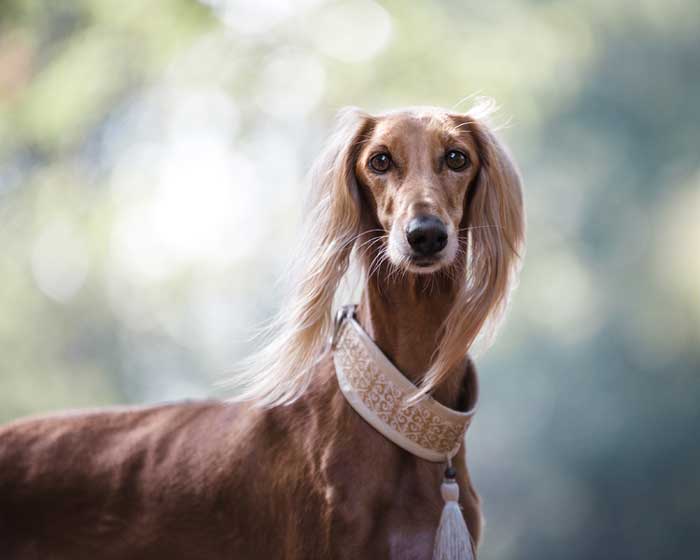
People call the Afghan the “King of Dogs” for that aristocratic look. Spend a week with one and you’ll meet the clown underneath it.
Short on time? Jump straight to the Fresh Patch real-grass pad
The breed reads as distant, even snobby. That cool exterior hides a sensitive, loyal dog with a famously laid-back streak. Most adults land around 50 to 60 pounds, so they take up less room than their height suggests.
They are peaceful by nature and rarely pushy. They do fine with older kids who already know how to handle a dog, and they get along with other pets in the home. Skip early socialization, though, and an Afghan can grow wary of strangers and unfamiliar animals. If they are not properly socialized from puppyhood, that aloofness hardens into distrust.
Training is the hard part. Afghans are independent thinkers, and housebreaking tests your patience. Stay calm, stay kind, stay firm, and keep at it. They will come around and they do want to please you. Just don’t expect the snappy obedience of a Border Collie.
That gorgeous coat is a commitment. You’ll be brushing it carefully a couple of times a week to keep the long, silky hair from matting. The most common owner mistake is letting grooming slide, then facing a tangled mess that needs scissors.
They also burn more energy than most large breeds. Plan on a long daily walk, and a jog when you can manage it.
Give an Afghan that exercise and a small apartment suits them fine. They love being indoors and will spend most of the day stretched out on the sofa, which is exactly what a lot of apartment dwellers want from a roommate.
2. American Staffordshire Terrier
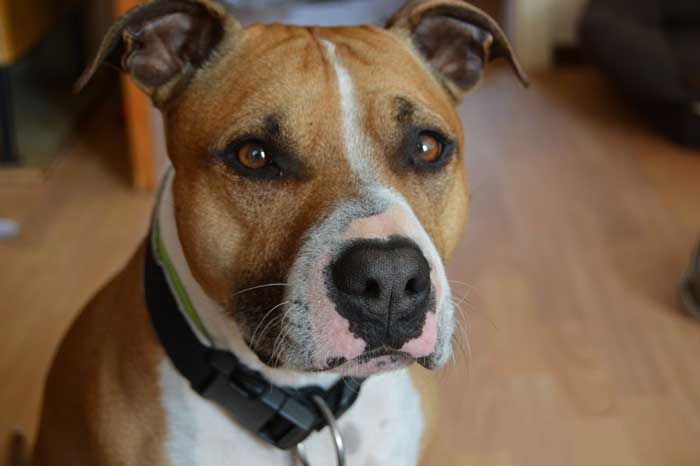
That blocky head and muscled frame look intimidating. The dog underneath is loyal, affectionate, and good-natured, usually weighing somewhere between 40 and 70 pounds.
They are smart and obedient, and they pour their affection onto their people, kids especially.
They guard their family and their turf. Read a real threat and an AmStaff can switch on fast. Socialize and train one properly, though, and you get a steady, devoted companion that bonds hard to its household.
Training comes easy because the breed is clever, but clever dogs test boundaries. Be consistent. Firm and gentle, every time, so the rules never blur.
They need regular exercise too. Daily walks, plus games that get them moving and thinking.
A bored AmStaff is a restless AmStaff. Without an outlet, that energy turns into pacing and chewing. An obedience class kills two birds, working the body and the brain at once.
Keep up the daily exercise and mental work, and they settle into apartment life without trouble.
3. Bernese Mountain Dog
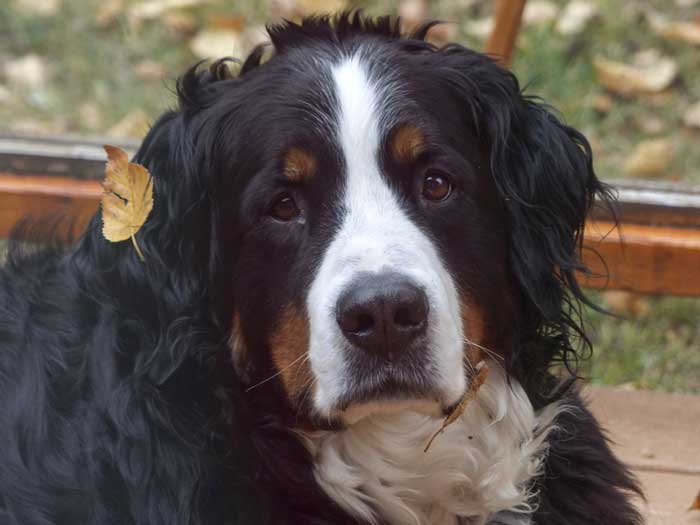
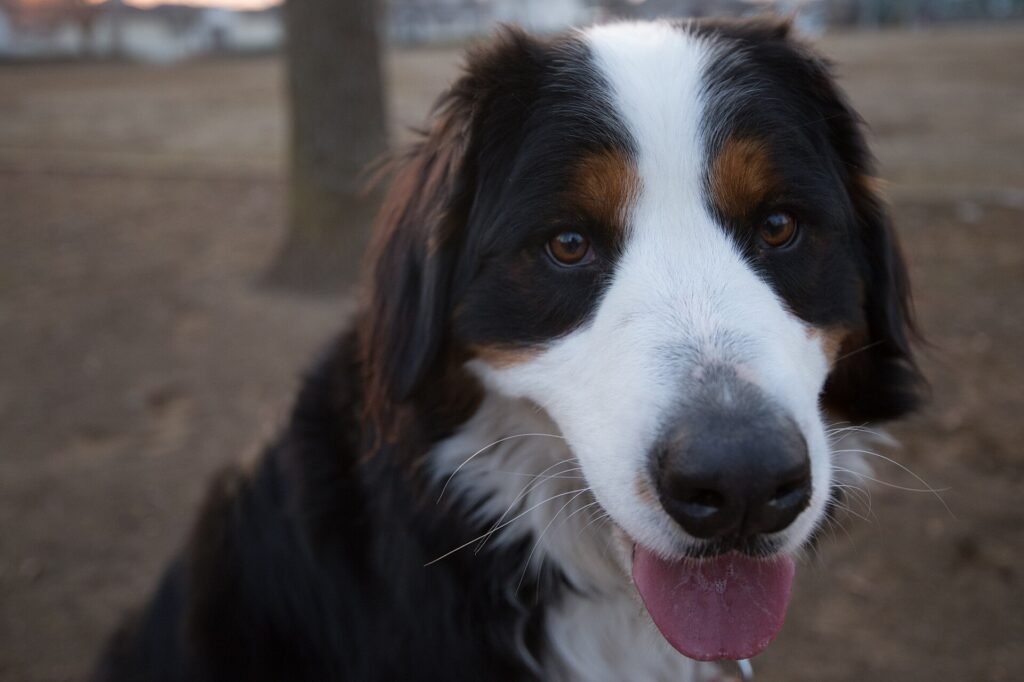
Berners are cheerful, gentle, and easy to like. They are patient with children, warm toward strangers, and they mix well with other pets. Adults run big, roughly 70 to 115 pounds.
Here’s a quirk worth knowing. They mature slowly and keep acting like overgrown puppies well past the age other breeds settle down.
They make confident, alert watchdogs. The catch is volume. A Berner barks a lot, and it barks loud, which your neighbors will notice through the wall.
This is a smart, sensitive dog, so train gently and stay firm. Like every big breed on this list, a Berner needs early socialization and steady training that continues for life, not just through the puppy months.
They want activity but tire out fast. Regular exercise is non-negotiable, and so is mental work. A puzzle feeder or a training session matters as much as the walk itself.
Their size makes tight hallways awkward. Even so, Berners suit apartments well because they are calm and well-mannered indoors, as long as you cover both the physical and the mental side of their needs.
4. Boxer
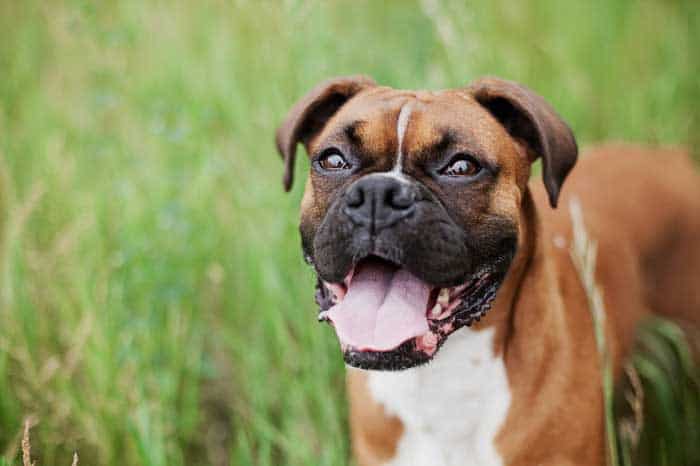
Boxers show up in therapy and service work alongside Labs and Goldens. They are reliable and alert, and they make solid watchdogs. Most weigh 50 to 80 pounds.
They are clowns at heart, playful and deeply attached to their families. A Boxer wants to be in the middle of whatever you’re doing. They can turn shy and suspicious around strangers, which is normal and manageable.
Train them with patience and a consistent hand. Harsh corrections backfire badly with this breed. Start simple so the dog builds confidence, then layer in harder skills once the basics stick. The good news on housebreaking: Boxers are naturally clean, so it usually goes quickly.
Energy is the headline for the first few years. Until about two or three, a Boxer is a bouncing, leaping, ramping machine. After that they mellow into steady, affectionate companions for the rest of their lives.
Budget at least an hour of exercise a day, whether that’s long walks or hard play. One real warning: don’t push a Boxer in the heat. The short muzzle makes them prone to heatstroke, so save the hard sessions for cooler hours.
They need plenty of mental stimulation and early socialization to grow into a stable, even-keeled adult.
Boxers can live well in a small apartment with the proper physical and mental activity.
5. Bullmastiff

Bullmastiffs are mild, docile, and even-tempered. They are also fiercely loyal and protective of the people they live with. This is a heavy dog, commonly 100 to 130 pounds, so the calm temperament is a relief.
They make excellent family dogs, tolerant with children and friendly with other pets once they’ve been properly socialized.
Grooming is simple. The short coat sheds steadily, so a weekly brush keeps the loose hair off your furniture and that’s about the whole job.
They are bright and want to please, which makes basic training straightforward. The stubborn streak is real, though. Start socialization and obedience early to keep that dominant side in check before the dog outweighs you. Related reading on the blog: what to check before signing a lease with a dog.
Bullmastiffs are not active dogs. They like to lounge and keep things low-key at home. Add the fact that they rarely bark, give them their daily walk, and you’ve got a genuinely good apartment dog.
6. Clumber Spaniel
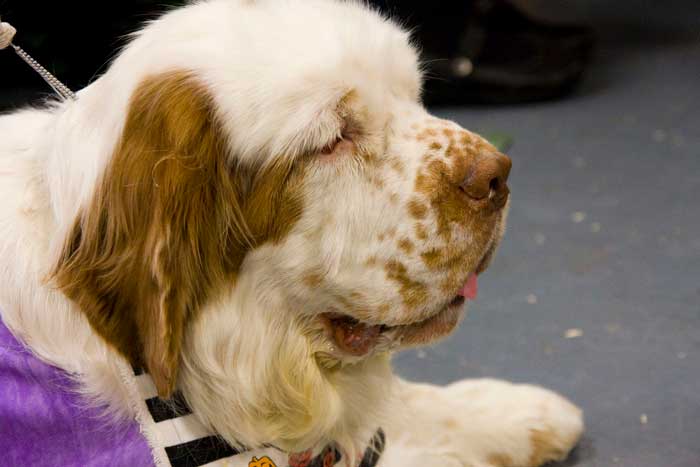
Clumbers are gentle, affectionate, and easygoing. They are also smart and independent, which cuts both ways. Without clear training and leadership, that independence shades into pure stubbornness. Most weigh 55 to 85 pounds on a low, sturdy frame.
The flip side is that they train readily for an owner who stays calm and assertive.
They are playful and good with children and other pets, but reserved around strangers, so start socializing early.
Puppies are bouncy and full of beans. Adults are not. A grown Clumber is happiest resting on the couch, sleeping, and eating, so you’ll need to make sure they still get at least an hour of exercise a day to stay healthy and trim. They put on weight easily.
They adapt well to apartment life since they are not barking dogs and are not active indoors.
7. Dogue de Bordeaux
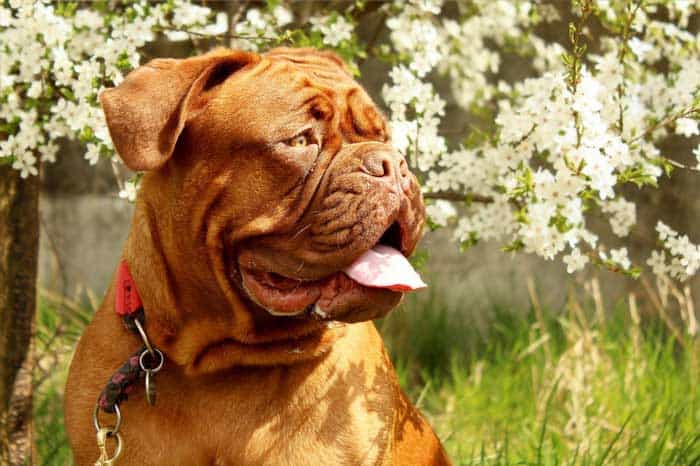
They look fearless and they are strong, but the temperament is friendly and pleasant. A Dogue de Bordeaux is mild, patient, and devoted to its family, kids included. These are dense, powerful dogs, often 99 pounds and up.
The guarding instinct is strong, so watch that it doesn’t curdle into suspicion of every stranger and dog you pass. Socialize them early and they learn to tell a real threat from a friendly hello.
Training is essential here, not optional. This breed needs clear leadership and firm limits. Skip the calm, consistent guidance and you end up with a stubborn, dominant dog that develops problem behaviors you’ll struggle to undo.
The payoff is that Dogues are quiet indoors and only ask for moderate daily exercise, which makes them surprisingly good apartment dogs. Just make sure they finish their walks genuinely tired. That’s what keeps them healthy and content.
8. Golden Retriever
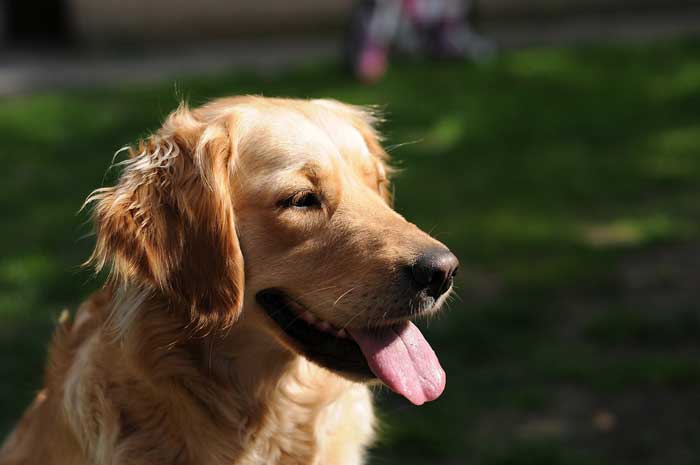
The Golden is a guide dog, a service dog, and for a lot of households the family dog. Smart, obedient, good-natured, and always game to learn. Adults usually weigh 55 to 75 pounds.
They are loyal and social, happiest in the thick of family life, and they are reliably gentle with children of every age.
Don’t count on a Golden for security. They barely bark and have no real guard instinct, which makes them lousy watchdogs and lovely companions.
This is one of the brightest breeds around. Goldens are easy to train and they soak up obedience work.
They crave activity and company in equal measure. Leave one alone too long and it gets unhappy, sometimes destructively so. That separation sensitivity is the thing apartment owners underestimate most.
Goldens are perfect for people who hike, camp, or just spend a lot of time outdoors.
They are active and need real daily exercise to stay healthy and to keep chewing and other bad habits from creeping in.
Because they are so friendly with people and animals alike, and as long as you meet their exercise needs, Golden Retrievers can be great apartment dogs.
9. Greyhound
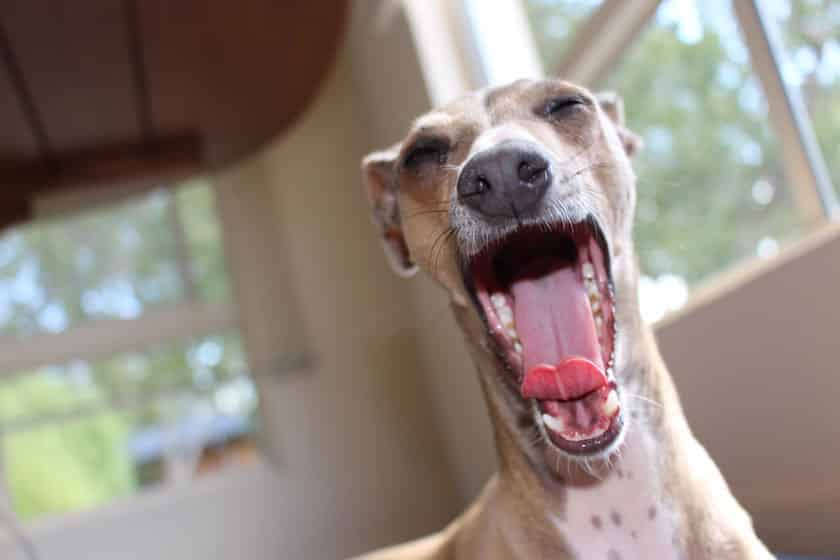
Forget the racetrack image. Despite that reputation, Greyhounds tend to be one of the best apartment dogs you can find, quiet and well-mannered and content to do their own thing. They are sprinters, not endurance athletes, and they spend most of the day asleep.
They are loyal, lovable, and they genuinely enjoy human company. The breed has a shy reputation, but steady socialization brings out a more confident, sociable side. Adults typically weigh 60 to 70 pounds yet feel lighter, all legs and lean muscle.
They want calm. A loud, chaotic household wears on them, and that’s why they have limited patience for small children. Most aren’t recommended for homes with kids under eight.
Greyhounds are sensitive and independent, so training takes patience and a light touch rather than pressure.
They enjoy exercise more than they strictly need it, and they adore a long nap and a cuddle on the sofa afterward. The trick is not letting that nap habit tip into total inactivity.
Long walks are a treat, but a few short walks spread through the day cover their needs just fine.
10. Great Dane
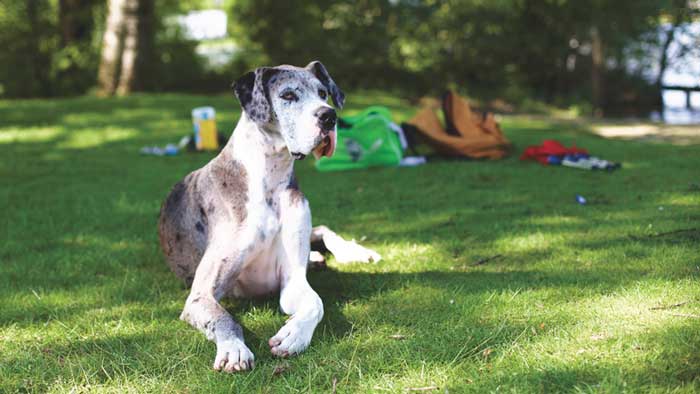
The “gentle giant” tag fits. The Great Dane is one of the tallest breeds in the world and one of the most good-hearted, with many adults topping 110 pounds and the biggest males well past 150.
They make wonderful family dogs, loyal and friendly and affectionate, plus playful and patient with kids.
They have a history as water rescuers and they’ll keep an eye on the door, though they rarely bark to announce anything.
With their easygoing, upbeat nature, Great Danes respond eagerly to training and like having a job to do.
They need surprisingly little exercise and are almost inert indoors, where they’ll claim the biggest, softest spot in the place.
Give them a long daily walk, but go easy. Too much running strains those long legs. The common mistake is over-exercising a puppy whose joints are still forming, which sets up hip and joint trouble later. Keep young Danes to gentle activity.
For all that height, the breed adapts well to apartment living because they simply aren’t active dogs, and they’re reliable and easy around everyone they meet.
It’s fair to say the Great Dane is one of best big dogs for apartments.
11. Irish Wolfhound
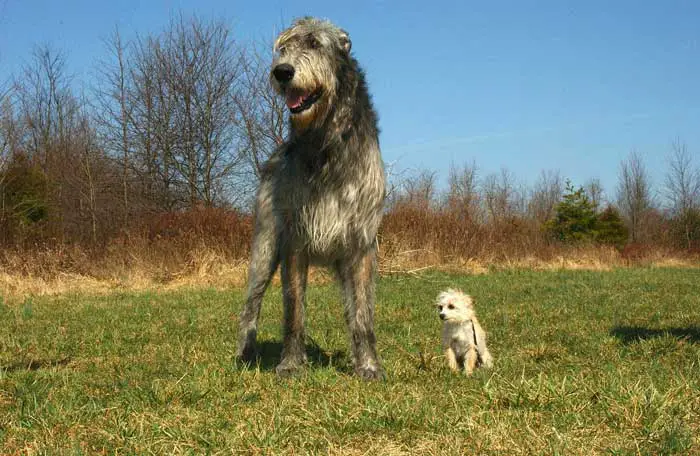
This is the tallest breed there is, so plenty of people write it off as an apartment dog on sight. Standing on hind legs, an Irish Wolfhound can look you in the eye.
The reality flips that assumption. They are easygoing, mild, and nearly motionless indoors, which is exactly what makes them adapt so well to apartments.
They are warm and affectionate with their family and remarkably patient with children of all ages, because they play with a gentleness their size doesn’t predict.
They are friendly toward strangers and other pets, but it still pays to socialize them with new dogs and people so they don’t spook easily.
Wolfhounds are smart and eager to please, which keeps training manageable. Start as early as you can. A puppy you can still pick up is a lot easier to shape than a 120-pound adult who has decided not to cooperate.
They need regular exercise to stay sound in body and mind. Some days they’ll act like they’d rather not, but they still need to get out and walk or run twice a day.
Owners often describe the Irish Wolfhound as the closest thing to a perfect companion, a calm shadow that follows you room to room.
12. Mastiff
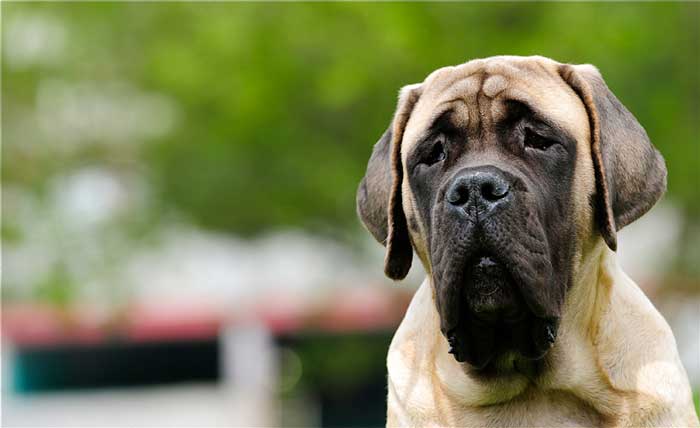
Mastiffs are easy to live with, great company, and natural guardians. They are also one of the heaviest breeds alive, with big males pushing well past 200 pounds.
Friendly, loyal, and gentle, they want to be near their people and bond tightly to the household.
For all that confidence and watchfulness, they are known for being patient and wonderful with kids.
A Mastiff barely barks, yet it will plant itself between its family and anything it reads as a threat. Socialize one well so it doesn’t grow guarded around every visitor.
They get stubborn now and then, but they’re smart and want to please, so training and housebreaking usually go smoothly.
Indoors they are moderately inactive, sliding toward lazy.
You still owe them regular daily exercise. A daily walk keeps a Mastiff relaxed and burns off both physical and mental steam. Don’t overdo it, though. Too much pounding can bring on hip and joint problems in a frame this heavy.
The same rule goes double for puppies. Keep their exercise light. They need movement, but overworking growing joints does lasting damage.
With enough exercise, a Mastiff makes a great large-breed apartment dog.
13. Newfoundland
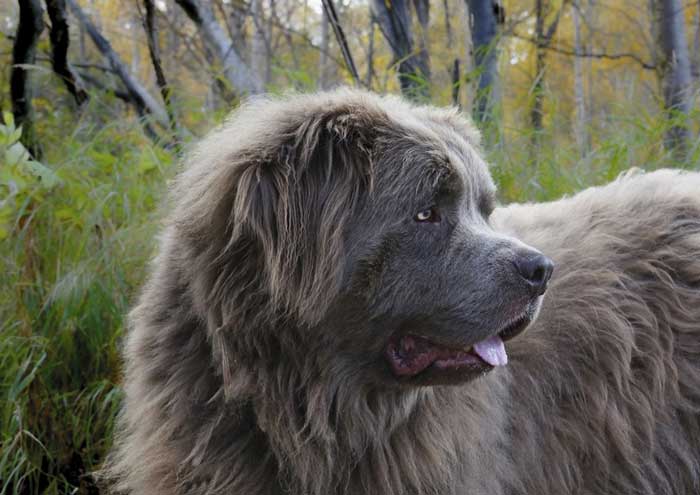
The Newfoundland is a superb family dog, sweet and affectionate and gentle to the core. Most adults weigh 100 to 150 pounds and carry a thick double coat built for cold water.
They are protective in a quiet, deliberate way, and a Newfie will put itself between its people and any danger it senses.
They are exceptional with children, protective and patient and careful in equal measure.
They are bright and rank among the easiest breeds to train. Owners joke that a Newfoundland nearly housebreaks itself.
They are also one of the laziest, most inactive breeds indoors, which is the part you have to manage. Their exercise needs are modest, but a Newfie skips activity given the chance, so regular walks matter for keeping obesity and the health problems that follow it at bay.
The Newfoundland is an excellent big dog for apartment life. They settle into small spaces because they aren’t active, and they move with real care around the furniture and clutter in their path.
14. Rhodesian Ridgeback
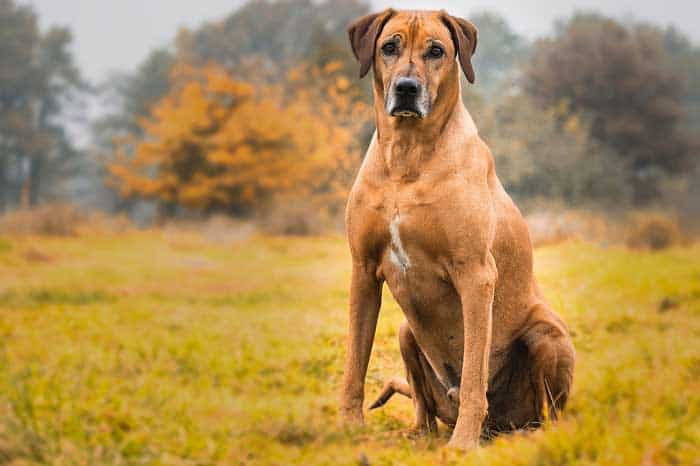
Smart, strong, and close to their family, Ridgebacks guard the people they love and stay reserved with everyone else. Adults usually weigh 70 to 85 pounds of solid muscle.
They are loyal and good-natured, but they can play rough, so they aren’t always the right match for young children.
At home a Ridgeback is calm, gentle, and obedient. Out in the world, that stubborn streak shows up, which is why you start training in puppyhood.
Being clever and headstrong at once, they bore fast and tune you out mid-session. That combination makes them a breed for dedicated owners, not first-timers looking for an easy ride.
Set clear leadership early, run daily training sessions, and give them enough physical and mental work to stay healthy and happy.
This is an athletic, high-energy breed. They want vigorous, regular exercise for the body and the mind both.
Here’s the saving grace. As wired as they are outdoors, Ridgebacks go calm and polite the moment they’re inside. Meet their exercise quota and the Rhodesian Ridgeback makes a perfectly good apartment dog.
15. Saint Bernard
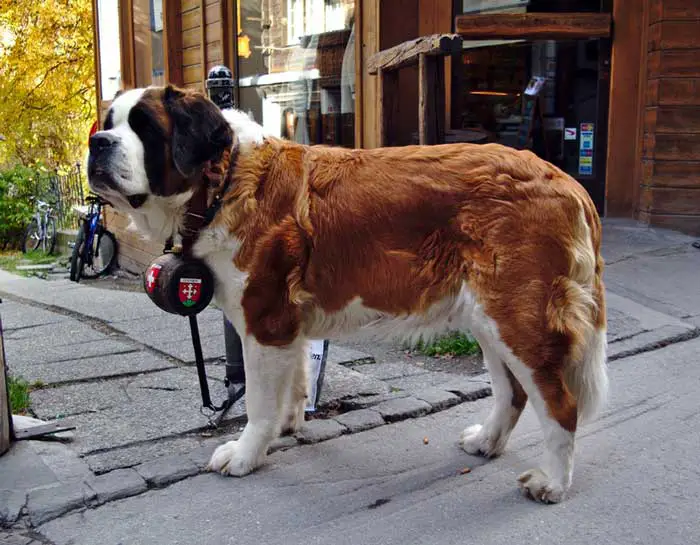
The Saint Bernard is friendly, gentle, and calm, devoted to its family and endlessly patient with children. These are mountain-rescue dogs by heritage, and adults often weigh 120 to 180 pounds.
They love being around people, but they still need early socialization to bond comfortably with other humans and animals.
They are protective and make excellent companions for apartment dwellers, growing close and watchful over their household. Keep one happy with love, time, and training. They are intelligent, so the training itself comes easy.
For such a big dog, they only need moderate daily exercise. Regular activity staves off boredom, but don’t over-exercise a Saint Bernard. The weight that already sits on their joints means too much hard work invites the same hip and joint problems you see in other giants.
Despite the size, the Saint Bernard fits apartment life well as long as you give it the time, training, and exercise it needs.
16. Shiloh Shepherd
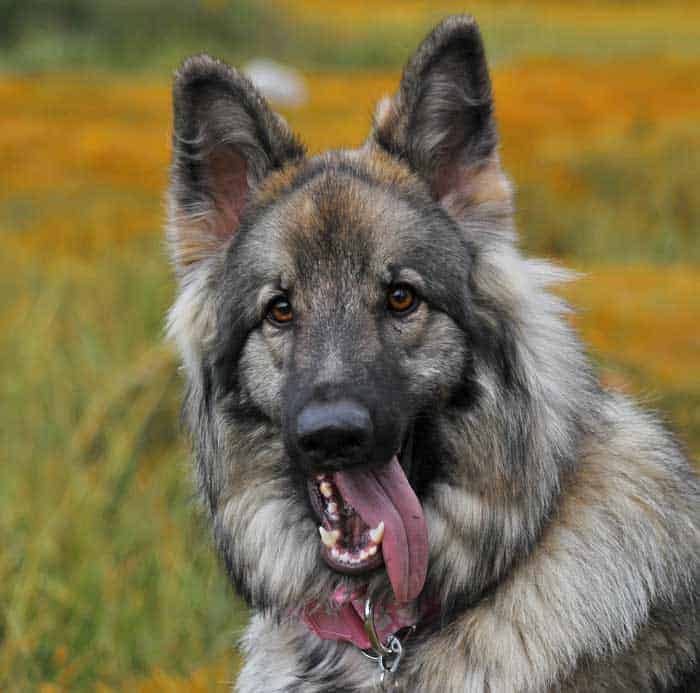
Bred for a stable, friendly, mellow temperament, these gentle giants make excellent family pets. Think German Shepherd looks on a larger, calmer frame, often 80 to 130 pounds.
They are loyal and loving, protective of their family, and patient enough to count as ideal companions for kids. Some run strongly protective, so socialize them early to keep that instinct balanced.
They train fairly easily because they are intelligent and always ready to work.
A smart dog needs a job. Keep a Shiloh mentally stimulated and give it regular exercise, or it’ll find its own entertainment.
They aren’t high-energy. Plenty of Shilohs are soft-tempered to the point that their main ambition is climbing into your lap.
Give one a long daily walk and proper exercise, and a Shiloh Shepherd lives happily in a small apartment.
17. Standard Poodle
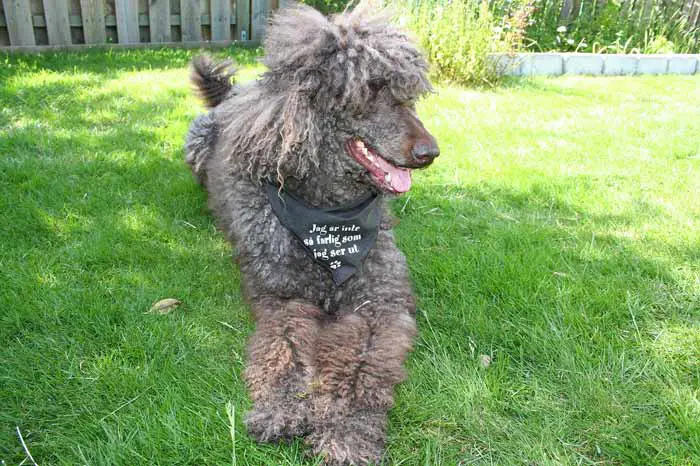
Standard Poodles are soft and sensitive, and they prefer a quiet home with little conflict or chaos. Most weigh 40 to 70 pounds and carry a curly, low-shedding coat that needs regular grooming.
They are lively and playful, yet calm, and they want company and attention. They stay polite with strangers and get along with other dogs and pets.
They make fine watchdogs too. Some have a sensitive protective streak, but they don’t tip over into aggression.
This is one of the smartest, most trainable breeds going, and that intelligence comes with a string attached. A Poodle needs steady mental work. Agility or advanced obedience does wonders, and a bored Poodle is the one that finds trouble.
They need a good amount of daily exercise. Energy ranges from moderate to high, so plan on jogging, brisk walks, and hard play to take the edge off.
Shortchange a Poodle on attention and activity and it gets bored, restless, and destructive in a hurry. Meet those needs and you get a calm, relatively inactive housemate who’s happy to nap the afternoon away in your apartment.
Final Thoughts
Size turns out to be a poor predictor of how a dog handles apartment living.
As these 17 large dog breeds show, a big dog often carries traits, a calm indoor nature, a low bark, a love of napping, that fit apartment life better than a wound-up small breed ever could.
So before you bring one home, learn what your specific breed actually needs day to day. Match the dog’s energy to your own, cover the exercise, and the square footage stops mattering.
Resources
- Largest Dog Breeds by The American Kennel Club
- The Best Giant Dog Breeds That Make Great Pets by The Spruce Pets
Frequently asked questions
Can big dogs really live in an apartment?
Yes. Energy level matters far more than size. A calm Great Dane settles into a flat better than a wound-up terrier, as long as it gets a proper walk twice a day.
Which dog breeds bark the least in apartments?
Greyhounds, Basenjis, Bulldogs and Cavaliers are among the quietest. Any dog can learn to be calm, but these simply start at a lower volume.
How much exercise does an apartment dog need?
Most do well on 30 to 60 minutes a day split into two walks, plus a little indoor play. Cut that short and the barking and chewing usually start.
Google lets you pick which sites come up first in your own results.