

A quick note: a few links below are affiliate links. Buy through one and we may earn a small commission. It never costs you more, and we only point to gear we'd actually put in front of our own dogs. As an Amazon Associate I earn from qualifying purchases.
Few dogs are as famous as Scooby-Doo. The greatest Great Dane of them all juggles a lot, ghosts and monsters one minute, splitting Scooby Snacks with Shaggy the next, then folding all 7 feet of himself into the back of the Mystery Machine.
Cramped as that van looks, Scooby never had to deal with the tight quarters of apartment living. Which leaves a real mystery worth solving. Are Great Danes good apartment dogs?
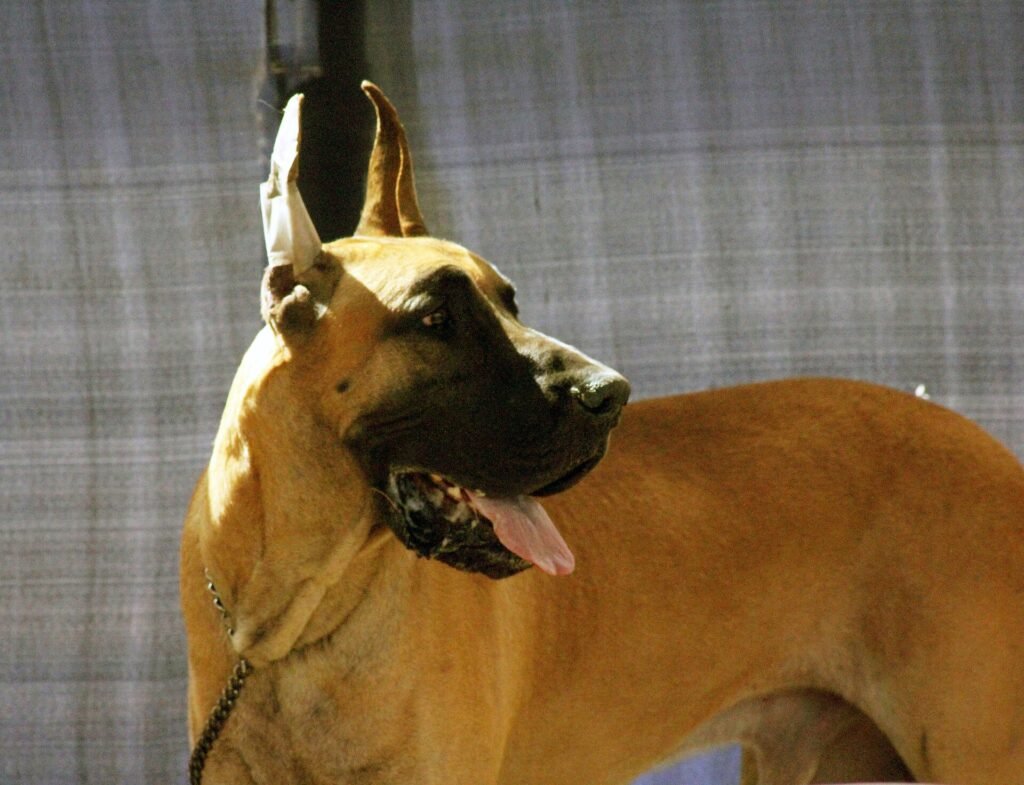
Great Danes are very good apartment dogs. Despite being a very large breed, they are low-energy dogs with a gentle and affectionate temperament which makes them perfect for apartment life.
That said, a few things need sorting out first if you want your Great Dane to actually thrive in a smaller space.
Check the Pet Policy First
Before you get ahead of yourself, make sure a Great Dane is even allowed in the building you have your eye on.
Plenty of apartments ban dogs outright. Others draw a line at “large dogs,” and a Great Dane clears that bar without trying. Call the leasing office and get a clear yes before you spend a minute thinking about training. A signed lease that forbids your dog is the worst time to find out.
Temperament Does the Heavy Lifting
The first question to ask about any apartment dog has nothing to do with size. It is temperament.
Take a Shih Tzu. Small enough that you could fit a dozen of them in one unit. Unwise, sure, but any Shih Tzu owner will tell you that one of those little furballs can be a total diva about its space, apartment or not.
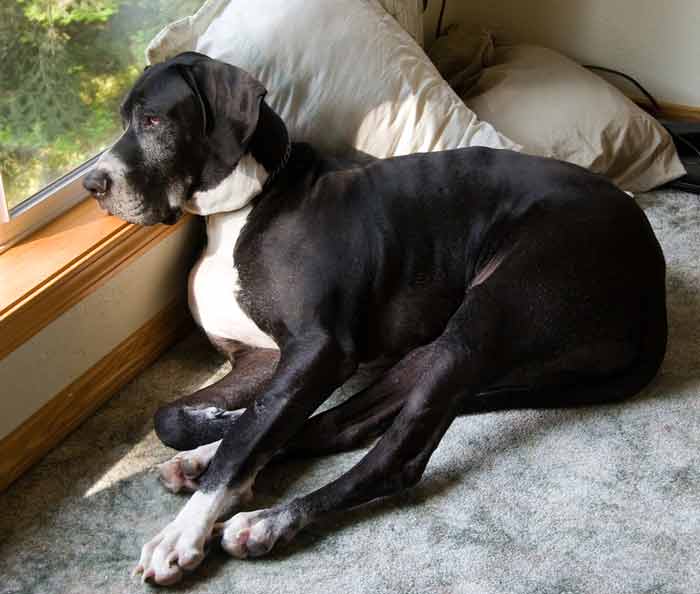
Great Danes are the opposite. “Diva” is the last word that fits them. For dogs this enormous they ask for almost nothing, temperament-wise. They are not the type to shred a couch or throw a fit when you leave the room.
Size, Space, and Where the Dog Fits

This is the part that worries most people. A Great Dane is a wall of dog.
Given how big these dogs get, it is fair to wonder whether four walls will start to feel like a shoebox to them.
Here is the good news. An apartment is not an automatic no for a Great Dane. They are low-maintenance dogs, and as you will see further down, they are oddly well suited to indoor life in ways that surprise first-time owners.
That leaves the size question. A few practical things come with sharing a small space with such a big dog:
- The sheer footprint a Great Dane takes up, sometimes just by standing in a narrow hallway
- That long, powerful tail, which can clear a coffee table of vases and picture frames in one happy wag
- A deep bark that carries straight through shared walls
Square footage alone is not the whole story. You could have a roomy apartment and still leave your dog no real spot to settle. So set aside an actual area for your dog, even if the place feels big.
You do not need a penthouse to house a Great Dane comfortably. These are clingy, affectionate dogs. If you are fine sharing a room with them, they will happily take you up on it.
However you split up the floor plan, leave enough room that the two of you are not constantly tripping over each other.
A Walk in the Park

Another thing to weigh is how much of an outdoor dog you are dealing with, and how that squares with being stuck inside most of the day. Big hunting breeds were built to range. They want ground to cover.
You might adore your Alaskan Husky or your Greyhound, but odds are neither one handles being cooped up all day. A Cocker Spaniel is the same story. These dogs run hot, and keeping one inside from morning to night usually ends badly for everyone.
You would expect a dog as massive as a Great Dane to fall in the same camp.
You would be mostly wrong.
Yes, Great Danes are big dogs that need space. But as covered above, there are ways to make a modest apartment feel like plenty of room for your pooch.
And while your Dane will get the zoomies during playtime, on the whole these are couch dogs at heart.
Unlike those wired spaniels, a Great Dane is happiest lounging next to you doing absolutely nothing. With the right training, the slow indoor rhythm of apartment life suits them down to the ground.
None of that excuses skipping exercise. Every breed needs it. The difference is that high-octane dogs like Greyhounds and busy hunters like Beagles are practically vibrating with energy, while Great Danes run far more lowkey. You will not have one whining at the door every hour the way some breeds do.
That does not let you off the hook for a good walk, though.
Regular walks matter for any dog, and twice as much for one kept inside most of the day.
Since an apartment rarely comes with a backyard, plan on walking your dog at the park or somewhere nearby at least once a day.
Start Training Early
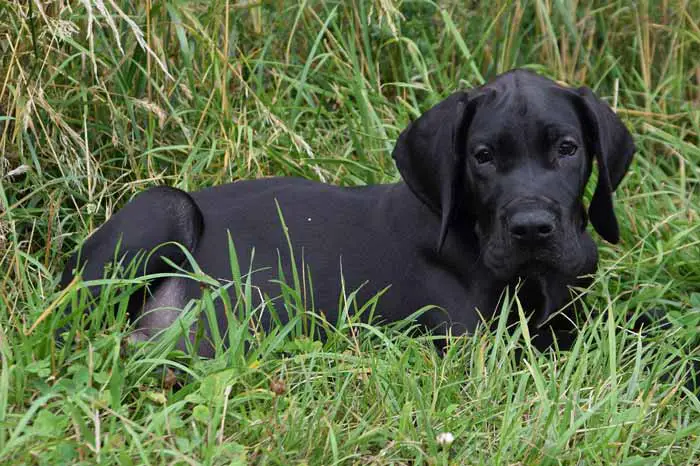
The surest way to raise an apartment-friendly Great Dane is to start while they are young. The earlier you teach the habits that make indoor life work, the easier the whole thing goes.
Crate Training
Crate training is one of the first habits to build.
On one hand, a crate gives your Great Dane a den of their own, a safe spot to rest and decompress. It also takes the edge off separation anxiety, since the dog has somewhere it feels protected and sure of itself.
On the other hand, as you will see shortly, the last thing you want in an apartment is “accidents.” A crate doubles as one of the better tools for potty training.
So you will want to start crate training early, along these lines:
- Train in an area that stays well ventilated
- Keep your Great Dane puppy out of direct sunlight and away from excessive heat during crate sessions
- Never leave your dog feeling completely isolated
- Toss a treat inside to coax your dog through the door
- Do not force them in
- Let the dog take its time walking in and getting comfortable
- Hand over another treat every time they sit through the full session
Buy the crate for the adult dog, not the puppy in front of you.
A Great Dane can top 200 pounds full grown. Keep that number in mind when you size the crate, and when you pick the apartment.
Potty Training Matters Most
Every dog has to be housebroken. That holds for a Great Dane whether you live in a studio or a mansion.
In an apartment, though, you are the one on the hook for the floors and carpet. Given the size of a Great Dane’s bladder, it only takes a couple of accidents to do real damage to an interior or a shared hallway.
Your landlord will not be thrilled. Even with a yes already in writing, a few messes can make them rethink the whole arrangement. That is not a conversation you want to have.
So make it a priority to get your Great Dane dog is fully potty trained before you ever carry a box through the door.
Toys Keep the Peace
Keep plenty of toys in rotation. A bored Great Dane is a problem waiting to happen, and idle paws this big can turn an afternoon into an apartment-wrecking project.
Besides, who wants to watch their big buddy mope around feeling sorry for itself?
Toys are thus a must for apartment life and for training sessions alike. Just make sure whatever you hand over is built tough. Anything flimsy turns to confetti in a Great Dane’s jaws.
Great Dane-Proofing the Apartment
To dodge the disasters above, Great Dane-proof your apartment well before the dog moves in.
Remember that these dogs are huge. A Great Dane can reach and topple things no other breed would ever get close to.
You might think you already know how to puppy-proof a room. Check again, this time picturing a tall dog that can hit 200 pounds.
Walls and countertops prove the point. Hang a picture or a clock and you assume it is safe up there. Set a hot dish on the counter and you assume the same.
You would be wrong.
Stand a Great Dane on its hind legs or let it jump, and it reaches several feet up. Plan your dog-proofing around an animal that can get its nose as high as a grown adult’s.
Pay close attention to where breakables and food end up. As gentle as Great Danes are, they carry enough mass to shatter a vase or an antique just by leaning against it.
That is not bad behavior. It is an accident, and the kind you head off before it happens.
When a dog smells food, the instinct is to go get it. A Great Dane has a much easier time reaching the counter than some little Shih Tzu.
Train your Great Dane well enough to resist, then store food high enough that one slip in that training does not cost you dinner.
Socializing Your Great Dane
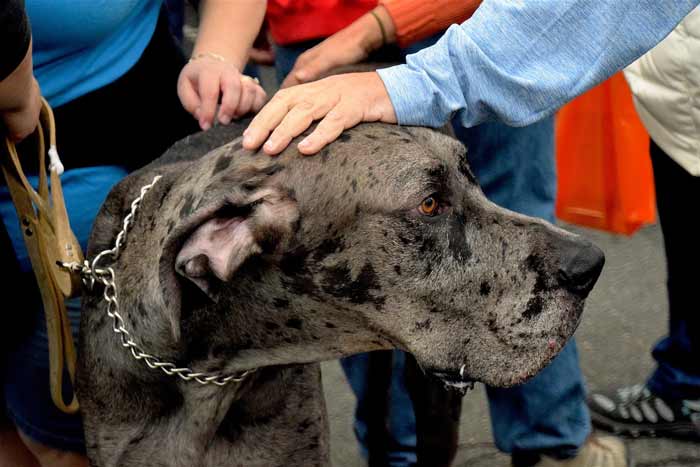
By now the theme is clear. Great Danes are sweethearts, and that is a big part of why people love them. They want to socialize, and as their owner you should want that for them too.
Still, you cannot turn a Great Dane loose on the world without a few ground rules in place first.
For starters, friendly as your dog is, not everyone returns the favor.
A large dog bounding toward a stranger can spook people, and smaller animals even more so. Teach your Great Dane to hang back, stay patient, and skip the full-speed greeting.
You will be sharing halls and elevators with a building full of neighbors, so your Great Dane has to be easy around strangers. Lucky for you, this is exactly where the breed shines. Their calm, friendly, drama-free streak makes them a natural fit for crowded buildings.
Final Thoughts
That easygoing nature and friendly streak are what make Great Danes ideal big dogs for the apartment lifestyle.
Plan around the size, stay ahead of the accidents, and life in an apartment with a Great Dane turns out cozy, a 150-pound shadow that follows you from room to room and asks for little more than a spot on the floor next to you.
Resources
- The Best Dog Breeds for Apartment Living by the American Kennel Club
Frequently asked questions
Can big dogs really live in an apartment?
Yes. Energy level matters far more than size. A calm Great Dane settles into a flat better than a wound-up terrier, as long as it gets a proper walk twice a day.
Which dog breeds bark the least in apartments?
Greyhounds, Basenjis, Bulldogs and Cavaliers are among the quietest. Any dog can learn to be calm, but these simply start at a lower volume.
How much exercise does an apartment dog need?
Most do well on 30 to 60 minutes a day split into two walks, plus a little indoor play. Cut that short and the barking and chewing usually start.
Google lets you pick which sites come up first in your own results.