

A quick note: a few links below are affiliate links. Buy through one and we may earn a small commission. It never costs you more, and we only point to gear we'd actually put in front of our own dogs. As an Amazon Associate I earn from qualifying purchases.
Quick answer
Yes, and it catches people off guard: a Newfoundland tips the scale near 130 pounds and still makes an easy apartment dog, because the breed is calm, slow-moving and content to settle into whatever space you give it. What it needs is a daily walk, early socialisation and consistent training from the day the puppy arrives. The real obstacles are your building's weight limit, the shedding and the drool, not the floor plan.
The Newfoundland, a “Newf” or “Newfie” if you ask the people who own one, is a giant working breed with a calm, almost sleepy temperament. Big dog, soft heart.
The breed comes from the coast of Newfoundland, Canada, where it hauled nets and lines for fishermen. That water-rescue instinct is still there. So is the habit of treating your whole family like its job.
Most people sizing up an apartment dog start with one question: how big is it going to get. Fair concern with this breed. So can a dog that tips the scale near 130 pounds actually live in a flat?
Yes. A Newfoundland can do well in an apartment because of its calm nature, gentle personality, and willingness to settle into whatever space you give it. Get the exercise right, socialize the dog early, train it consistently, and a Newfie makes a surprisingly easy roommate for its size.
The honest version is longer. You have to know what you are signing up for. This breed carries a few traits that will make or break apartment life, and you want to understand them before the dog is already sleeping across your hallway.
What Living With a Newfoundland Is Actually Like
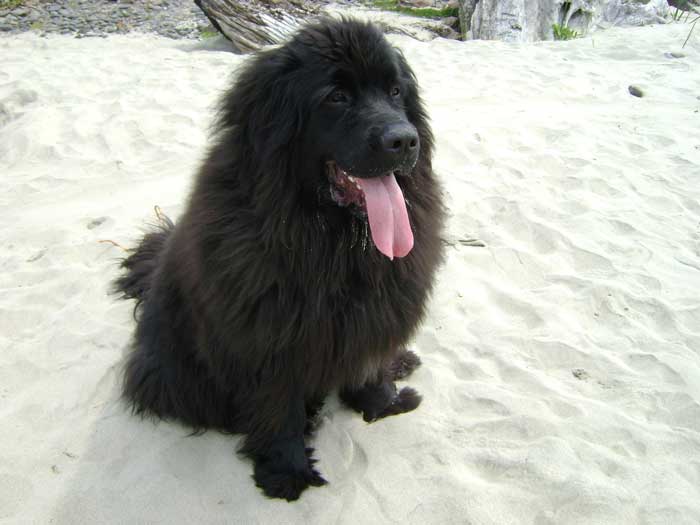
Newfies are loyal to a fault and genuinely affectionate. Ask anyone who owns one and the word that comes up first is sweet. They mean it.
This is a dog that wants to be in the room with you. Cooking, watching TV, folding laundry, it does not matter. The Newfoundland wants in on all of it.
Calm does not mean lazy, though. These dogs fit active households just fine, and they are happiest when there is something to do outside a few times a week.
Are Newfoundlands Good Family Dogs?
Few breeds slot into family life this naturally. The temperament runs calm, friendly, and patient, which is exactly what you want with kids in the house.
It is a social dog through and through. It likes people, and it likes being part of whatever the family is doing.
Protective? Yes. Aggressive? No. Those are two different things, and the Newfie lands firmly on the gentle side.
Newfoundlands have a reputation for being trustworthy and tolerant with children. The catch is physics. A dog this size can knock a toddler over without meaning any harm, or sit down right where a small child happens to be, so supervise the two of them the way you would around any giant breed.
Do Newfoundland Dogs Need a Lot of Exercise?
People assume a working breed means a high-energy dog that needs to run for miles. Not here. The Newfoundland was bred for water work, loves a hike or a swim, and can absolutely get playful, but its everyday needs are modest.
A moderate daily walk plus some play keeps an adult Newfie healthy and content. You are not going to burn this dog out, and you do not need to.
Here is the part owners underestimate. Newfoundlands grow fast and grow huge, and that puts real strain on developing joints. Hip and elbow trouble is common in the breed, and a lot of it traces back to too much hard exercise too young.
Puppies do not have much stamina anyway. They go hard in short bursts, then crash. Let them.
For roughly the first two years, skip anything that pounds those joints. No long forced runs, no repetitive jumping, no marathon walks on pavement.
A useful rule of thumb is five minutes of walking per month of age. So a four-month-old gets about 20 minutes. Treat it less like a workout and more like a chance for the puppy to sniff around and read the neighborhood.
Besides those short walks, a few low-impact ways to wear out a Newfoundland puppy:
- Free play. Loose, unstructured play indoors or out is one of the easiest ways to tire a puppy without grinding on the joints.
- Training. Start young while the dog is small and easy to handle. It works the body and the brain at the same time.
- Swimming. Newfies are born for water. Introducing a puppy to it early builds those natural swimming muscles and gives you a joint-friendly way to burn energy.
While the dog is still growing, avoid:
- Running them on hard surfaces.
- Jumping
- Climbing stairs
As the dog matures, build the walks up gradually. A grown Newfoundland can handle up to about an hour of activity a day. Your vet can tell you when this particular dog is ready for tougher stuff, since growth plates close at different times.
One more thing. This is a cold-weather dog under a heavy coat, and it overheats easily. Walk in the cooler hours, morning and evening, and stay home with it on hot afternoons.
And the water. If you can get a Newfie swimming on any kind of regular basis, do it. You get extra exercise that goes easy on the joints, and you get the happiest version of your dog.
Are Newfoundland Dogs High Maintenance?
On grooming alone, yes. This is a high-maintenance coat, full stop.
That thick, water-resistant double coat needs brushing a few times a week. Skip it and you get mats, dead undercoat, and hair packed against the skin. Stay on top of it and the coat stays healthy.
Day to day, a Newfoundland is a moderate shedder, and regular brushing keeps the fallout manageable. Then spring and fall arrive. The coat blows, the hair comes off in clumps, and you will be brushing daily just to keep up.
Bathe when the dog is actually dirty rather than on a schedule. With a Newfie that drags its coat through every puddle, dirty can come around pretty often.
Then there is the drool. Plan on keeping a hand towel nearby. After the dog drinks, or shakes, you will want it.
Past the coat and the slobber, the rest is ordinary dog care.
- Trim the nails when they get long.
- Brush the teeth weekly to head off bad breath and gum disease.
- Check and clean the ears so they do not get infected.
Are Newfoundlands Easy to Train?
Generally, yes. Newfies are outgoing, eager to please, and quick on the uptake. They like having a job to figure out, and they pick things up fast.
What they need is a soft hand. Gentle, reward-based training gets the best out of this breed. Go harsh and you will lose the dog’s trust, and a Newfoundland that does not trust you is hard to win back.
Start early, while the dog still weighs less than you do. An adult Newfie can hit 130 pounds or more, and at that size, a dog that never learned the basics is a genuine handful.
Are Newfoundlands Hard to Potty Train?
Not particularly. These are smart dogs that learn quickly, which makes them relatively easy to potty train compared with a lot of breeds.
Lean on positive reinforcement. Reward the right behavior and this breed catches on fast.
The goal is simple. The puppy learns that the bathroom is a specific spot outside, not the living room rug.
Young puppies need to go often, sometimes every hour. Their bladder control stretches out as they grow, so the early weeks are the demanding ones.
At the start, take the puppy out frequently to the same chosen potty area. You will both be making the trip several times a day, so pick somewhere close to the building, ideally with grass.
Every time the puppy goes in the right place, praise it and hand over a treat. Make the good spot the rewarding spot.
Never scold a Newfie for an accident indoors. Punishment after the fact teaches the dog to hide where it goes, not to hold it.
Catch it mid-accident? Make a quick sound to interrupt, scoop the dog up, and get it to the designated spot to finish. Then praise and reward like it was the plan all along.
Clean any indoor accident with an enzymatic cleaner, not just a regular one. If the scent lingers, the dog reads it as a marked bathroom and goes back to the same patch.
Stay patient and stay consistent. Sooner than you would expect, the dog starts telling you when it needs to head outside.
Can Newfoundlands Be Left Alone?
This breed wants its people close. Company is not a luxury for a Newfoundland, it is closer to a need.
Leave a Newfie alone too often, or for too long, and separation anxiety can set in. That shows up as chewing, pacing, whining, the works.
A house where everyone is gone ten hours a day is a poor match for this dog. It does not cope well with that kind of empty schedule.
None of that means a Newfie can never be home by itself. Tire the dog out with a solid exercise session first, and it will happily sleep the afternoon away on the sofa while you are out.
Leaving a few favorite toys helps too. A bored Newfoundland will chew. Better the toys than your furniture.
Doggie daycare is worth a look as well. A day spent playing with other dogs beats a day spent staring at the door alone.
Do Newfoundland Dogs Bark a Lot?
The voice is impressive. Deep, loud, the kind of bark that fills a stairwell. They just do not use it much, though there are exceptions in every litter.
Most Newfies bark only now and then. A few turn out to love the sound of their own voice. It really comes down to the individual dog and how it was raised.
When a Newfoundland does sound off, it is usually for one of these reasons:
- Barking at strangers to warn them off and guard the home.
- Barking at other dogs, often down to what trainers call barrier aggression and leash reactivity.
A well-socialized dog barks less. Early exposure to people, places, and other dogs builds the kind of confidence that keeps a Newfie from turning fearful or suspicious, and a confident dog has less to bark about.
If your Newfie does get going, the move is to settle it rather than shout over it.
Call the dog over to you, or go to it. Get its attention, ask for a sit or a down, and reward the quiet once it lands. You are paying for calm, not noise.
Are Newfoundland Dogs Protective?
Protective, yes, in the way that matters most. Newfoundlands are calm and friendly to a fault, and they still keep a quiet eye on their family.
Do not mistake that for guard-dog instinct, though. If a burglar walked into your apartment while you were out, the odds are good your Newfie would wag its tail and offer a tour rather than raise the alarm.
What it protects is the family, especially the kids. When a Newfoundland senses something is off around the children, it will work to put space between them and whatever it reads as the threat.
That often looks like the dog physically planting itself between your family and the danger. It is instinct, not training.
So no, this is not the breed to buy as a watchdog. It is the breed that looks after the people it loves.
Is a Newfoundland a Good Apartment Dog?
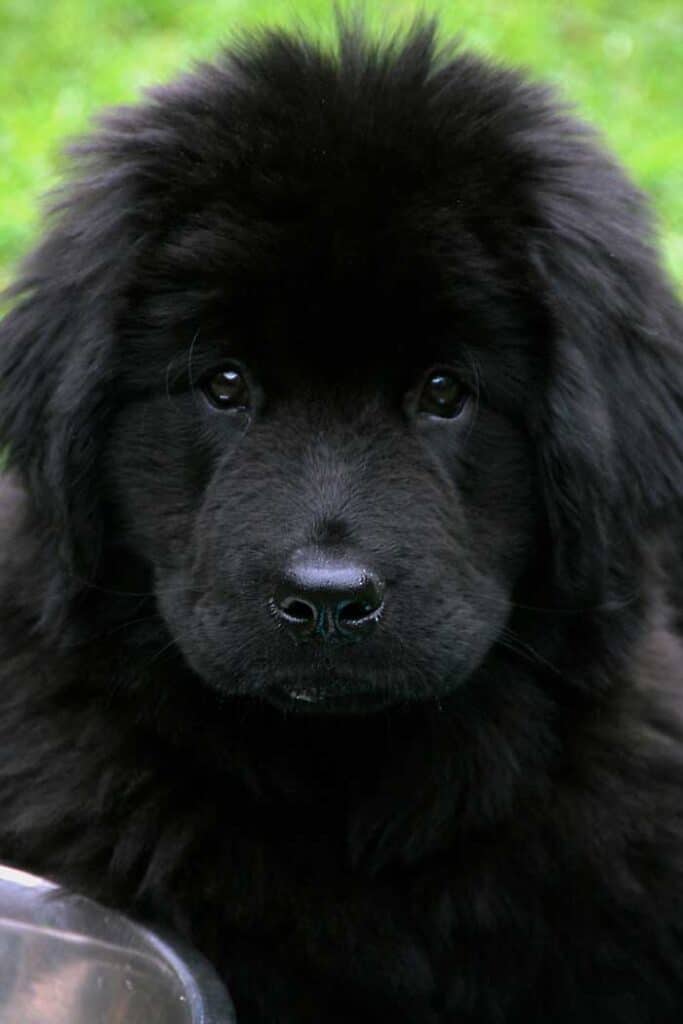
Size aside, this breed is built for it. The calm temperament and the friendly, people-focused personality make a Newfoundland an excellent apartment dog, big body and all. It is loyal, protective of its family, and never happier than when it is near its people.
Newfoundlands are big apartment dogs that do well even in tight spaces, as long as they get enough daily exercise and are not left alone for hours on end.
And it all rests on the early work. Train and socialize the dog from puppyhood. That is what turns a giant breed into a manageable apartment companion, for the dog’s sake and yours.
Tips for Raising a Newfoundland in an Apartment
Check Your Apartment’s Pet Restrictions First
Before you fall for a Newfoundland puppy, read your lease. The building’s pet policy decides whether any of this is even possible.
Policies vary by landlord, and one of the most common limits is a weight cap.
Plenty of buildings draw the line at 55 pounds. Management worries about damage and about the noise a large dog can make, fair or not.
Now do the math. A full-grown Newfoundland often runs from about 100 pounds on a female to 150 or more on a male. Against a 55-pound cap, that is not a close call, and a weight restriction can quietly end the whole plan before it starts.
Living With a Giant Dog
You cannot plan around a Newfoundland without planning around its size. It shapes everything.
Here is the funny part. Calm as they are, Newfies have no idea how big they are. Plenty of them will try to climb into your lap like a 10-pound terrier.
So you adapt the apartment to the dog. A little setup work up front saves you a lot of broken things later.
Move the breakables. Anything a swinging body or a turning shoulder could knock over should come off the low shelves, decorations and lamps included. Even a TV on a flimsy stand is fair game.
Keep an eye on young kids too. At this size, the dog can bump a small child over without ever noticing.
And do not laugh off the tail. A happy Newfoundland tail swings at coffee-table height and clears a coffee table just as fast. That wag is a real hazard indoors.
Start Training and Socializing the Day Your Puppy Comes Home
Every dog benefits from training and socializing. With a Newfoundland, it is not optional.
The reasoning is straightforward. This breed grows enormous, and it grows fast, so the window where you can easily shape behavior is short. Wait until the dog is full grown and you are negotiating with 130-plus pounds of opinion.
Newfies are not aggressive by nature. They still need to learn how to meet new people, greet other dogs, and stay relaxed around other animals. That comfort is built, not born.
Get on leash training early, too. If a grown Newfoundland decides to lunge after something mid-walk, you are not stopping it through strength. Your only real brake is the training you put in as a puppy.
The good news, again, is that this breed makes it easy. Newfies are smart, fast to learn, eager to please, and they enjoy the work.
Bring patience, a gentle hand, and a pocket of treats, and training a Newfoundland turns into something you both look forward to. It also builds the bond, which is half the point.
Dealing With Heavy Shedding
Make no mistake, the Newfoundland is one of the heaviest shedders in the dog world. The coat that protects it in cold water ends up all over your home.
Live with a Newfie and you stop noticing the hair after a while. It is on your clothes, woven into the rugs, drifting under the couch, settled in every corner.
Plan on vacuuming and sweeping often, plus regular grooming sessions with the dog. Stay ahead of the coat and it is manageable. Fall behind and the apartment shows it fast.
Final Thoughts
If your days are packed and your home sits empty for long stretches, skip this breed. A Newfoundland will not thrive in that life, and it is not fair to ask it to.
But if you have the time to share your space with the dog, and the energy to give it the steady, joint-friendly exercise it needs, a Newfoundland turns into a remarkable apartment companion. Big, soft, and devoted to the people in the room.
Bringing one home is a commitment measured in years and pounds. Go in certain you can meet this dog’s needs, the emotional ones as much as the physical, so it gets the happy, healthy life it gives back tenfold.
Resources
- 10 Good Dogs for Small Spaces by The Animal Rescue Site
- Newfoundland (Newfie): Dog Breed Characteristics & Care by My Brown Newfies
Frequently asked questions
Can big dogs really live in an apartment?
Yes. Energy level matters far more than size. A calm Great Dane settles into a flat better than a wound-up terrier, as long as it gets a proper walk twice a day.
Which dog breeds bark the least in apartments?
Greyhounds, Basenjis, Bulldogs and Cavaliers are among the quietest. Any dog can learn to be calm, but these simply start at a lower volume.
How much exercise does an apartment dog need?
Most do well on 30 to 60 minutes a day split into two walks, plus a little indoor play. Cut that short and the barking and chewing usually start.
Google lets you pick which sites come up first in your own results.