


A quick note: a few links below are affiliate links. Buy through one and we may earn a small commission. It never costs you more, and we only point to gear we'd actually put in front of our own dogs. As an Amazon Associate I earn from qualifying purchases.
A dog that alerts you to a stranger at the door is useful in an apartment. A dog that is hard to manage in a shared hallway is not. The breeds below sit between those two, and each profile here comes from the American Kennel Club’s own breed page, linked where a fact is used.
Size, a protective temperament and a dog that does not bark without reason are what to look for. Numbers for height and weight are the AKC’s breed standards. Your individual dog will vary, and so will its training.
1. American Bulldog

The AKC lists the American Bulldog at 20 to 25 inches tall and 60 to 100 pounds, with males at the top of both ranges. That is a lot of dog for a flat, and it reads as one on sight.
Short on time? Jump straight to the Fresh Patch real-grass pad
The breed’s history explains the job. The AKC describes the American Bulldog as a descendant of the English Bulldog that worked on farms as a guardian, stock dog and catch dog, and says its primary job has always been to work as a hog and cattle dog and a protector of personal property.
That makes it a dog that watches what is yours. The same working background means it needs real activity, and the AKC notes that the breed does not do well being left alone in a back yard because of pent-up energy. In an apartment, plan for daily exercise and training, not just a loud bark at the door.
2. American Staffordshire Terrier

The AKC describes the AmStaff as a stocky, muscular bull-type terrier standing 17 to 19 inches at the shoulder. Males weigh 55 to 70 pounds and females 40 to 55 pounds.
On temperament, the AKC calls them smart, confident, good-natured companions and excellent guardians, and says their courage is proverbial.
One caution from the same page: dog aggression can develop, so socialization and training are part of owning one. Your building has shared hallways and an elevator, and a dog that meets other dogs calmly matters more there than in a house.
3. Boxer

The AKC puts male Boxers at 23 to 25 inches and 65 to 80 pounds, with females about 15 pounds lighter.
On guarding, the breed profile says Boxers take the jobs of watchdog and family guardian seriously and will meet threats fearlessly. It also describes them as upbeat, playful and good with children, and says they do best when exposed to many people and other animals in early puppyhood.
Our guide on whether Boxers suit apartment life covers exercise needs in more detail.
4. Bullmastiff

The AKC describes the Bullmastiff as a large, muscular guarder who pursued and held poachers in England, the result of Bulldog and Mastiff crosses. Its nickname is The Gamekeeper’s Night Dog, and the breed was recognized by the AKC in 1934.
Males stand 25 to 27 inches and weigh 110 to 130 pounds, females 24 to 26 inches and 100 to 120 pounds. The AKC calls the breed fearless at work, docile at home, and adds that as with any large guarding dog, training and socialization should begin early, while the puppy is still small enough to control.
It also says the breed can be quite strong willed, and that moderate daily exercise is enough, with brisk walks suiting it better than running. Life expectancy is listed at 7 to 9 years.
5. Bull Terrier

The AKC describes the Bull Terrier by its long, egg-shaped head and a muscular build. Adults stand 21 to 22 inches and weigh 50 to 70 pounds.
The AKC notes that bulldog-terrier crosses became popular as sporting dogs in the early 1800s, and that Bull Terriers do not bark unless there is a good reason. That is useful in a building: when the dog speaks, it is worth checking.
The temperament note is honest about the downside. The breed is playful and devoted but sometimes stubborn, and the AKC lists early socialization with dogs and people, firm but loving training and ample exercise among the keys to a happy Bull Terrier.
6. Chow Chow

The AKC lists the Chow Chow at 17 to 20 inches and 45 to 70 pounds, a compact and powerful dog with a lion’s-mane ruff.
It describes the breed as an all-purpose dog of ancient China, aloof with strangers and eternally loyal to loved ones. The AKC also says Chows have little doggy odor, housebreak easily, and have no special exercise needs, so they take happily to city life.
Well-socialized Chows are described as refined and dignified, which is the reason to socialize early. A wary dog that never meets new people is the version that causes trouble in a shared building.
7. Dogue de Bordeaux

The AKC calls the Dogue de Bordeaux the most ancient of French dog breeds and describes its guardians as courageous, loyal, affectionate and protective. Males stand 23 to 27 inches and weigh 110 pounds and up, females 99 pounds and up.
Two practical points from the same page. The breed is well-known for how much they drool, and the facial wrinkles need cleaning at least weekly. The short coat also sheds year round.
The AKC adds that owners say Dogues can be stubborn and will dominate those who fail to apply firm training in puppyhood. Life expectancy is listed at 5 to 8 years, which is worth knowing before you commit.
8. Great Dane

The AKC puts Great Danes at 28 to 32 inches and 110 to 175 pounds, and says that standing on their hind legs they are taller than most people.
The profile makes the guarding case plainly: despite their sweet nature, Danes are alert home guardians, and just the sight of these gentle giants is usually enough to make intruders think twice. It also calls them patient with kids and people pleasers who make friends easily.
Size is the apartment question here. Our guide on Great Danes in apartments goes through space and cost. Life expectancy is listed at 7 to 10 years.
9. Rhodesian Ridgeback
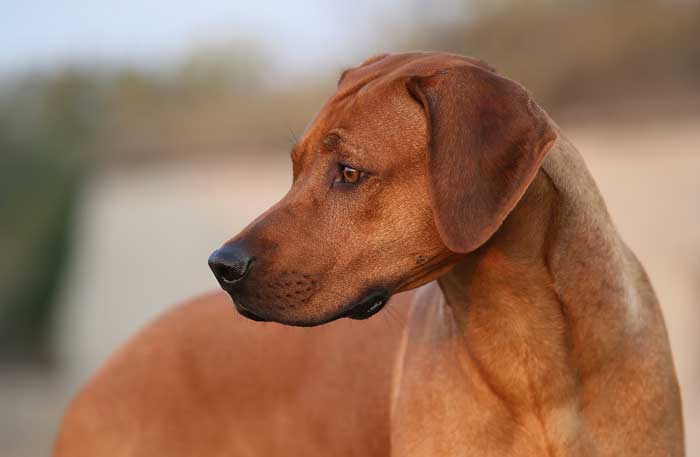
The AKC says the Rhodesian Ridgeback was originally bred in southern Africa to hunt large game, including lions. Males stand 25 to 27 inches and weigh about 85 pounds, females 24 to 26 inches and about 70 pounds.
Today, in the AKC’s words, Ridgebacks are cherished family dogs whose owners must be prepared to deal with their independence and strong prey drive.
That prey drive matters on a leash outside an apartment, where squirrels and small dogs are everywhere. Plan on training and secure handling from the first week.
10. Shar Pei

The AKC lists the Chinese Shar-Pei at 18 to 20 inches and 45 to 60 pounds, a compact, medium-sized dog with folds of loose skin around the head, neck and shoulders.
It calls them strong, regal, independent guardians famous for intelligence and loyalty, steadfastly loyal to family but standoffish with strangers. The same page says they are suspicious of strangers and other dogs.
The AKC is direct about training: early training and socialization are essential, and a dominant adult Shar-Pei without them is a serious problem waiting to happen. Life expectancy is listed at 8 to 12 years.
Final Thoughts
Several of the AKC profiles above repeat the same advice: start training and socialization early, while the dog is small enough to control. Temperament helps, but training decides how the dog behaves around neighbors, and a large guardian breed is a responsibility in a building with neighbors.
If you are weighing a first dog, our guide to guard dogs for first-time owners covers more picks, and the best apartment dogs list has calmer options.
Frequently asked questions
Can big dogs really live in an apartment?
Yes. Energy level matters far more than size. A calm Great Dane settles into a flat better than a wound-up terrier, as long as it gets a proper walk twice a day.
Which dog breeds bark the least in apartments?
Greyhounds, Basenjis, Bulldogs and Cavaliers are among the quietest. Any dog can learn to be calm, but these simply start at a lower volume.
How much exercise does an apartment dog need?
Most do well on 30 to 60 minutes a day split into two walks, plus a little indoor play. Cut that short and the barking and chewing usually start.
Google lets you pick which sites come up first in your own results.