

A quick note: a few links below are affiliate links. Buy through one and we may earn a small commission. It never costs you more, and we only point to gear we'd actually put in front of our own dogs. As an Amazon Associate I earn from qualifying purchases.
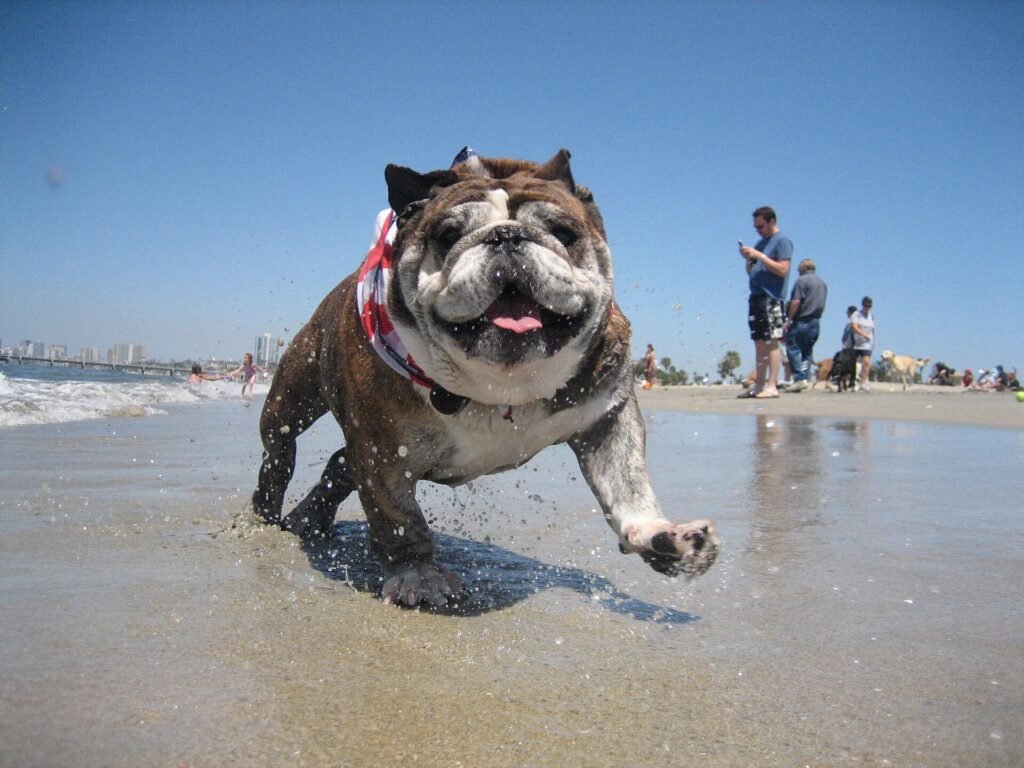
The Bulldog, often called the English Bulldog, is a stocky medium-sized breed that usually tips the scale somewhere between 40 and 50 pounds. He was bred centuries ago to grip and hold bulls. These days he wants a sofa and a person to lean on.
People fall for the breed because of three things: stubborn loyalty, a goofy sense of humor, and that wrinkled face that always looks faintly worried.
So are Bulldogs good apartment dogs?
English Bulldogs are perfect for apartment living. They are calm indoor dogs with minimal exercise requirements. A breed that hardly barks and with a friendly and playful personality, known for being loyal companions and great family dogs.
What You Should Know About Owning a Bulldog
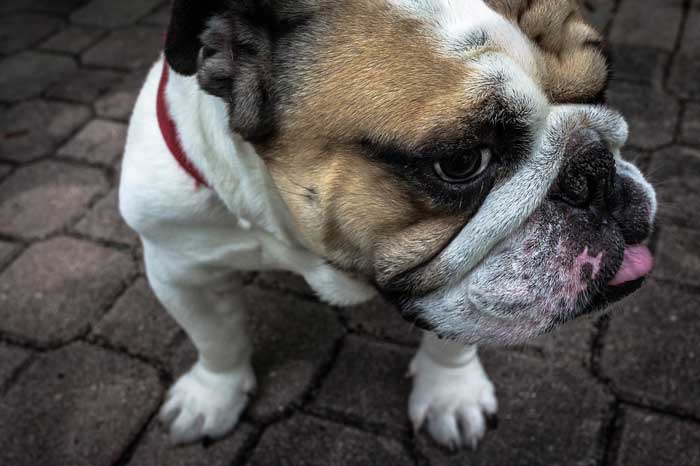
A Bulldog is patient by nature. He will let a toddler climb on him and barely shift his weight.
He is also stubborn. That stubbornness sits right next to a soft, almost needy streak, which is part of his charm.
This is a clownish, clever breed that figures out fast how to make you laugh.
Bulldogs are predictable and deeply people-oriented. Leave one in an empty room and he will follow you to the next one, then flop down at your feet and sigh.
Are Bulldogs Good Family Dogs?
Few breeds settle into family life as easily. Bulldogs are easygoing, social, and gentle, and they rarely make a fuss about the chaos a household throws at them.
They bond hard and stay loyal, which is exactly what most people want from a companion dog.
They are great with kids. A Bulldog will happily spend an afternoon being dressed up, flopped on, and used as a pillow.
That bond extends to other pets too. Most Bulldogs get along fine with the family cat and with other dogs once they have met a few times.
Are Bulldogs Good Guard Dogs?
The face says guard dog. The temperament does not. Bulldogs were originally bred for bull-baiting and dog fighting, which is where the name comes from, and they kept the thick, muscular build from those days.
What they did not keep is the aggression. A Bulldog is sociable even with strangers. An intruder is more likely to get a slobbery greeting than a confrontation.
Protectiveness is a different story. If a Bulldog senses that someone in his family is genuinely in danger, he will plant himself between them and the threat, and he does not scare easily.
Do Bulldogs Bark a Lot?
Their bark is deep and loud, but you will rarely hear it. They are almost non-barking dogs which makes them great dogs for apartment living.
Quiet does not mean silent, though. Share your home with a Bulldog and you sign up for a soundtrack of snorts, grunts, and serious snoring at all hours.
When a Bulldog does bark, it is usually because something startled him: a knock, a stranger, an odd noise outside.
Other things that can set one off:
- Fear
- Depression
- Excitement
Bulldogs can also get territorial. Some will sound off every time a person or another animal gets close to the front door, then forget about it thirty seconds later.
Can Bulldogs be Left Alone?
Yes, within reason. The English Bulldog loves company, but he is one of the dogs that can be left alone while you work.
The trick is training, and the earlier the better. Teach a puppy that alone time is normal and he handles it well. Skip that step and you risk separation anxiety down the line.
Build up to it slowly. Start with short absences and keep your comings and goings low-key, no big emotional hellos or goodbyes.
Stretch the time out gradually, but only while he stays calm. The moment you see pacing, drooling, or whining, you have pushed too far and need to dial it back.
Let the dog set the pace. Rushing it almost always backfires.
Are Bulldogs Good Indoor Dogs?
The Bulldog is built for indoor life. He needs no yard, which makes him an excellent medium-sized apartment dog. Leaving him outside all day is bad for his health.
Here is the catch. Bulldogs struggle to regulate their own body temperature, so they do poorly in the swings of outdoor weather.
They cannot cool themselves down efficiently, and a hot afternoon can tip into heatstroke faster than you would expect.
Cold is no better. Breathing in very cold air drops their core temperature quickly.
None of this means keeping him locked inside. A walk on a mild, sunny day and a bit of play does him good.
Just keep an eye on him and bring water so you can cool him off if he starts to overheat.
Bulldogs Exercise Needs
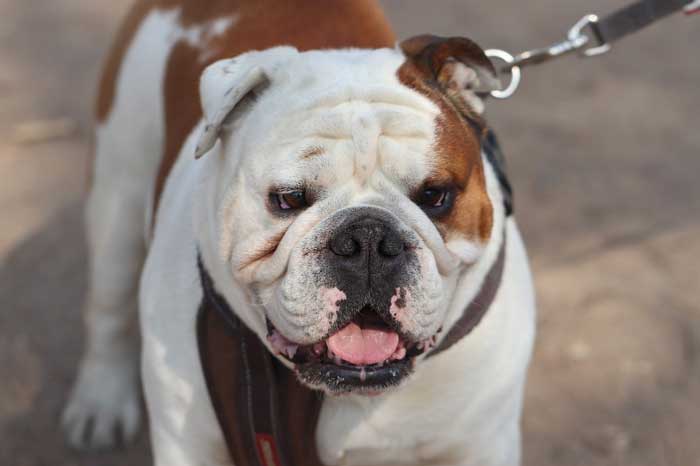
Nobody will accuse a Bulldog of being athletic. He would rather nap beside you. Still, he does enjoy an easy stroll now and then.
Exercise is not his strong suit, but skipping it is a real problem. Under-exercised Bulldogs put on weight fast, and that extra load strains the heart and the joints.
This is a brachycephalic breed, meaning a flat face and a short muzzle. That anatomy comes with brachycephalic syndrome, which can cause real breathing trouble.
Because of it, a Bulldog cannot shed heat the way a longer-nosed dog can. So avoid exercising him on hot days, never push him past the point of comfort, and be careful around stairs and swimming pools, which are genuine hazards for the breed.
What he actually needs is modest and regular. A 15 minute walk usually covers it.
Bulldogs Grooming Needs
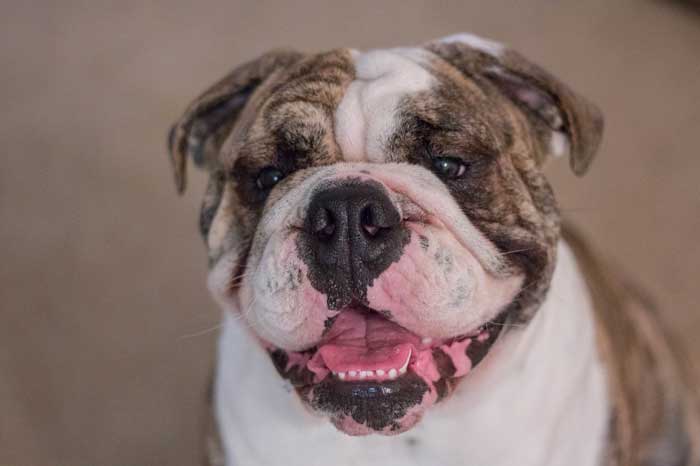
The short coat is low effort. A brush three times a week keeps it healthy, and Bulldogs shed at a moderate, manageable level.
Brush regularly and you can skip frequent baths.
The shedding picks up in spring and fall. During those weeks you will want to brush more often to stay ahead of the loose hair.
Nails matter too. If they do not wear down naturally, trim them roughly every two weeks so they do not crack or make walking painful.
The skin is where this breed asks for extra attention.
Those famous facial folds need checking and cleaning on a routine. Keep them dry and clean, because trapped dirt and moisture turn into skin infections quickly.
Training & Socialization Needs
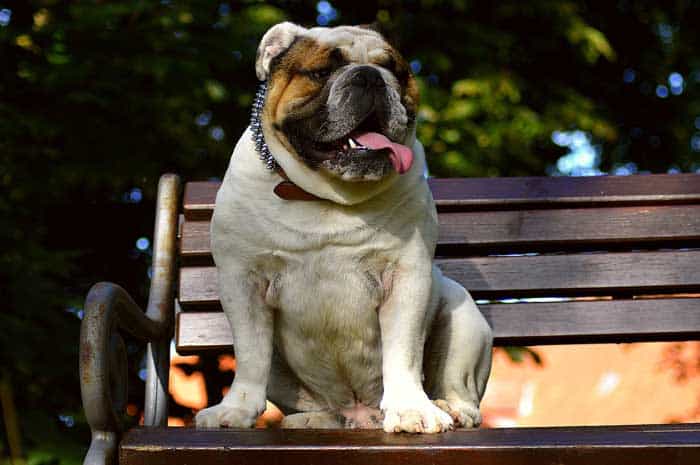
Bulldogs are smart and they genuinely want to please you. They are also stubborn, which is the part most owners underestimate.
People call them hard to train because they think things over instead of obeying on the spot. The flip side is worth it: once a Bulldog learns something, it sticks.
Keep sessions short, fun, and built on praise, treats, and repetition. That is where this breed shines.
Socialization matters as much as obedience. Start it early so your Bulldog grows up steady and even-tempered.
A dog that misses that window can turn fearful or snappy. Socialization teaches him how to read children, strangers, and other dogs without panicking.
It also teaches him dog manners, the signals that head off misunderstandings before they become a scuffle at the park.
Is a Bulldog a Good Apartment Dog?
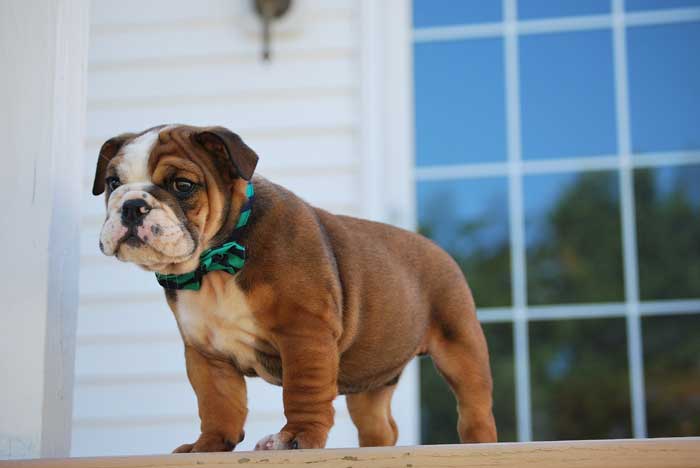
Bulldogs are perfect for apartment living. They are low-maintenance, they do not need much room, and they ask for little exercise. A Bulldog is a quiet, sociable roommate who barely barks, which makes him an ideal dog for a city flat.
Tips for Raising a Bulldog in an Apartment
1. Exercise Is Essential, Even If He Doesn’t Want To
Left to his own devices, a Bulldog would spend the entire day melting into the couch cushions.
He does not need much activity, but he does need regular walks to stay healthy and keep the weight off.
Every dog is different. Most Bulldogs are content with a couple of short 15 minute walks a day.
Play counts too. A few rounds of tug or fetch indoors is great exercise for a playful Bulldog.
One firm rule: never over-exercise him and never work him in hot weather. For this breed, that is dangerous, not just uncomfortable.
2. Start Potty Training as Soon as Possible
In an apartment, potty training is the first project, and you want to start it the day the puppy comes home.
Remember that puppies need to go far more often than adults do.
A rough rule: a puppy can hold his bladder about one hour per month of age. A three month old makes it roughly three hours. An adult Bulldog can usually go six to eight.
The whole thing rests on one word: routine.
Pick a potty spot near the building, ideally on grass. Dogs lock onto the surface they first learn on, so starting on grass saves you trouble later.
With a young puppy, carry him out to that spot about every hour, then slowly stretch the gaps as he matures. This cuts down on indoor accidents and teaches him exactly where the bathroom is.
Early on, accidents are unavoidable. Scolding does nothing useful. Just clean the spot thoroughly with an enzymatic cleaner (here you can find a selection of good enzymatic cleaners) so no scent lingers to invite a repeat.
Catch him mid-accident and interrupt gently, then hustle him outside to finish the job in the right place.
Give it time, patience, and consistency, and your dog will start telling you when he needs to go out.
Dogs are naturally tidy. Given the option, they will choose to go outside their living space every time.
For apartment living, dog grass pads can be a great help and an alternative to going to the bathroom outside.
3. Leaving a Bulldog Home Alone
Bulldogs are calm and undemanding, but they still crave their owner’s attention and company.
They cope with alone time better than a lot of breeds. Push it too long, though, and boredom sets in, which can spiral into chewed furniture and separation anxiety.
A few habits make those hours easier on him:
- Take your Bulldog for a walk just before leaving him alone. A tired dog will spend most of the time alone sleeping and resting.
- Leave your dog his favorite toys so that he stays entertained and channel his energy and attention in something other than your personal belongings.
- Provide your dog with a comfortable space where he feels safe. He will need a bed to rest on, his toys and water on hand.
- If your dog is going to be left alone for a very long period, ask a friend or hire a dog sitter to visit your dog and spend time playing with him and taking him outside for a potty break.
- Keep an eye on your dog with a pet camera to see how he is handling being alone. Pet Cams are cameras that you leave in your apartment and allow you to see your dog from wherever you are with a cell phone or computer. Some even allow you to talk to them and even give treats to them.
4. Beware of the Building Stairs
If your building has no elevator and you live a few floors up, the stairs deserve real thought before you bring a Bulldog home.
Stairs are hard for a Bulldog, though not impossible.
Blame the build: a low, heavy body on short legs is not designed for climbing.
Bulldog puppies are often nervous on stairs, especially heading down, where the drop and their wobbly coordination work against them.
For puppies under 12 weeks, climbing is more than scary, it is risky. Repeated stair work at that age can stress the joints and raise the odds of hip dysplasia.
For a healthy adult, the occasional flight can double as indoor exercise, but keep watching him the whole way.
Stairs take a lot out of this breed. The effort can leave a Bulldog struggling to catch his breath, so do not make them a daily habit.
5. Keeping Your Bulldog Cool
Because English Bulldogs handle their own temperature so poorly, hot weather calls for constant attention. The breed is prone to heat stress and heatstroke, and both move fast.
A few ways to keep a Bulldog from overheating:
- On very hot and humid days, don’t take your dog outside and keep your apartment adequately air-conditioned.
- During hot seasons, take your dog for a walk in the early morning or late in the evening when the weather is cooler.
- Never leave a Bulldog alone in a car, even if the windows are down.
- Always carry water with you when you go out with your dog so you can cool him down if necessary.
Final Thoughts
The English Bulldog earns his place among the best dog breeds for apartment living. Quiet, low-energy, and devoted, he fits a small space about as well as any dog can.
House or apartment, the deal is the same. You owe it to the dog to understand his quirks and his real needs before you commit.
Bringing one home is a ten year promise, give or take. Make sure a Bulldog actually suits your life, then give him the good one he is built to enjoy.
Resources
- Boxers Dog Breed Information and Personality Traits by HillsPets
- How to Care for Boxers by WikiHow
Frequently asked questions
Can big dogs really live in an apartment?
Yes. Energy level matters far more than size. A calm Great Dane settles into a flat better than a wound-up terrier, as long as it gets a proper walk twice a day.
Which dog breeds bark the least in apartments?
Greyhounds, Basenjis, Bulldogs and Cavaliers are among the quietest. Any dog can learn to be calm, but these simply start at a lower volume.
How much exercise does an apartment dog need?
Most do well on 30 to 60 minutes a day split into two walks, plus a little indoor play. Cut that short and the barking and chewing usually start.
Google lets you pick which sites come up first in your own results.