

A quick note: a few links below are affiliate links. Buy through one and we may earn a small commission. It never costs you more, and we only point to gear we'd actually put in front of our own dogs. As an Amazon Associate I earn from qualifying purchases.
The question most dog owners with a full-time job ask is how long the dog can be left alone while they are at work. The RSPCA advises leaving a dog for no longer than four hours at a time, so the dog has chances to exercise, go to the toilet and spend time with people. Many workdays are longer than that, so this guide covers what you can do about the gap. For a closer look at limits by age, see how long you can leave a dog alone.
Dogs vary, and the RSPCA says the right length depends on the individual dog. It also reports that research suggests eight out of 10 dogs find it hard to cope when left alone, and that half of them show no obvious signs, so an owner can easily miss it. The tips below are ordered from planning to what you do when you get home.
1. Know Your Dog’s Limit
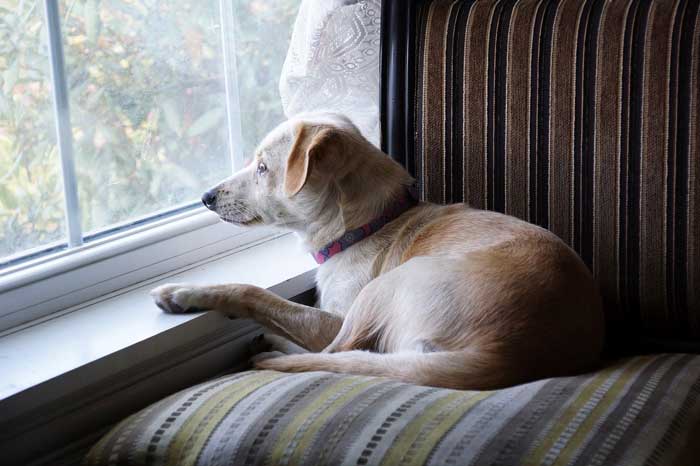
The RSPCA puts the upper limit at four hours and says the figure depends on the dog. Your dog’s age, health and temperament all change it, and so does whether he struggles with separation anxiety.
The ASPCA lists the signs that point to separation anxiety: urinating or defecating, persistent barking or howling, chewing, digging and destruction, escape attempts, and pacing, all of which occur when the dog is left alone or separated from his guardian and usually not in your presence. Boredom is a different case: the ASPCA notes that bored dogs usually do not appear anxious. If you see signs of distress, the RSPCA recommends talking to a vet, who may refer you to a clinical animal behaviourist.
A change in routine can matter too. The ASPCA gives the example of a guardian who works from home and then takes a job that leaves the dog alone for six or more hours at a time, which can trigger separation anxiety.
2. Be Honest About Your Schedule Before You Adopt
If you know the dog will be alone for most of the workday, think about that before choosing one. The Humane World for Animals guide says that if you will be away more than four or five hours a day, you should consider whether this is the right time for a puppy, and suggests an older, house-trained dog as an alternative.
We do not rank breeds by how well they handle solitude here, because none of the three organizations cited on this page publishes such a list. Individual temperament and training history matter more than a breed label.
3. Teach Your Dog to Be Alone
The RSPCA says one of the most effective ways to prevent anxiety is to teach a dog from the start that being alone is fine, by increasing the time very gradually so that it is never frightening and is always linked with something pleasant. It also cites studies finding that dogs introduced gradually to being alone are less likely to have problems later.
The RSPCA’s steps, in short:
- Reward your dog for staying relaxed in his bed with you present, then move away a little, return and reward.
- Build up distance and time, then go out through the door and come back, then shut the door, then go out for longer. If he reacts, do not reward; go back a stage.
- Once he is happy to be left for up to an hour, longer periods should be easier. Vary the length of the absences and leave something to occupy him.
The ASPCA gives the same rule for dogs with anxiety: plan absences that are shorter than the time it takes the dog to become upset, wait a few minutes between practice absences so he is calm before the next one, and stay calm when you leave and return. It also says there are no standard timelines, because each dog reacts differently, and that moderate or severe cases need guidance from a trained professional.
4. Exercise and Feed Before You Leave
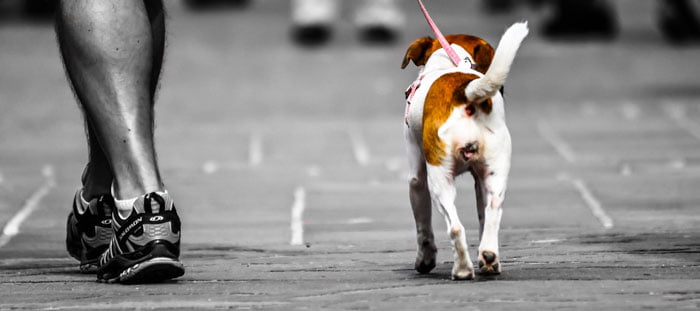
The RSPCA says a dog is more inclined to relax when left alone if he has had an appropriate amount of exercise and has been fed before you go. Its suggestions: walk him and be back half an hour before you leave, give a small meal shortly before leaving, and make sure he goes to the toilet before you go.
How much exercise is enough depends on the dog. Your vet can tell you what suits yours. For mental work, see our guide to puzzle toys for apartment dogs.
5. Plan Toilet Breaks
For puppies, the Humane World for Animals guide says to take the puppy outside at least every two hours, and especially after waking, play, eating or drinking. A puppy confined for several hours should go straight to his potty spot when you return.
If your dog cannot wait until you are home, the same guide lists indoor options such as pee pads, newspapers or a sod box, and warns that indoor potty training can make outdoor housebreaking take longer. We review grass pads for apartments separately. The ASPCA also reminds owners that accidents can have a medical cause, including urinary tract infections, bladder stones, diabetes, kidney disease and age-related weakness of the sphincter, so ask a vet if a housetrained dog starts having accidents.
6. Give Him a Safe Place
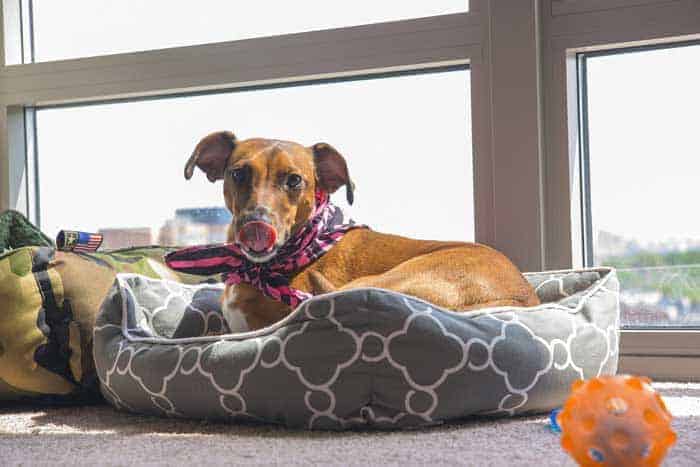
Leave water, a bed and toys within reach, and remove cords and small objects he could chew or swallow. Baby gates can close off rooms you do not want him to enter.
A crate works for some dogs. The Humane World for Animals guide calls crate training a reliable and humane method of confinement for puppies. If you use one, see where to put a dog crate in the house and our picks of crates for apartments. A dog who becomes distressed in a crate should not be left in it.
7. Leave Something to Do
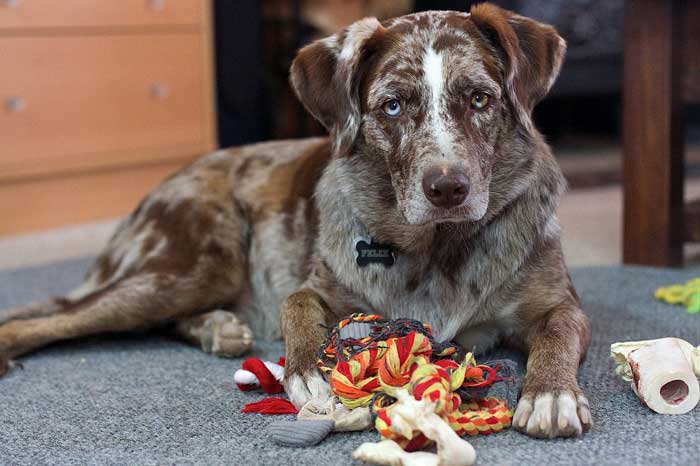
The RSPCA suggests leaving a safe, suitable toy, and making it special by giving it only when you go out. Good options it lists are a Kong stuffed with food, a meat-flavoured chew, or a treat ball or cube filled with dried treats so he has to work to get them out. Put the item away when you come home. Take the treats out of his daily food allowance, since overfeeding can lead to obesity.
The RSPCA adds a useful test: a long-lasting treat shows if a dog is worried, because an anxious dog will not eat something he normally enjoys. If he leaves it, do not reward him and shorten the next absence.
See also our toys that keep a dog busy while you work and chew toys for heavy chewers. If you buy a food-dispensing toy through our link, we may earn a commission.
8. Arrange Help for Long Days
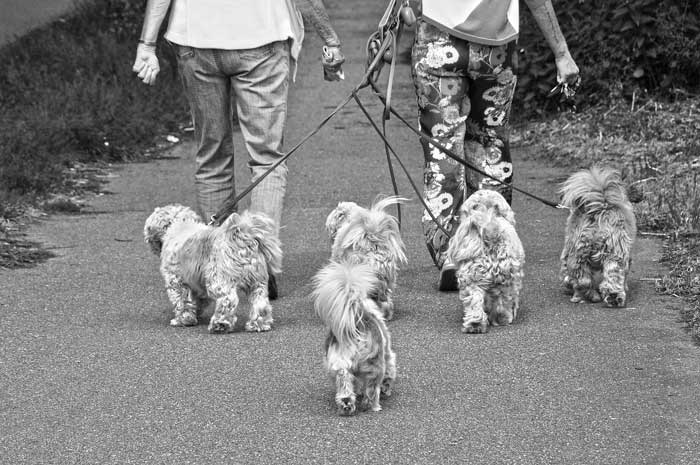
If your day runs longer than the four hours the RSPCA advises, line up help. The RSPCA suggests arranging for friends or family to help out if you must leave a dog for long periods. Paid options include a dog walker at midday, a pet sitter who visits your home, or doggie daycare. These are choices to compare on price and on how your dog reacts, and we have no figures on how often each is needed.
9. Check How He Copes
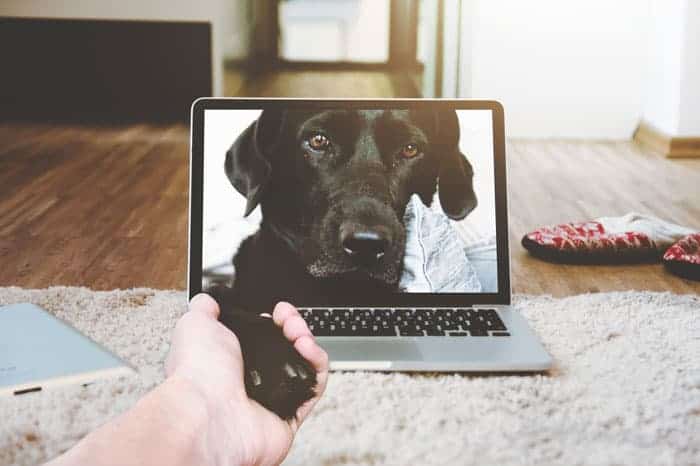
Because half of the dogs that struggle show no obvious signs, the RSPCA recommends that owners video their dog from time to time when left alone, to check for hidden signs of distress such as trembling, pacing or whining. A pet camera lets you watch live from a phone. If the footage shows distress, speak to your vet.
10. When You Get Home
Take your dog out straight away if he has been holding it, and spend time with him. The RSPCA is firm about one point: do not punish him if you find a mess. It says separation-related problems get worse when owners punish their dogs on their return, because the dog links the punishment with your arrival rather than with what happened hours earlier. It also explains that the guilty look many owners see, with the head lowered, ears back and tail tucked, is a dog making himself small, not an admission. Let him outside before you clean up so he does not see that you are annoyed, and use positive, reward-based training.
Final Thoughts
A dog can learn to be comfortable alone if the time is built up gradually, but there is a limit to what training can do. If your schedule leaves him alone for far longer than four hours, plan for a walker, a sitter or daycare, or reconsider adopting until your schedule changes.
Related: how to stop a dog barking when left home alone and leaving a puppy home alone for the first time.
Sources
- RSPCA, Dogs and being left alone
- ASPCA, Separation anxiety
- Humane World for Animals, How to potty train your dog or puppy
Frequently asked questions
How long can I leave my dog home alone?
An adult dog can manage about 6 to 8 hours. Puppies need a break every 2 to 4 hours. Beyond that, plan a walker or daycare.
How do I keep my dog busy while I am at work?
Leave a stuffed puzzle feeder or a long-lasting chew, a comfortable spot by a window, and some background sound. A real walk first helps them settle.
Is it separation anxiety or just boredom?
Boredom looks like chewing and mess. True separation anxiety shows panic, drooling and distress within minutes of you leaving, and needs a gradual desensitizing plan.
Google lets you pick which sites come up first in your own results.