

A quick note: a few links below are affiliate links. Buy through one and we may earn a small commission. It never costs you more, and we only point to gear we'd actually put in front of our own dogs. As an Amazon Associate I earn from qualifying purchases.
Few small breeds work a room like a French Bulldog. They are sociable, people-focused dogs that fit singles, couples, and families with kids alike, and most of them treat making you laugh as a full-time job.
But, are French Bulldogs good apartment dogs?
French Bulldogs are a good choice for people who live in apartments. It’s a small breed that needs little space and adapts easily to any environment. They are clean dogs that require little exercise and only bark when they have something important to say.
That said, the Frenchie is not the right dog for everyone. You need a real sense of his physical and emotional needs before you can tell whether he fits your routine, and apartment living in a busy city raises the stakes on both.
Here is what actually matters before you bring a French Bulldog home to a flat.
French Bulldogs Temperament and Personality Traits
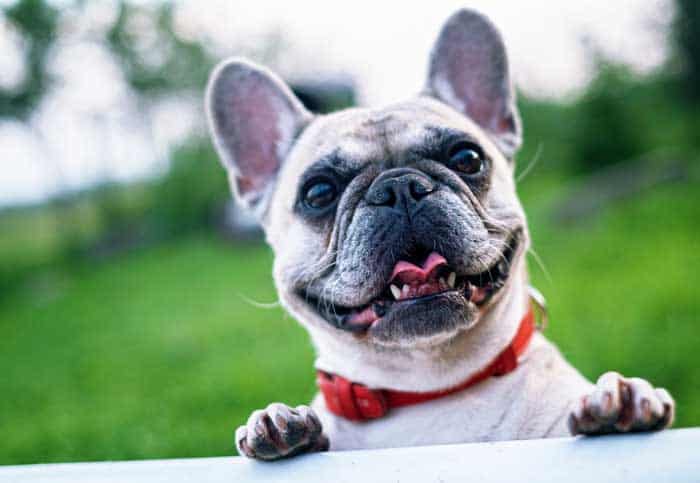
People call them “clown dogs” for a reason. A Frenchie is playful, a little goofy, and smart enough to know exactly when he is being funny.
He will happily play, then flop onto the couch and cuddle for an hour.
This is a breed built around people. Frenchies are loyal, patient, and affectionate, and they bond hard to their family. Some get possessive too, especially with other dogs in the room.
They are sociable by default. Most settle into a new environment fast and get along with other pets and kids.
Are French Bulldogs Good Family Pets?
They are wonderful with families. A Frenchie wants to be near people, his own people most of all, and he stays devoted to the pack he lives with.
The small size and easy-going temperament make them a natural fit for homes with children. They are playful and gentle, and a Frenchie posing a real threat to a child is very unlikely.
Still, supervise young kids around any dog. That protects both of them. A Frenchie is small, and children have to learn how to handle a dog without hurting one.
One thing worth knowing: Frenchies love rough, vigorous games, so the play can get boisterous.
Are French Bulldogs OK to Be Left Alone?
This is the breed’s soft spot. Frenchies need their family close and do not cope well on their own.
Short absences are fine. Leave one for a long stretch and separation anxiety often shows up. It hits puppies hardest, but plenty of adult Frenchies struggle with it too.
An anxious, lonely Frenchie tends to get destructive while you are gone.
Is a French Bulldog a Good First Dog?
Yes, a Frenchie suits most first-time owners.
The exercise demands are light and the grooming is minimal. He is loyal, glued to his family, and easy to fold into a home with kids.
Just don’t expect a flawless dog.
Every breed comes with strings attached, and a new owner has to weigh them.
The Frenchie’s flat face brings real health risks, breathing trouble chief among them. That means extra care on hot days and extra room in your budget for vet bills.
The other thing a first-timer should weigh is separation anxiety. This is not a dog for someone who works long hours and is rarely home.
So yes, a good first dog. Learn his needs and quirks the way you would any breed, and be honest about whether your schedule and energy match what a Frenchie asks for.
Do French Bulldogs Bark a Lot?
Frenchies bark, but far less than most small breeds. By and large they are dogs of a quiet nature.
When a Frenchie does sound off, he usually has a reason.
The most common triggers:
- Excited and Happy.- A Frenchie can’t help but bark when he’s excited about something. Either because of the excitement of playing or because you came home after being away from home.
- Attention.- French Bulldogs like attention. It’s common for them to bark when they feel ignored and want to get attention.
- Territorial.- Frenchies are pretty territorial. If they see any other dog or animal invading their territory, they will bark as a warning and the intention of driving them away.
- Distress.- A Frenchie may bark when he feels distressed. This usually happens when left alone.
- Alarm.- French Bulldogs can be good watchdogs. If there is a stranger at the door or a strange sound nearby, it will bark to let you know something is going on.
Exercise Needs
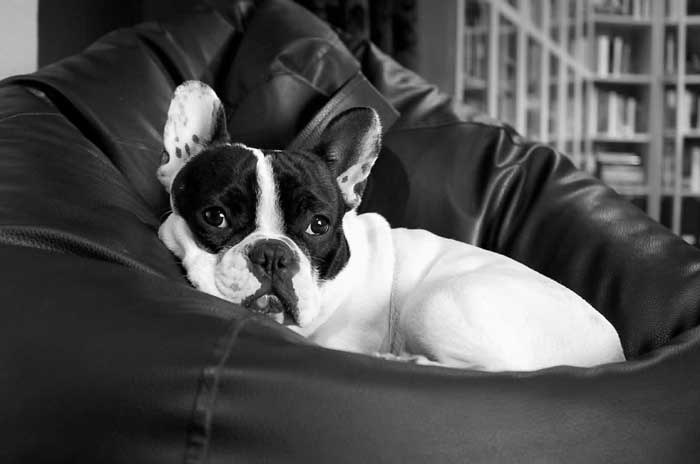
Frenchies don’t need much exercise. They do put on weight easily, though, and that weight feeds a long list of health problems, so a daily walk is non-negotiable.
Movement keeps them healthy, but skip the hard, strenuous stuff, and never push it in hot weather.
That flat, brachycephalic face makes breathing harder the moment they overdo it or sit too long in the heat.
Rather than one long outing, break the day into several short ones. It keeps them from overheating.
Play counts as exercise, and Frenchies love it, so a few games cover most of their needs. Watch them closely and call it off the second they look tired or are panting hard for water.
One safety rule: French Bulldogs can’t swim. Their body shape sinks them, so keep them away from pools and open water.
Grooming Needs
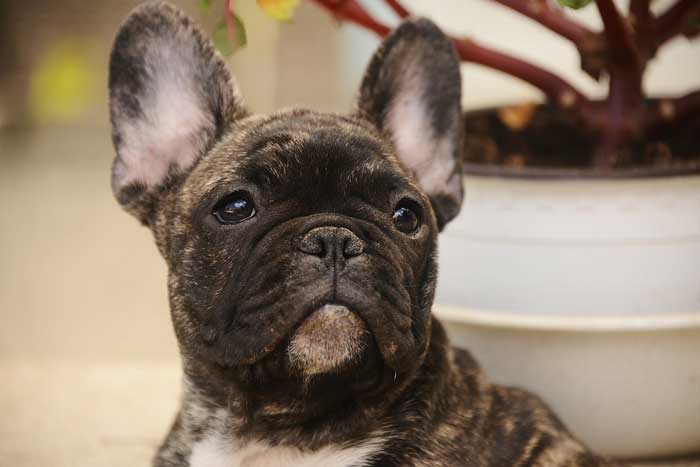
The short coat keeps grooming simple. Frenchies are average shedders most of the year, shedding very little, but in spring and fall they blow their undercoat. During those seasons, brush more often to pull out the loose hair.
Outside of shedding season, one brush a month would technically do. A weekly pass is better. It spreads the skin’s natural oils through the coat and helps new hair come in.
The one chore you cannot skip is the face. Wipe and dry the folds at least once a week. Dirt and moisture that settle in there turn into yeast, fungus, and skin infections fast.
Round it out with regular ear cleaning, tooth brushing, and nail trims if they don’t wear them down on their own.
Training and Socialization

Every dog needs training and socialization. Even the friendliest, most social breed can grow into behavior problems without it.
The Frenchie, easy-going as he is, gets no free pass here.
These are sharp dogs. The catch in training a Frenchie is the stubborn streak that comes with the brains.
That doesn’t make them hard to train. It just means patience and consistency matter more with them than with some other breeds.
They are also deeply food-motivated, which works in your favor every session.
Start the day you bring him home. By eight weeks a Frenchie can already soak up what you teach. Wait too long and you are training an older, more set-in-his-ways dog, which is more work for you.
Potty Training
Frenchies are tidy by nature and like a clean space, which makes house training fairly straightforward. The stubbornness can slow it down a little.
Given the chance, a Frenchie will work to avoid accidents.
Like every small breed, though, he has a small bladder and can’t hold it for long.
Puppy pee pads help bridge the gap, especially in an apartment. Even so, getting them outside often is the better habit to build.
A useful rule of thumb for puppies: they can hold it about one hour per month of age. A 3-month-old puppy needs a bathroom break roughly every 3 hours.
Praise him every single time he goes outside in the right spot. Never scold an accident. Just clean the area thoroughly with an enzyme cleaner so no scent lingers to draw him back.
With repetition and consistency the results come, and before you notice it your dog will be the one asking to go out.
Socialization
Start young. That advice holds for every dog.
Frenchies are friendly enough to greet almost anyone who offers affection, but they still need to meet plenty of different people early so they learn how to read and respond to them.
Socializing also sharpens their skills with other dogs. A dog has to learn the rules of dog-to-dog interaction to communicate clearly and handle whatever situation comes up.
If you can, puppy kindergarten is a great way to build those skills around other dogs early. Just wait until his vaccinations are complete before you go, so he doesn’t pick anything up.
Until then, introduce him to family, friends, and any dog you know is fully vaccinated.
Tips for Raising a French Bulldogs in an Apartment
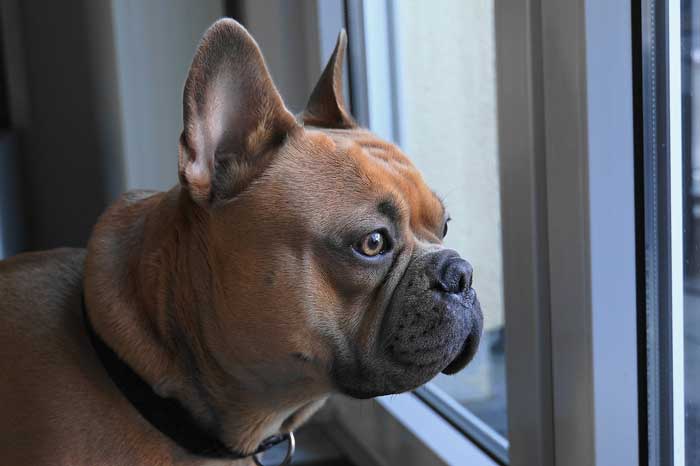
1. Help Your Frenchie to Better Handle Being Alone
Frenchies hate being home alone, and most of them handle it badly. That is exactly why the breed is a poor match for owners who leave a dog by himself for long hours.
Left to his own vote, a Frenchie would never be alone at all. Real life doesn’t allow that, so your job is to make the alone time easier on him.
It starts with making him feel comfortable and safe in the apartment.
From day one, help him settle into the new place.
Early on, avoid leaving him alone and give him time to learn the space. Once he seems secure and confident at home, start leaving him for very short stretches and build from there.
Go slow. Don’t rush it. Over time he learns to manage longer and longer on his own.
Give him a spot in the home where he feels safe, somewhere cozy and warm, away from the busiest, noisiest corner of the apartment.
Make sure he has what he needs to be comfortable:
- Bed.- They need a comfortable bed and if necessary, provide blankets or pillows, especially in the cold season.
- Toys.- Dog toys help keep them entertained during the time they spend alone. Each dog is different, with different tastes. Some prefer to have their chew toys nearby while others like food dispensing toys.
- Water.- All dogs must have water at their disposal. We must try to leave enough water to drink when we leave them alone.
2. Handling the Problems of a Bored French Bulldog
Boredom is the number one reason a Frenchie turns destructive.
A bored Frenchie chews whatever fits in his mouth, because that is how he entertains himself.
It peaks in puppyhood, but the habit can carry into adulthood.
A few ways to stay ahead of it:
- Make sure to keep personal items out of your puppy’s reach.
- Use baby gates to limit access to areas of the apartment that you don’t want them to enter.
- Provide various chewing toys to direct the chewing behavior.
3. Keep Your Frenchie Cool
Those flat faces and short snouts make it hard for a Frenchie to regulate body temperature, which pushes up the risk of overheating and breathing trouble.
So hot weather is not their friend. A little too much heat or strain, and you have a health problem on your hands.
In an apartment, keep the air cool and moving. Through hot climates and summer months, decent air conditioning is the difference-maker.
Walk him early in the morning and again at night, once the temperature has dropped and the pavement has cooled.
4. Be Careful With the Stairs
If your building has stairs, take a few precautions.
A Frenchie can climb stairs easily enough. Coming back down is the hard part for him.
As he ages, he is more prone to issues like hip dysplasia or patellar luxation, and constant stair use can make those worse.
Here the small size pays off. When you need to, you can just carry him up and down.
5. The Problem of the Bathroom in an Apartment
Bathroom logistics top the worry list for most dog owners, and an apartment makes them trickier. Patience and a routine get you there.
The issue with Frenchies, as with all small breeds, is the small bladder. They need to go more often than a big dog does.
The best plan is to train him to go outside. With a Frenchie that means a lot of trips to the spot you’ve picked for him. The trips are frequent in puppyhood and taper off as he grows.
A ground-floor apartment makes all of this much easier.
Early on, a set schedule pays off. It teaches you his rhythm and helps you predict when he needs to pee.
For small dogs the common fallback is pee or grass pads.
Put the pad somewhere quiet, well away from where he sleeps and eats. Given the choice, dogs keep themselves clean and won’t do their business near the bed or the food bowl.
The one rule that makes or breaks to be successful with potty training is never to scold an accident. Reward and praise the behavior you want instead.
Final Thoughts
A French Bulldog can absolutely be the right dog for apartment life.
The question is whether he fits your lifestyle and whether you can cover both his physical and emotional needs, the company most of all.
A dog is a commitment measured in years, not months.
Know the breed well, be honest about your hours and your space, and a Frenchie will pay you back with one of the most affectionate companions a small apartment can hold.
Resources
- French Bulldog Dog Breed Information by The American Kennel Club
- What is the French Bulldog Temperament Like? by PetPlace
Frequently asked questions
Can big dogs really live in an apartment?
Yes. Energy level matters far more than size. A calm Great Dane settles into a flat better than a wound-up terrier, as long as it gets a proper walk twice a day.
Which dog breeds bark the least in apartments?
Greyhounds, Basenjis, Bulldogs and Cavaliers are among the quietest. Any dog can learn to be calm, but these simply start at a lower volume.
How much exercise does an apartment dog need?
Most do well on 30 to 60 minutes a day split into two walks, plus a little indoor play. Cut that short and the barking and chewing usually start.
Google lets you pick which sites come up first in your own results.