

A quick note: a few links below are affiliate links. Buy through one and we may earn a small commission. It never costs you more, and we only point to gear we'd actually put in front of our own dogs. As an Amazon Associate I earn from qualifying purchases.
Say “Dalmatian” and most people picture 101 Dalmatians or a dog riding shotgun on a fire truck. There’s a good deal more to this breed than the spots and the movie poster.
Dalmatians are friendly and fiercely loyal to their people. If you’ve ever asked whether Dalmatians are good with kids, the short answer is yes.
Here’s the catch. Dalmatians carry a lot of energy, enough that many breeders steer them away from homes with very young children.
Let’s get into what these lovable, spotted dogs are really like.
Origin of the Dalmatian
Nobody is entirely sure where the breed began, but we know it took its name from Dalmatia, a region that was once part of coastal Austria.
They caught on in the 1800s, when they were trained to trot alongside carriages and shield the horses from other animals.
Some historians trace them back to the pointer. Dalmatians have worn a lot of hats over the years: hunting dog, circus performer, and a few odd jobs in between.
These days they’re mostly companion animals. They’re good with kids thanks to that friendly, loyal nature, but there are still a few things to keep on your radar.
Are Dalmatians Good for Families?
Start with the energy, because it’s the whole ballgame. Some people swear it borders on nervous energy. Either way, a Dalmatian needs a serious amount of exercise every single day, or it tips into hyper and hard to manage.
If the kids in your house won’t actually play with the dog and help it burn that energy off, a Dalmatian probably isn’t the right pick for your family.
Older kids and adults tend not to run around with a dog the way younger children do, and running around is exactly what this breed is after.
Bottom line, Dalmatians need room. Space to roam, space to play. An apartment or a condo just isn’t going to cut it for this dog.
If you can’t commit to real time with your Dalmatian, daily playtime and daily exercise, then this isn’t your dog. It’s that simple.
Shortchange them on exercise and it goes one of two ways. Some Dalmatians fold inward and get withdrawn and almost depressed. Others go destructive and start taking the house apart, which is arguably worse.
By nature they’re sensitive, playful, and seriously smart. That loyalty also makes them solid watchdogs. A few run a little shy, but most are outgoing and warm with everyone.
They train up easily too, which a lot of families love. These are bright dogs with long memories, and they remember whether they’ve been treated well or badly.
Some Stats About Dalmatians
Here’s one that surprises people: Dalmatians aren’t born with their spots. It takes about two weeks for the spots to come in, and they show up either black or brown.
Dalmatians live roughly 10 to 12 years, and both males and females run anywhere from 45 to 60 pounds. Males reach up to 23 inches tall, females around 22.
Their coats are short, flat, and low maintenance, so grooming stays light.
That said, Dalmatians shed a lot. You’ll want to brush that spotted coat several times a day to keep hair from getting everywhere.
Past the brushing, owning a Dalmatian asks very little on the grooming front.
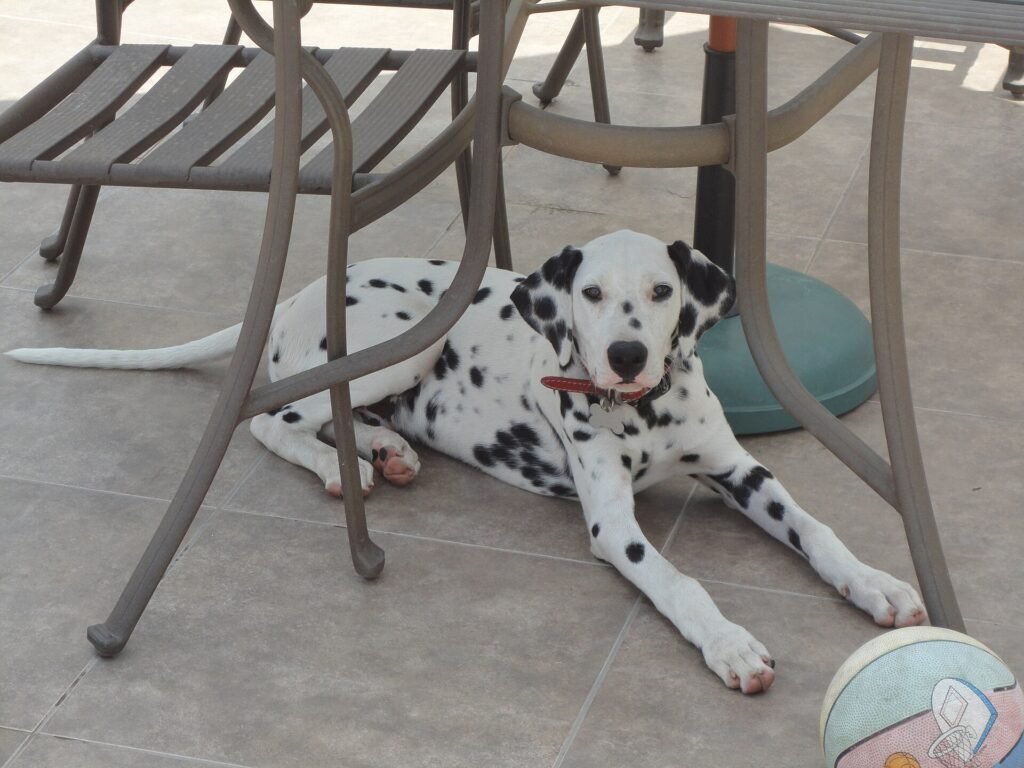
They’re medium-sized dogs with sleek builds, floppy ears, and long, slender tails that curl up at the end. Good-looking dogs that turn heads, and a ton of fun on top of it.
Now for the Not-So-Good News …
If you’re still weighing whether Dalmatians make good family dogs, run through a few more things before you decide.
Their hazy, unknown history makes some people nervous, but realistically there’s very little to worry about there.
We do know Dalmatians have served as working dogs, circus dogs, carriage dogs, and guard dogs, and nothing in that record points to them being aggressive. They suit most families just fine.
At one time, Dalmatians ran ahead of horse-drawn fire engines, clearing the crowded streets so the engines could get through. Even now, the breed tends to have a soft spot for horses.
That history is also why so many firehouses still keep one around as a mascot.
So where do the worries about Dalmatian temperament come from?
For one, no two are the same. The home a Dalmatian grows up in, its genetic background, and how it’s handled all shape the personality you end up with.
That’s why you’ll hear people describe the breed in opposite ways. To some owners they’re affectionate people-pleasers; to others they come off as stubborn and a bit pushy.
One family calls them great with kids, another says theirs barely tolerates them.
Don’t let that scare you off, though. On the whole, Dalmatians are smart and highly adaptable. Buy from a reputable breeder and the odds of landing a difficult dog drop way down.
Dalmatians love people, and they love it even more when you fold them into whatever the family is doing. They get on well with animals, horses especially, and with everyone in the house, kids included.
It’s worth saying again that Dalmatians have a ton of energy, so very small children can struggle with them. Give a Dalmatian at least 40 minutes of exercise a day. Fall short and they get too wound up.
An overstimulated dog can knock a small child over or get nippy without meaning to, which is exactly why those long daily runs and walks matter so much.
Despite all that, socialize them early, exercise them well, train them properly, and keep up the companionship they crave, and your Dalmatian will turn out well adjusted and happy.
What it’s Like to Be a “Fad” Dog
Thanks to the 101 Dalmatians films, the breed got branded a “fad” dog. Each time the movie put Dalmatians in the spotlight, registrations shot up as families rushed to grab the spotted puppy from the screen.
Then came the crash. Once the novelty faded, demand fell off a cliff, one of the steeper drops the American Kennel Club has tracked, and the breed paid for it. Shelters filled with Dalmatians that families took on without understanding the energy and work involved.
Things to Consider If You’re Interested in Dalmatians
Once more, the big thing to brace for before adding a Dalmatian to the family is the sheer amount of companionship and exercise these dogs need. They really do need it.
Leave a Dalmatian on its own too often and the destructive habits creep in, the chewing and digging. It isn’t spite. It’s a bored dog that isn’t getting the attention it needs.
Socialization carries the same weight. Skip it and a Dalmatian may do things you really don’t want, like snapping or biting at total strangers.
Their intelligence and independence cut both ways, which can make them a handful to train. A Dalmatian will sometimes decide its way beats yours, and that can turn training into a battle of wills.
Lean on positive reinforcement and reward-based training, since that’s what consistently lands with this breed. If you hit a wall, puppy obedience classes are a fine fallback.
And while you’re exercising a Dalmatian puppy, remember its joints and bones aren’t done growing until around two years old.
Dalmatians are prone to joint trouble like hip dysplasia, so daily exercise is a must, but overdoing it on a young dog works against you.
Hearing problems run in the breed too, so make sure any Dalmatian you’re considering has had its hearing checked by a vet before you take it home.
Adopting a Dalmatian
Once you’ve adopted, treat socialization and regular exercise as non-negotiable parts of your Dalmatian’s daily life from day one.
In a lot of ways, a Dalmatian is like any other dog. It needs love, structure, fresh air, exercise, and good food to grow and thrive.
Final Thoughts
Before you bring a Dalmatian home, make sure the breeder is reputable and not some fly-by-night operation looking to make a quick buck.
Do the homework, then treat your dog right once it’s home, and you’re looking at a good 10 to 12 years with this spotted, lovable companion.
Frequently asked questions
Is this breed actually safe around small children?
Temperament and tolerance for clumsy handling matter far more than breed or size. A patient 60-pound dog is a safer bet with a toddler than a nervous small one that has nowhere to retreat to.
At what age can a child be left alone with the dog?
Not before about ten, and even then only with a dog that has never guarded food or toys. Young kids miss the early warning signals, so supervision is about them as much as the dog.
How do I introduce a dog to a toddler?
Let the dog approach on its own, keep the first meetings short, and give it an escape route it can take without being followed. Forced greetings are where most bites start.
Google lets you pick which sites come up first in your own results.