


A quick note: a few links below are affiliate links. Buy through one and we may earn a small commission. It never costs you more, and we only point to gear we'd actually put in front of our own dogs. As an Amazon Associate I earn from qualifying purchases.
The French Bulldog, or Frenchie if you ask anyone who owns one, has quietly become one of the most common dogs you will meet at a city dog park. Small, sturdy, and built like a little tank with bat ears.
People call them clown dogs for a reason. They goof off, they flop over for belly rubs, and they fit into all kinds of households: families with kids, people living alone, retirees who want company on the couch.
Here is the question that actually matters before you fall for the face. Are French Bulldogs good for first-time owners?
The honest answer has some caveats.
Some traits make this breed forgiving for a beginner. Others will test your patience and your wallet. You want both lists in front of you before you commit.
Are French Bulldogs Good for First-Time Owners?
Yes, for most beginners a Frenchie works out fine. The exercise demands are low, the coat takes almost no upkeep, and the temperament is easygoing. This is one of the most adaptable breeds you can pick, and it tends to mold itself to whatever your daily routine looks like.
Every dog comes with trade-offs, though. Below is the real breakdown, pros first, then the parts breeders tend to skip over.
Pros of Owning a French Bulldog
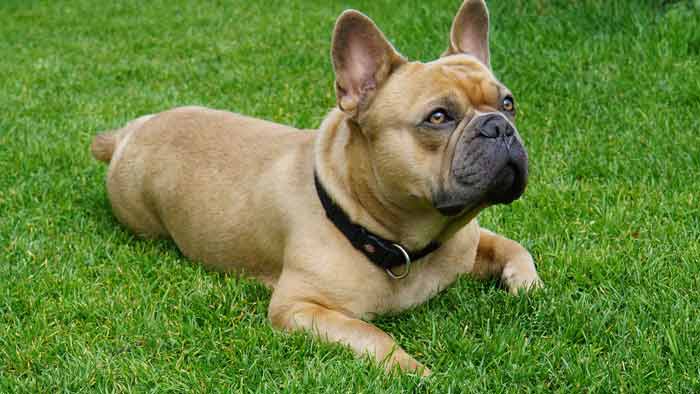
1. They Have a Unique Personality
Frenchies are companion dogs to the bone. They want to be wherever you are, and they have a steady, friendly, slightly silly temperament that wins people over fast.
They will tear around the living room one minute and then climb into your lap the next. Playful and cuddly in the same body.
They are loyal too, and surprisingly alert for such a small dog. Plenty of owners count them among the protective dogs known to be good guard dogs. A 25-pound Frenchie will not scare off a burglar, but it will absolutely sound the alarm.
2. They are Good Family Dogs
This breed lives for its people. A Frenchie wants to be in the middle of family life, not parked in a crate while everyone else is in the next room.
They hate being left alone, so they do best in a home where someone is around for a good chunk of the day.
Their gentle, mellow nature makes them solid around kids of every age.
They like rough-and-tumble play, which usually clicks well with energetic children who want a buddy that can take it.
They also read the room. Most Frenchies dial it down around toddlers on their own. Still, the old rule holds: never leave any dog alone with a small child.
3. They Are Good With Other Pets
Frenchies generally get on well with other dogs and even cats. The catch is socialization. Start it early and keep it up.
They love being the star of the show, and they can get jealous when another pet soaks up the attention they think belongs to them.
Skip the socializing and you might see some attitude. Usually it stops at barking or a grumble, nothing serious.
And it is never too late to start. An older Frenchie can still learn to share space with other pets if you make the introductions slowly and on neutral ground.
4. They Don’t Need a Lot of Exercise
Every dog needs to move, and Frenchies are no different.
That said, the bar here is low. They do not need much, which is one reason they rank among the good dogs for first-time owners and suit less active households and seniors.
Aim for about an hour of activity a day, broken into a few short walks rather than one long march. Their flat faces make long sessions harder on them.
Watch the heat especially. A Frenchie can overheat on a warm day faster than you would expect, because that squished muzzle makes breathing and cooling down tough. Heatstroke in this breed is no joke.
5. They Are Easy to Groom
That short coat is about as low-maintenance as it gets. A quick brush once a week keeps it looking decent.
Baths are rare too. Once a month, or whenever your dog rolls in something gross, is plenty.
Add the usual basics: clean the ears monthly, brush the teeth, and trim the nails if they are not wearing down on the pavement.
The one job people forget is the face folds. Moisture and gunk collect in those wrinkles and can turn into a skin infection if you ignore them. Wipe the folds out once a week and you will sidestep most of that trouble.
6. They Are Quite Easy to Train
Frenchies have a stubborn streak, no argument there. Even so, most of them train up without much drama.
They are smart, and they genuinely want to please you, which goes a long way toward canceling out the hard-headedness.
The whole trick is patience and consistency. Same cues, same rules, every single time.
They pick things up quickly and respond best to treats and praise rather than corrections.
Do not treat socialization as separate from training, either. Start exposing your puppy to new people, dogs, and places early, and the rest of the process gets far smoother for both of you.
7. They Are Extremely Adaptable Dogs
Adaptability might be this breed’s best feature.
A Frenchie is just as happy in a fifth-floor studio as in a house with a yard. Single, married with three kids, retired and living quietly, the dog rolls with all of it.
Cover the basics, exercise, attention, and early socialization, and your Frenchie will settle into whatever rhythm your life runs on.
8. They Don’t Bark a Lot
There are always loudmouths in any breed, but as a rule Frenchies are quiet. They are not the dog blowing up at every leaf that moves outside.
When one does bark, it usually means something. Worth a look.
Most of the time it is excitement or a heads-up that something out of the ordinary is going on.
Other things that can set a French Bulldog barking include:
- Pain or discomfort
- Distress
- Attract attention
- Keep an intruder away from his territory
9. They Are Not Aggressive Dogs
Aggression is not in this breed’s wiring. Frenchies are known for being sweet and sociable, the kind of dog that greets strangers like old friends.
They can still show flashes of it in the wrong situation, like any dog pushed past its comfort zone.
When it happens, it tends to be barking or growling and rarely goes any further than that.
Two things usually trigger it: jealousy over another pet, or plain fear when the dog feels cornered or threatened.
Cons of Owning a French Bulldog
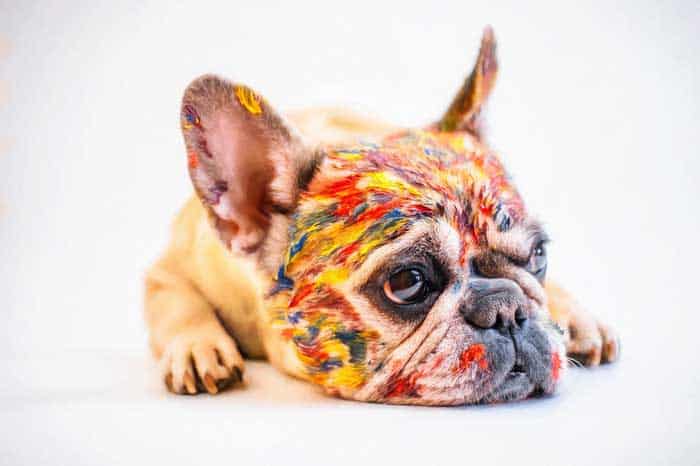
1. They Are Quite Stubborn
For all that easygoing charm, Frenchies are also famously hard-headed. They have opinions, and they will dig in on them.
Left unchecked, that stubbornness drags out training and can snowball into behavior problems.
Small-dog owners tend to let things slide that they never would with a 70-pound shepherd.
With a Frenchie that is a mistake. Set the rules on day one and hold the line, because if you do not, that strong will to do things his own way becomes a daily headache.
2. They Can Be Hard to Potty Train
Frenchies pick up most commands quickly. House training is the exception, and it can humble you.
Some pups take up to eight months to get fully reliable indoors. That is a long stretch of paper towels.
Frustrating, sure, but it does click eventually if you stay patient and keep the routine rock solid.
3. They Are Prone to Separation Anxiety
This breed was built to be a companion, full stop. They crave attention and need their people nearby for most of the day.
That bond has a downside. Frenchies do not cope well with long stretches alone, and they suffer separation anxiety more readily than a lot of other breeds.
Common signs include:
- Excessive barking
- Destructive behaviors like chewing
- Escaping
- Urinating and defecating around the house when home alone
You can train a Frenchie to handle alone time better, but leaving one by itself for hours day after day is asking for trouble.
Bottom line, this is a dog for a household where someone is usually home. If you work twelve-hour shifts away from the house, reconsider.
4. They Are Prone to Health Issues
This is the big one. Frenchies are prone to a long list of numerous health problems, and the vet bills add up.
Most of it traces back to the flat face. Brachycephalic dogs like this have shortened skulls and pinched airways.
That structure makes breathing harder and throws off their ability to regulate body temperature.
Which loops right back to overheating. A Frenchie can slide into heatstroke on a day other dogs handle fine.
Beyond the breathing, the breed is prone to issues with:
- Bone and joints
- Eyes
- Heart
- Skin
5. They Shed a Lot
Day to day, a Frenchie does not shed much. Then spring and fall hit, the undercoat blows out, and suddenly there is hair on everything you own.
During those seasons a daily brush keeps the worst of it off your couch and clothes.
If the shedding picks up outside of those windows, take note. Heavier-than-usual shedding can point to poor diet, allergies, stress, or an underlying medical issue worth a vet visit.
6. They Can Be Quite Destructive
Young Frenchies can be little wrecking balls. Bored, under-exercised, or ignored, they chew and dig and tear things up, and those habits can stick around for life if nobody addresses them.
The usual culprits look like:
- Chewing and biting
- Digging
- Peeing and defecating inside
The fix is not complicated: consistent training plus a household that actually shows up with the time and attention this dog needs.
7. They Drool a Lot
Get ready for slobber. Frenchies drool, plain and simple.
They are tidy dogs otherwise, but the drool flows freely, especially right after they eat or drink.
If that does not bother you, the only real cost is wiping slobber off your floors and furniture on a regular basis.
Sudden heavy drooling is a different story, though. It can come from a handful of causes, including:
- Excitement and food
- Mouth disease and tooth decay
- Heatstroke
- Motion sickness
- Anxiety and stress
- Poisoning
- Mouth injuries
8. They Are Expensive
Brace yourself for the price tag. From a responsible breeder, a Frenchie runs roughly $1,500 to $3,500, and often more.
That cost reflects how the dogs are bred. Most Frenchies need artificial insemination to conceive and a c-section to deliver, and that adds up fast for the breeder.
The purchase is only the start. Vet care, food, toys, and the occasional emergency all stack on top once the dog is home.
Plan on roughly $700 to $3,000 a year to keep a Frenchie, and the high end is easy to hit if those flat-faced health problems show up.
Final Thoughts
French Bulldogs make wonderful pets, and yes, they can work for a first-time owner who knows what they are signing up for.
Any dog is real work, though, and a Frenchie comes with its own specific demands.
Read up on the breed before you bring one home, the health risks especially.
Match the dog’s personality and needs against your actual lifestyle, your budget, and how many hours the house sits empty. Get that part right and a Frenchie will reward you for years.
Frequently asked questions
What is the easiest dog for a first-time owner?
Breeds that are eager to please and forgiving of beginner mistakes, like a Labrador, Poodle or Cavalier, tend to be the smoothest first dogs.
Should a first-time owner get a puppy or an adult dog?
An adult is often easier. What you see is what you get on temperament and energy, and most are already house-trained.
How much does a first dog cost in the first year?
Budget roughly 1,500 to 3,000 dollars once you add food, vet visits, gear, training and the unexpected. The adoption fee is the small part.
Google lets you pick which sites come up first in your own results.