

A quick note: a few links below are affiliate links. Buy through one and we may earn a small commission. It never costs you more, and we only point to gear we'd actually put in front of our own dogs. As an Amazon Associate I earn from qualifying purchases.
Quick answer
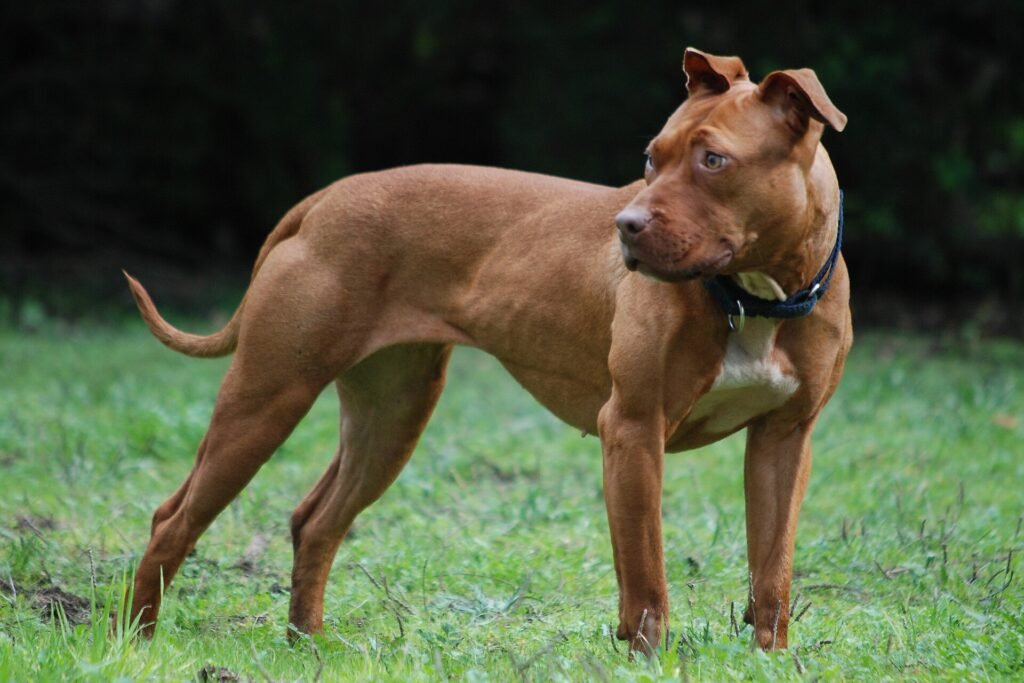
They can be, but a Pit Bull is not the easy pick. Expect 40 to 60 lb of muscle with a lot of energy, so a morning walk alone will not cut it. They are usually friendly with people, can clash with dogs their size, and some buildings ban the breed or ask for registration, so check the lease first.
So you want a Pitbull, and you live in a flat. Are Pitbulls good apartment dogs, or are you setting yourself up for two cramped, frustrated years? Fair question. It comes up a lot.
Plenty of people will tell you not to do it. Plenty of Pitbull owners in studios and one-bedrooms will tell you it’s the best decision they ever made. Both camps have a point.
Here’s the honest version. A Pitbull is not the path of least resistance for apartment living. Give one the right training, the right amount of exercise, and a person who actually shows up, and you get a companion that’s hard to beat.
What Makes a Dog Apartment-Friendly?
Before we talk breed, let’s talk about what actually makes any dog easy to live with in a small space. A few things matter more than size.
Matches Well with the Apartment
This cuts two ways. The dog has to fit the space, and the dog has to fit you.
Size and energy should line up with the square footage you actually have. A tight, cramped layout and a big dog is a bad pairing, and the dog is the one who pays for it.
Sometimes the place is roomy but packed wall to wall with furniture. Drop a high-energy dog into that and something gets knocked over every week. A dog that’s happy to flop on the couch slots right in.
Matching the dog to the person counts just as much. A dog that needs hard daily exercise and a job to do will thrive with a runner who lives a block from the park.
Pair that same dog with someone billing twelve-hour days at a law firm, and nobody wins.
Isn’t a Big Barker
In an apartment you have neighbors on every side, sometimes above and below too. A dog that barks at the hallway or howls when you leave will make enemies fast. This one sits near the top of the list.
Has a Friendly Demeanor
You’ll run into people constantly. The elevator, the stairwell, the mail carrier, the delivery folks, the neighbor with the cat. Strangers everywhere.
Your dog needs to take all that in stride. Not spooked by the noise, and not trying to scare anyone off either.
Some dogs are protective, some territorial, some so friendly they mug every stranger for attention. The ones who do well in apartments have decent social skills and a long fuse.
Doesn’t Mind Warming Up the Sofa
Nobody can keep a dog outside all day, and you can’t entertain one every waking minute while you’re home. There will be downtime. Plenty of it.
There will also be the days you head out and the dog stays behind.
A dog that goes stir-crazy with nothing to do, no engagement, no stimulation, tends to take it out on the apartment. Chewed baseboards, shredded cushions, that sort of thing. Boredom and stress wreck a room.
A dog that’s content with long naps and a sunny spot by the window has a far easier time indoors.
Easy to Train
A dog you share four walls with is a different proposition than one who lives in a yard. Both need training. The indoor dog needs more of it, and it needs to stick.
A dog that picks up basic cues quickly and doesn’t argue with every request makes apartment life a lot smoother.
Doesn’t Drool too Much
You’ll be cleaning either way, that’s the deal. Every dog drools a little, also the deal. But some breeds leave ropes of it on the floor, the couch, your pant leg.
In a small space, with hardwood and upholstery close at hand, that gets old fast.
Has a Moderate Appetite
A dog that eats like a furnace needs a ton of exercise to burn it off. That’s not always realistic in an apartment, so the weight creeps on and the dog turns into a couch potato for the wrong reasons.
A steady, moderate eater is usually the easier match, and the appetite often tracks with the energy level anyway.
Doesn’t Get Naughty Around the House
This comes down to temperament, not size. A little Dachshund can tear a place apart while a Great Dane stretches out and sleeps through the afternoon.
Some dogs just aren’t built for close quarters. Forcing that life on a restless, busy dog isn’t fair to the dog, the owner, or the apartment.
What you want is a dog that can handle you being gone without falling apart, and one that’s fine staying in for long stretches.
Stays Within Fences
Now and then your dog will need to stay put inside a fenced area. That’s pointless if the dog treats a fence as a warmup.
Pitbulls and a few other athletic breeds can clear a surprising height from a standstill. Impressive to watch, less fun when it’s your patio railing.
Doesn’t Need to Exercise All Day
German Shepherds and Dobermans were bred to work. They’re agile, sharp, and they need a real outlet for all that drive.
Keeping a breed like that in an apartment really only works if you’re an athlete yourself. Bike rides, long runs, swims, weekend hikes, the whole routine, not the occasional one.
Consistent Potty Behavior
Accidents indoors are no fun for anyone. The dog should have housetraining down cold. Let it slide and a small apartment gets unlivable in a couple of months.
Doesn’t Shed All Year Round
Long-coated dogs tend to shed a lot. In a yard you’d barely notice. In an apartment it’s everywhere.
If you wear a suit to work, that’s a daily lint-roller tax. Hair also collects in the air filter, the upholstery, the AC unit, and the carpet.
You’ll be vacuuming more than you’d like, off pretty much every surface, and swapping out filters sooner than the box says.
Doesn’t Have a Strong Odor
Some dogs carry more of a smell than others. Same as people, honestly. Apartment life is easier with a dog whose coat and skin stay fairly neutral between baths.
That smell has a way of soaking into the whole place. You come home, turn the key, and it hits you the second the door opens. Not the welcome you want after a long shift.
A decent shampoo and some care with the food go a long way toward keeping it down.
What Are Pitbulls Really Like?
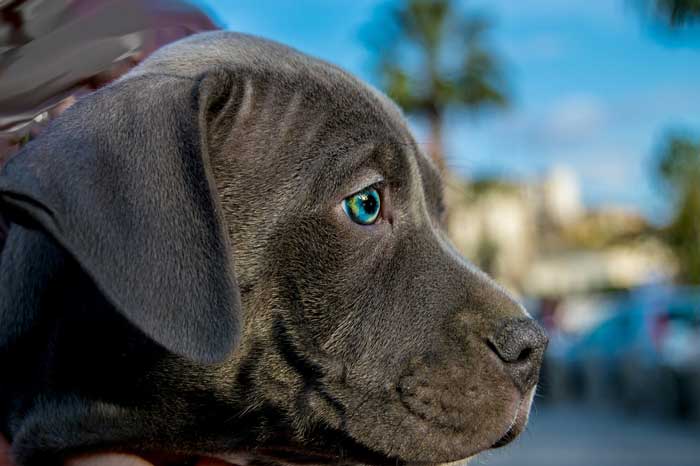
Plenty of people meeting a Pitbull on the sidewalk hesitate for a beat before deciding whether to say hello or give the dog room. That hesitation is worth being honest about, because almost nobody has it about a Labrador of the same weight.
It has nothing to do with the individual dog standing in front of you and everything to do with the reputation. The blocky head, the tough-guy look, the messy history of the breed in the wrong hands. Most Pitbulls are good dogs saddled with a bad story they didn’t write.
Pitbull Temperament and Traits
Every breed has a general profile, the traits that show up often enough to describe the group. Then every individual dog goes ahead and has its own personality, sometimes nothing like the brochure. People are the same. Here’s what tends to be true of Pitbulls.
Complex Emotionally
Pitbulls are one of the more emotionally expressive breeds you’ll meet. They run through a wide range of moods and let you know about each one. That’s part of the charm, and it’s also why you’ll catch them sulking, digging in their heels, or genuinely cheesed off on occasion.
Kind-Hearted
Once the mood passes and they settle, they’ll come make it right. A nudge, a lean, a paw on your knee, that whole apology routine. They get goofy and affectionate, and they won’t quit until you’re square again.
Energetic
These dogs have a deep tank. They need real daily exercise to stay sane and stay sweet. A morning walk is nice but it won’t cut it on its own. Picture a Pitbull as an athlete who needs the gym a lot more than the rest of us.
They Sweat Profusely
Quick correction on a common myth. Dogs don’t sweat the way we do. They cool off mainly by panting, with a bit of sweat through the paw pads. A busy, muscular Pitbull will pant hard after a workout, and between the activity and certain ingredients in the food bowl, that’s usually where a doggy smell comes from.
High-Jump Experts
They’re serious jumpers too. A bored Pitbull can be up on your counter or over a low fence before you’ve finished your coffee. If your plan was to leave one out back behind a four-foot fence, rethink it.
Friendly
Here’s the part that throws people. Pitbulls make lousy guard dogs because they like everybody. The look says back off, the dog says come say hi. They warm up to strangers fast and would rather make a new friend than chase one away.
Not too Sociable to Other pets
That friendliness has limits. Most people, most of the time, sure. Other dogs and pets are a different story. A Pitbull may square off with a dog its own size and look at the cat or the rabbit as something to chase.
Early socialization and steady training can soften that a lot, especially while they’re still puppies. An older Pitbull who’s already made up its mind is harder to budge.
Smart
Their brains need a workout as much as their legs do. They won’t out-think a German Shepherd or a Border Collie, but they’re clever and they get bored. Give them puzzles, training games, something to chew on with their heads.
Training a Pitbull
Pitbulls want to know who’s steering, and they want it clear from day one. They’re bold, strong-willed, full of opinions. They also relax the moment they trust that you’ve got it handled. Set the rules early and hold the line on them.
You’ll need patience to spare. They can be mulish, they can be moody, and a poorly raised one can tip into dog aggression.
For some owners, training a Pitbull is a real grind. Worth figuring out early whether you and this breed are actually a fit before you both commit.
That said, loads of Pitbull owners get there without much drama and end up with one of the most rewarding dogs they’ve ever had.
On the whole they’re quick studies. Positive reinforcement clicks with them, and the secret weapon is simple: they badly want to please the person they love.
Are Pitbulls Good Apartment Dogs?
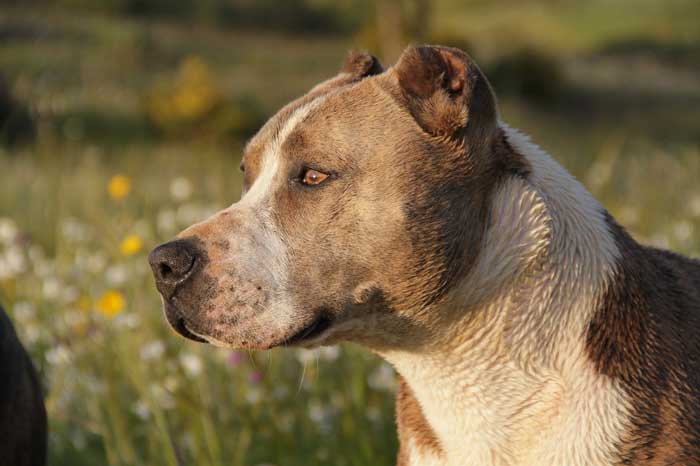
Add all of that up and the honest answer is this: a Pitbull is not the easy pick for apartment life.
They’re big and strong, often forty to sixty pounds of muscle, full of energy, stubborn on their off days. On the flip side they’re affectionate, funny, and they bond hard with their people.
They train up well and socialize fine, but only if you bring patience and act like the one in charge.
Bottom line, yes, you can keep a Pitbull in an apartment. You’ll need to give it enough room, manage it well, and front-load the exercise and the mental work every single day.
Check that your neighbors are comfortable around big dogs, and ideally don’t have other pets in the mix.
Plan on some regular grooming to keep the smell in check, and accept that you’ll be cleaning the place more than your dogless friends do.
Get all that right and a steady, even-tempered Pitbull turns into a genuinely great roommate.
Some Tips to Keep Your Pitbull Happy in an Apartment
A handful of small moves go a long way toward keeping your Pitbull content within four walls.
- Keep the delicate stuff away from the dog’s quarters
- Provide sufficient space for your dog
- Buy the right type of food for your dog
- Include some dog treats
- Get your dog some house toys to keep him engaged
- Include a chewy object he can bite, instead of your Italian shoes
- If possible, get your dog a treadmill to match his energy
- Keep the windows opened for proper ventilation
- Give your dog a bath with a shampoo for active dogs
- Keep your dog well-groomed and healthy
- Give your dog love and attention while you’re around
Do that and your dog stays mellow while you’re home. Stack on a couple of solid daily walks, regular trips to the dog park, and routine vet care, and you’ve got one happy camper.
Are There Restrictions to Having Pitbulls in an Apartment?
Yes, and you’ll want to check before you sign anything.
Some buildings and even whole neighborhoods ban specific breeds outright. Others take a softer line on large dogs. They’ll let you keep your stocky friend, but you may have to register the dog first.
Find out where Pitbulls stand where you live, or where you’re about to move. Being a good neighbor starts with picking a place that actually fits the life you’ve got.
Then there’s the question of what’s nearby. Is there a vet within reach? A pet store? A boarding spot for when you travel? A dog park with dogs your Pitbull can actually hang with?
Those services cluster in areas where big dogs are common. There’s a small garden near me, and it’s a good sign of a dog-friendly block. Owners out walking every evening, folks throwing a ball around, the Saturday meetups where half the neighborhood’s dogs show up.
Dogs are woven into the day around here. They walk, they sniff, they make themselves known, and they’re full members of the household. I’d take a place where my dog is welcome over a fancier one where he isn’t, every time.
Final Thoughts
A Pitbull in an apartment is not the simplest setup. These are big, powerful, high-energy dogs that like to run the show.
They’re also loyal to the bone, smart, and as sweet as any dog you’ll meet.
Can you do it? Absolutely. Just make sure your area welcomes the breed and has the vets, parks, and pet stores that make daily life easy.
Put the training in, keep the body and the brain busy, and a Pitbull will reward the effort many times over.
Resources
Frequently asked questions
Are Pit Bulls allowed in apartments?
It depends on the building. Some landlords and neighborhoods ban the breed or require registration, so read the pet policy and get approval in writing before you move in.
How much exercise does a Pit Bull need in an apartment?
A lot. One morning walk is not enough for this high-energy breed. Plan several outings a day, and a treadmill or tough chews can help on bad-weather days.
Are Pit Bulls good with other dogs?
They are usually friendly with people, but some square off with dogs their own size and chase cats. Introduce new animals slowly and supervise.
Are Pit Bulls easy to train?
They can be stubborn. Positive reinforcement with short, regular sessions works best.
Google lets you pick which sites come up first in your own results.