

A quick note: a few links below are affiliate links. Buy through one and we may earn a small commission. It never costs you more, and we only point to gear we'd actually put in front of our own dogs. As an Amazon Associate I earn from qualifying purchases.
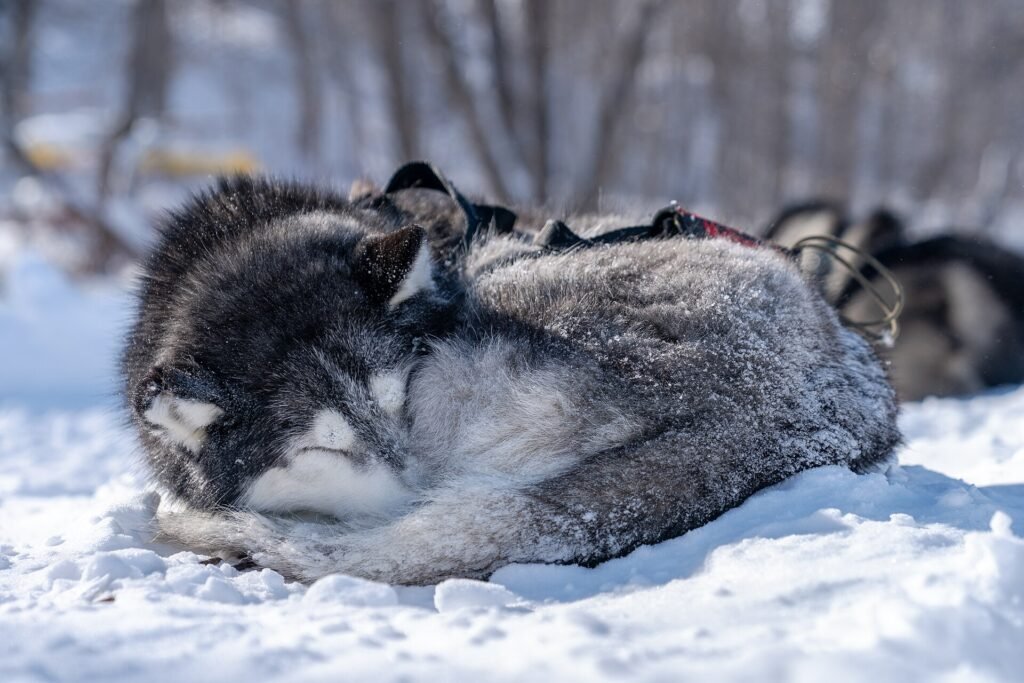
Siberian Huskies were bred to haul sleds across frozen distances, so stamina is baked into them. They are friendly, talkative, and almost comically energetic.
People fall for the wolfish looks and the blue eyes, then buy or adopt on impulse. A lot of those same Huskies end up in shelters once the energy and the shedding hit home.
So, are Huskies good apartment dogs?
Huskies are close to a worst-case scenario for small spaces, and honestly so are border collies if you can’t match their exercise needs. Our apartment dog breed guide ranks the calmer options if a husky’s energy level sounds like too much.
Due to their high energy and need for a lot of physical activity, Huskies are not usually the ideal dogs to live in an apartment. But if they are provided with enough exercise and are properly trained, Huskies can adapt very well to apartment life.
Sharing a one-bedroom with a Husky is doable. It also asks more of you than most breeds will.
Before you commit, it helps to know exactly what daily life with this breed looks like.
What You Should Know About Living with a Siberian Husky
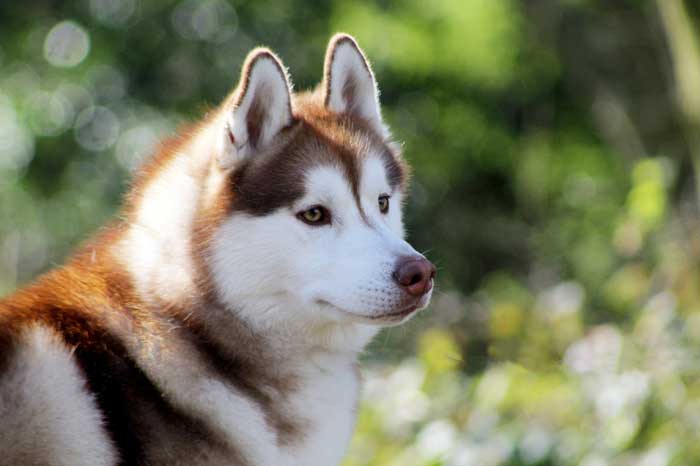
This is a working breed. A Husky wants a job, and an adult typically tips the scale around 35 to 60 pounds of pure go.
They are smart and genuinely sweet, the kind of dog that leans into your leg and talks back when you talk to it. Give them what they need and they make wonderful companions. Skip that part and you will see why so many wash out of homes.
Are Huskies Good Family Dogs?
Few breeds slot into a busy household as easily. Huskies are affectionate, patient, and naturally social.
They tend to like everyone they meet. With their own family, including kids, they are warm and tolerant.
There is an independent streak, sure, but underneath it they are pack animals that hate being on the sidelines.
The catch is time. A Husky needs training and real daily exercise to turn into the calm, well-mannered dog you pictured.
Active families do best here, the kind who actually want a dog along on the morning run or the weekend hike.
They also need people who are around. A Husky left to its own devices for most of the day is a Husky looking for trouble.
Do Huskies Need a Lot of Exercise?
Yes, and more than new owners expect. This is a dog built to run for miles and pull a loaded sled through snow.
The exact amount varies by dog. Some are content with an honest hour a day.
For most adults, plan on at least two hours of real activity, and some will still ask for more.
Watch for the signs that your Husky is running short:
- Escape attempts. A Husky that keeps testing the door or the fence is usually burning off energy that has nowhere else to go.
- Destruction. Chewing baseboards and digging at the carpet are classic under-exercised Husky behaviors.
- Constant demands. If your dog shadows you room to room, drops toys in your lap, and barks at you to do something, that is a request for a workout, not just attention.
They live for the outdoors, which sounds like a strike against apartment life.
Here is the thing people get wrong: a big backyard does not exercise a Husky. The dog will lie in it and stare at the gate. You still have to get out there and move with it.
Do Huskies Need Grooming?
A Husky carries a medium double coat, and yes, it sheds. There is a low background shed all year, plus one or two heavy blowouts when the entire undercoat comes loose in clumps.
Even so, they are easier to keep than most double-coated breeds.
A weekly brushing keeps the everyday fur in check. During a coat blow, switch to daily sessions with an undercoat rake or you will be vacuuming forever.
Baths are rare. Huskies are fastidious and nearly odorless, so you only wash one when it actually gets into something.
Round it out with the basics. Trim the nails every couple of weeks if they aren’t wearing down on their own, and brush the teeth regularly to head off gum disease and bad breath.
Are Huskies Hard to Train?
Smart, yes. Easy, no. Huskies are stubborn and independent, with a sharp sense of pack rank, and they tend to obey the one they read as the leader.
Start young and stay consistent. Those two things do most of the work.
Show your Husky early that you set the rules. Get that across and a long list of behavior problems never shows up in the first place.
A few ways to hold that leader role:
- Keep the rules the same every day. Make an exception once and your Husky files it away as a loophole.
- Don’t treat your Husky as a roommate with equal say. Stay the one who calls it, and keep the hierarchy obvious.
- Be calm and sure of yourself around the dog. Hesitate, and a Husky will read it as a gap in leadership and push into it.
Positive reinforcement is the method that actually sticks with this breed. Reward the behavior you want with treats and praise, and steer the wrong choice toward a better one.
It works well on Huskies and keeps them from turning fearful or snappy the way harsh correction can.
A solid first step is a professional obedience class.
You both build a foundation, and you walk away with enough to carry the training on at home.
Are Huskies Easy to Potty Train?
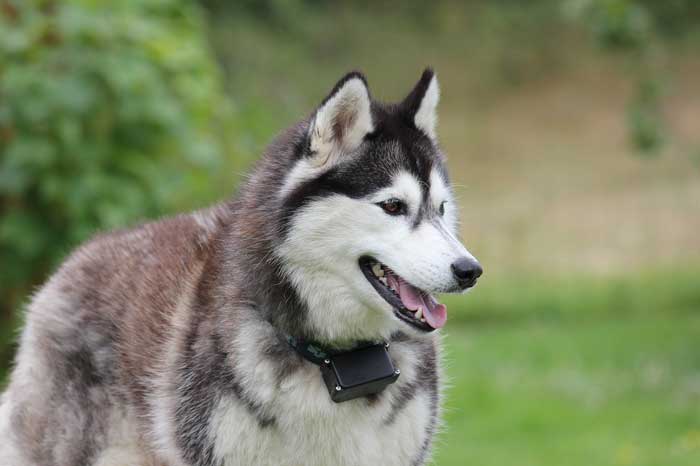
Here the breed gives you a break. Huskies are clean by nature, which makes apartment potty training relatively easy.
In an apartment, the goal is teaching your dog to do its business outside, every time.
The routine that gets you there:
- Pick a potty spot close to the building, ideally on grass.
- Take your dog to that same spot on a schedule. A young puppy can’t hold it long, so plan on trips roughly every hour at first, then stretch the gaps as it grows.
- When your dog goes in the right place, praise it and hand over a treat right away.
- Catch it starting to go indoors? Scoop it outside to the chosen spot to finish, then praise and treat once it’s done.
- Find an accident after the fact? Don’t punish. Clean the area with an enzymatic cleaner so not a trace of the smell is left to pull the dog back.
The whole thing runs on consistency and patience from day one.
Sooner than you’d guess, your Husky will be the one telling you it’s time to head out.
Do Huskies Bark a Lot?
Barking is not really their thing. It is mostly a territorial habit, and Huskies just aren’t a territorial breed.
That same trait makes them lousy guard dogs. A stranger at the door is more likely to get a tail wag than a warning.
When a Husky does bark, the reason is usually one of these:
- An invitation to play, aimed at you or another dog.
- A heads-up that it wants something, like a trip outside.
- An outlet for extra energy it hasn’t burned off.
- Stress from being left alone too long.
- Fear. Barking is the dog trying to push back whatever it sees as a threat.
Quiet on the barking front, loud on another. Huskies howl, and they put their whole chest into it.
The usual triggers for a howl:
- Talking to other dogs, often answering a howl they hear in the distance.
- Plain boredom.
- High, wailing sounds like sirens, which a Husky will happily sing along with.
Can Huskies Be Left Alone?
Not for long, and not as a daily habit. These are pack animals that need contact with their people and, ideally, other dogs.
They are also more prone to separation anxiety than a lot of breeds when the alone time stretches on.
It tends to come out as destruction, nonstop barking, or another escape attempt while you’re gone.
Puppies are the worst candidates for solo time. They are still figuring out the new home and need you close.
Build the tolerance slowly, adding a little time at a stretch, and read how your dog handles each step.
As a rough ceiling, six hours is about the limit for a healthy adult, though it swings a lot from one dog to the next.
If your schedule means leaving a dog home alone all day, most days, a Husky is the wrong pick. Be honest with yourself about that one.
Is a Husky a Good Apartment Dog?
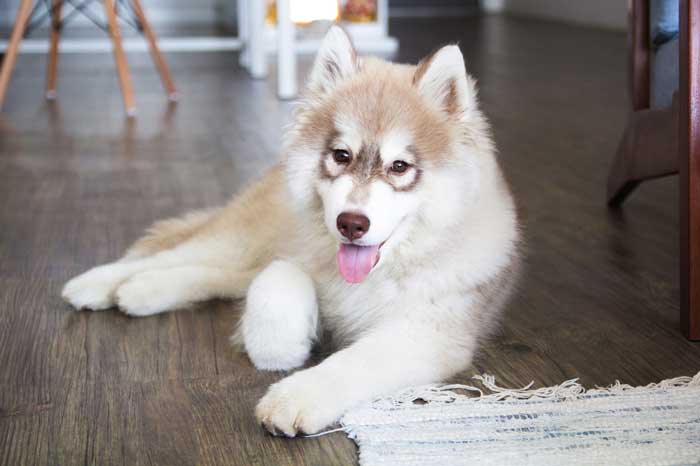
It won’t win any award for the easiest apartment dog, but a Husky can adapt very well to apartment life when it gets enough daily exercise and proper training.
The traits working in its favor:
- Friendly, gentle temperament that won’t terrorize the neighbors.
- No real need for a lot of square footage.
- Rarely barks.
- Easy to potty train.
- Easy to groom.
- Great with families and gets along with everyone, kids included.
Tips for Raising a Husky in an Apartment
Check the Dog Breeds Restrictions of Your Apartment
Plenty of buildings keep a banned-breed list. Dogs tagged as noisy, hard to handle, or dangerous get shut out.
Limits on size, weight, and age are common too.
Some places say yes to dogs but want pet insurance on file to cover any damage to the unit.
Huskies, unfortunately, land on a lot of those banned lists.
So ask first. Get the rules in writing from your landlord or building manager before you bring a Husky home.
Exercise Is a Must
Huskies run hot on energy. Exercise is what keeps them sound in body and in mind.
Shortchange it and you get the destruction and the door-bolting all over again.
One more thing: this breed was built for cold. In hot weather, ease off and watch for overheating when you work a Husky.
Aim for two hours a day, minimum, and make a good chunk of it high effort.
Ways to get a Husky the workout it needs:
A Daily Walking Routine
Every dog needs its walks. They cover the physical side and feed the mind too, all those passing smells, sights, and sounds doing quiet work on a curious brain.
An easy stroll around the block won’t cut it for a Husky.
Set a real schedule. Two walks of 45 to 60 minutes each works well, one early before the heat and one in the cooler part of the afternoon.
Want to drain more energy in the same time? A weighted dog backpack adds resistance and makes the walk count for more.
Take Him Out for a Run or a Bike Ride
Some Huskies act like the tank never empties. They have the lungs and legs of a distance runner, because that is exactly what they were bred to be.
That makes a Husky a great partner for running and biking. Take one on a trail and it will be thrilled.
Two cautions. Don’t push the pace in the heat, and build distance and intensity up slowly so you don’t strain a young dog’s joints.
Take Him to the Dog Park Regularly
Nothing beats running flat out and playing off leash.
With no backyard of your own, a dog park gives your Husky room to tear around and mix with other dogs.
Just scope it out first. You want a secure park with owners who are actually watching their dogs.
Provide Mental Stimulation
Huskies are clever, and a clever dog needs to think as much as it needs to move.
A few ways to give that brain a workout:
Let Your Dog Explore His Environment
Dogs read the world through their nose, eyes, and ears.
Letting your Husky sniff and investigate its surroundings is one of the simplest ways to tire out its mind.
Walks are the natural place for it. On a walk, trade off between covering ground and giving the dog time to read every interesting spot.
A dog that gets to sniff and explore on top of the physical effort comes home far more settled than one that only logged the miles.
Puzzle Toys
Interactive toys make a dog work for the payoff through little problem-solving games.
A good puzzle feeder or treat puzzle can keep a Husky locked in and busy for a long stretch.
Provide Consistent and Regular Training
Obedience training is the single best way to keep a Husky’s mind occupied. It pays off twice, since it also gives you a more obedient, balanced dog.
A professional obedience class early on is worth the cost.
You leave with a working foundation and the know-how to keep training your dog at home for years after.
Seek Help If You Need to Leave Your Dog Home Alone
Alone time is not where a Husky shines.
Life happens, though, and there will be days you have to head out. A little planning makes those hours easier on your dog.
- Walk your dog hard right before you leave, and again the second you get back. A tired Husky is far more likely to settle and sleep while you’re out.
- Leave a few chew and puzzle toys behind to soak up its focus, so the couch cushions stay off the menu.
When you can swing it, bringing in some outside help is worth it for the dog’s sake.
1. Doggie Daycare
Facing a long stretch away from home? Doggie daycare beats leaving a Husky to stew by itself.
The dog spends the day playing with other dogs instead of counting the hours at home.
You get a dog that comes home tired and well socialized, which is exactly what this breed wants.
2. Dog Walkers
A professional dog walker can swing by your apartment to take your Husky out in the middle of the day.
That breaks up the alone time and adds another dose of exercise on top.
Final Thoughts
Huskies are striking dogs with a personality to match.
They are also not a low-effort breed, and apartment life only sharpens that.
Get the exercise, the training, and the company right, and a Husky will thrive in a fifth-floor walk-up as happily as on a farm. Cut corners on any of the three and both of you will be miserable. Decide which owner you can be before you bring one home.
Resources
Frequently asked questions
Can big dogs really live in an apartment?
Yes. Energy level matters far more than size. A calm Great Dane settles into a flat better than a wound-up terrier, as long as it gets a proper walk twice a day.
Which dog breeds bark the least in apartments?
Greyhounds, Basenjis, Bulldogs and Cavaliers are among the quietest. Any dog can learn to be calm, but these simply start at a lower volume.
How much exercise does an apartment dog need?
Most do well on 30 to 60 minutes a day split into two walks, plus a little indoor play. Cut that short and the barking and chewing usually start.
Google lets you pick which sites come up first in your own results.