

A quick note: a few links below are affiliate links. Buy through one and we may earn a small commission. It never costs you more, and we only point to gear we'd actually put in front of our own dogs. As an Amazon Associate I earn from qualifying purchases.
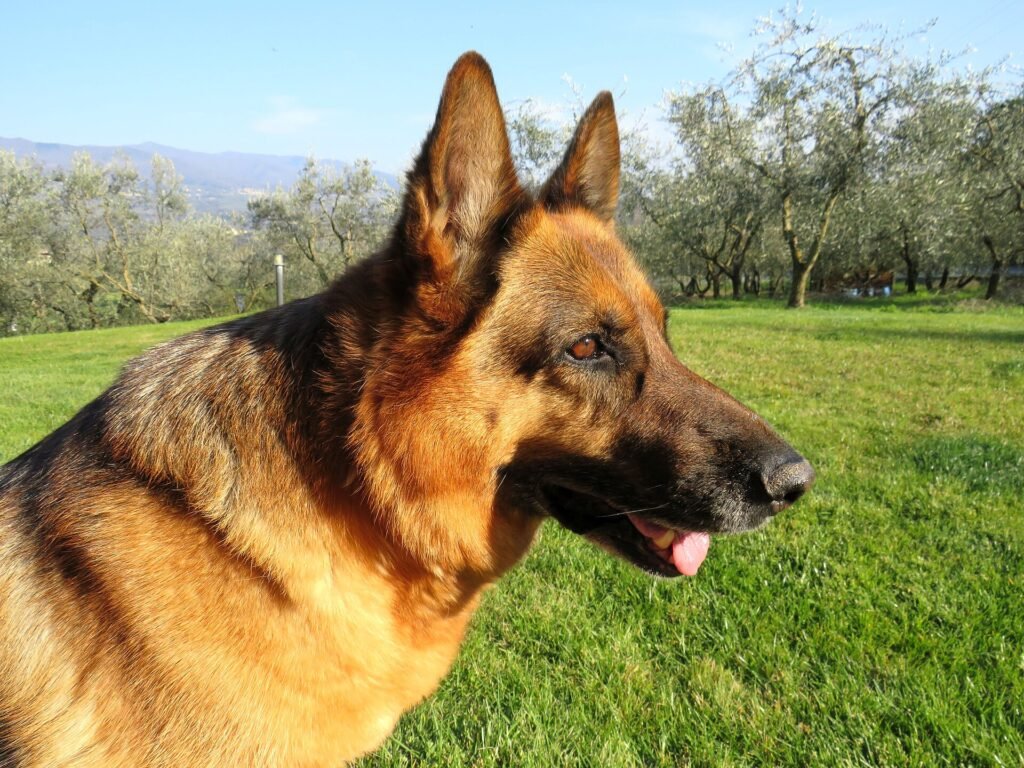
The German Shepherd is a big, capable working breed. Most adults land somewhere around 50 to 90 pounds, with the males on the heavier end.
They are sharp, steady dogs with a serious streak. Loyal to the point of velcro, naturally protective, and quick to size up a stranger at the door.
So, are German Shepherds good apartment dogs?
If you’re new to the breed entirely, it’s worth reading whether German shepherds make sense as a first dog before deciding on apartment living specifically. Other large, loyal breeds face similar scrutiny, pit bulls get the same questions about space and exercise.
Although they are not the ideal apartment dogs, German Shepherds can adapt well to apartment living when they have plenty of exercise, mental stimulation, and are socialized appropriately. It is a very adaptable, intelligent, and obedient dog with a friendly, loving, and very loyal personality, ideal characteristics for apartment life.
Before you commit, you owe it to the dog to be honest about the breed. A Shepherd has real needs, and a small space punishes the owner who ignores them.
What You Should Know About Living with a German Shepherd
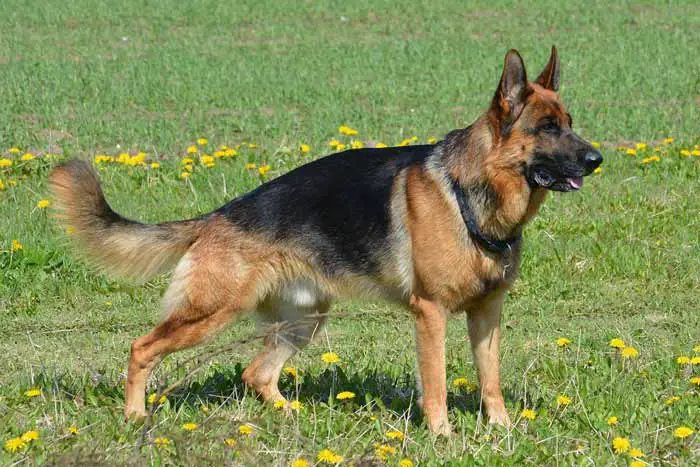
This is one of the smartest breeds going, and that cuts both ways.
They are strong, athletic, and surprisingly graceful for their size. Most people know them as guard dogs, but the same brains and drive make them excellent at police work, search and rescue, and service tasks.
Is a German Shepherd a Good Family Dog?
With the right training and early socialization, yes. A well-raised Shepherd folds into family life and treats the household as his job.
They bond hard. Affectionate with their own people, watchful around everyone else, and almost stubbornly loyal.
They also love a bit of chaos. A Shepherd raised around kids from puppyhood usually has the patience to handle toddlers and rowdy older children alike, though you should still teach the kids to leave a resting dog alone.
Here is the catch. They are active dogs, so they do best in an active home that actually wants to move.
Give a German Shepherd the exercise and structure he needs and you get a balanced dog. Skip it, and you get a frustrated one.
Do German Shepherds Need a Lot of Exercise?
Yes, and more than most people expect. Plan on roughly two hours a day.
Fall short and the dog tells you about it. A Shepherd who is under-exercised will chew the couch, dig at the carpet, and invent his own bad habits.
The body is only half the equation. These dogs think, so they need problems to solve as much as miles to cover.
That is part of why daily walks matter so much. The walk burns energy, but the smells, the sounds, and the new faces along the way tire out his brain too.
A practical way to hit that two hours is a couple of solid walks, each around 45 to 60 minutes.
Routine helps. Try to walk him at roughly the same times each day so his body learns the rhythm.
Spread it out, too. Several shorter outings across the week beat one marathon walk on a Sunday.
Once the basics are covered, lean into harder activities. This breed thrives on a job and a bit of sweat.
If you run, hike, or ride, you have found yourself a partner. A fit Shepherd will happily keep pace.
Their stamina is real, and they can cover long distances without tiring. Just build up the intensity and mileage slowly, especially with a young dog, so you protect those growing joints.
Do German Shepherds Need to Be Groomed?
Brace yourself for the hair. People joke about the “German Shedder” for a reason. He carries a thick, medium-length double coat that drops fur year round and blows out heavily in spring and fall.
Brush at least once a week to stay ahead of the loose undercoat. During shedding season, daily is closer to the truth.
Baths are another story. Shepherds stay fairly clean and rarely get that doggy smell, so a wash every three months or so is plenty.
Over-bathing backfires. Strip the natural oils too often and you trade a little odor for itchy, irritated skin.
Round it out with the small stuff. Trim the nails about weekly if pavement walks are not wearing them down, and brush his teeth often to keep the breath and the gums in check.
Can German Shepherds Be Left Alone?
They would rather not be. This is a people-oriented breed that wants to be wherever you are, and a bored Shepherd finds trouble fast.
Separation anxiety is common, too. Leave one alone too long, too often, and you may come home to shredded cushions and a noise complaint from the neighbor.
None of that means they can never be left. It just means you set them up for it instead of hoping for the best.
A healthy adult can usually manage about six hours on his own, and some stretch to eight.
Puppies are a different matter. A young Shepherd should not be left more than two hours, since he cannot hold his bladder that long and has not learned to settle by himself yet.
Remember what you are dealing with. An energetic, clever dog with nothing to do will make his own fun, and you rarely like his choices.
A few things make the alone time easier on him:
- Gradually increase the amount of time he is left alone. Avoid leaving your dog alone for a long time at once. You have to start slowly, leaving him alone for a few minutes and gradually increase the time.
- Make sure your dog has a high-energy exercise session just before he is left alone. A tired dog is calmer and tends to spend time sleeping.
- Leave him some chew and puzzle toys to keep him entertained and mentally stimulated. It’s advisable to vary the toys so he doesn’t get bored with them.
- Install a Pet Cam in your apartment that allows you to monitor his behavior while he’s alone. Some models even allow you to talk to him and treat him.
Are German Shepherds Easy to Train?
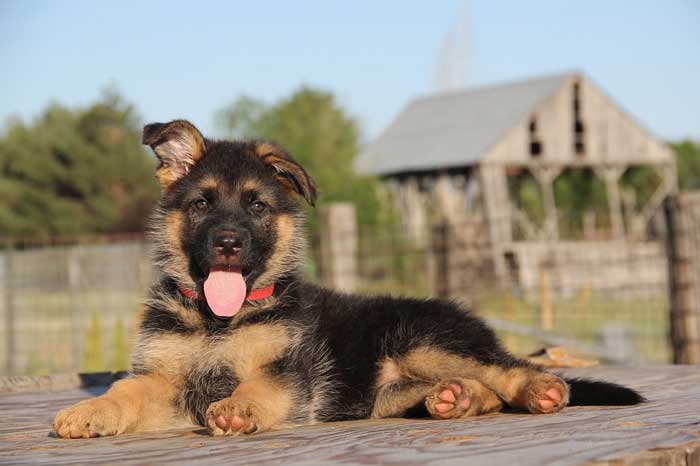
Few breeds learn faster. Shepherds pick up new commands quickly and genuinely want to please you, which is why they sit near the top of nearly every trainability ranking.
Start young. The earlier you begin, the easier everything that follows becomes.
You also need to be the one calling the shots, and that has nothing to do with being harsh. Heavy-handed punishment backfires with this breed. Push a Shepherd around and he may push back, sometimes with teeth, because he reads it as a threat.
Leadership here looks calm and steady. Be confident, be consistent, and be firm without ever scaring the dog.
Begin with the house rules and the limits you expect him to respect. Stay consistent and the results come fast. Get sloppy and contradict yourself, and he simply stops understanding what you want.
One piece of training matters as much as any command, and that is socialization. Start it early, while he is still a puppy.
The idea is simple. Introduce him to all sorts of places, people, and other animals so the world stops feeling like a series of surprises.
Do it well and you raise a Shepherd who stays calm and confident in a crowd, an elevator, or a busy street, instead of a nervous dog who suspects everyone.
Are German Shepherds Easy to Potty Train?
Because the breed learns so quickly, potty training relatively simple.
The whole thing rests on three things: consistency, patience, and the time you are willing to put in.
Apartment living adds a wrinkle, since there is no backyard. You have to teach him to do his business outside, on a schedule.
Here is what works:
- Choose an area near the apartment that is preferably a grass surface. Dogs develop a preference for doing their thing on certain surfaces.
- At first, you have to frequently take your dog outside to the designated area to go to the bathroom. Puppies need to go to the bathroom every one to two hours.
- Every time your dog successfully goes to the bathroom in the designated area, praise and give him a delicious treat. Slowly your dog will understand where he should go.
- Accidents are inevitable. When you find your dog red-handed doing his things, immediately take him out to the designated place and let him finish there. Praise and reward him when he is done.
- When you find an accident in your apartment, there is no point in scolding him since he will not relate the accident to scolding. Just try to clean the area well with an enzymatic cleaner so that there is no trace of odor.
Do German Shepherds Bark a Lot?
They can. The breed was built to herd and to guard, so staying alert and sounding off is baked into the wiring.
That tendency shows up as a fair bit of barking, especially when something seems off.
In an apartment, a deep Shepherd bark carries. Thin walls and close neighbors turn that instinct into complaints to the landlord in a hurry.
Most of the barking traces back to a handful of triggers:
- Boredom and Frustration
- Guardian Instinct
- Excitement
- Pain and Discomfort
The fix is mostly upstream. A Shepherd who gets real exercise and mental work each day stops sweating the small stuff and saves his voice for things that actually warrant it.
Is a German Shepherd a Good Apartment Dog?
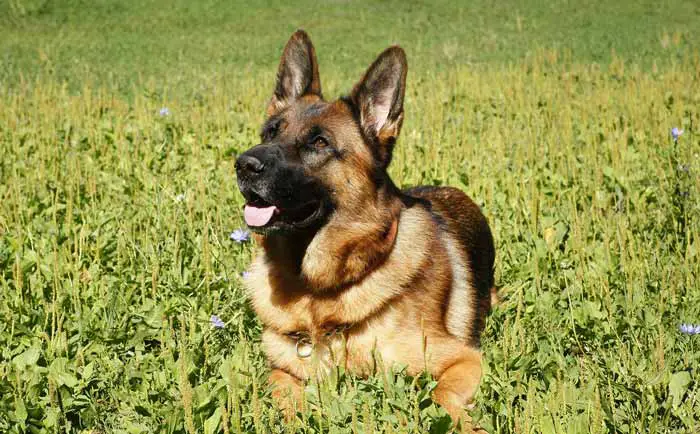
On paper, no. They are big dogs with big exercise and big mental needs, and that scares a lot of people off the idea.
In practice, it is a different story. A well-socialized Shepherd whose exercise and brainwork are genuinely covered can settle into apartment life and be a calm, easy roommate indoors.
A few traits actually work in their favor in a small space:
- They are dogs that easily adapt to different lifestyles
- With proper training, they are very obedient and well-behaved dogs
- With the right amount of exercise are calm dogs indoors
- They are dogs with a noble, friendly, loving, and loyal personality.
- With proper socialization, they are very social dogs.
Tips for Raising a German Shepherd in an Apartment
Check the Dog Breeds Restrictions of Your Apartment
Do this before you fall in love with a place. You need a building that actually welcomes German Shepherds.
Plenty of rentals carry breed restrictions. Some buildings ban specific breeds outright because they have decided those dogs are dangerous or hard to handle.
The rules are all over the map. They shift from city to city, building to building, and a lot comes down to whatever the landlord decides.
Breed is not the only filter, either. Many leases also cap the size, the weight, or even the age of the dog you can bring in.
And here is the frustrating part. The German Shepherd shows up on those banned-breed lists more often than almost any other dog.
So ask directly. Get the pet policy in writing from the landlord or building manager before you sign anything.
Sometimes there is a middle ground. A few places will allow the dog but require pet insurance to cover any damage to the unit.
Establish a Daily Routine
Dogs do better on a routine, and apartment dogs especially.
A predictable day tells your dog what comes next. That predictability lowers anxiety and helps him feel safe in a small, busy environment.
Do not turn it into a rulebook, though. Be so rigid that any small change rattles him and you have created a different problem. Toss in a new activity now and then so he learns that surprises can be fun.
The backbone of the routine is simple: meals, exercise, and potty breaks. Naps and a little playtime fit in around those anchors.
Feeding at set times pays off in a concrete way. Once meals are regular, you can predict almost to the half hour when he will need to head outside.
Anchor the exercise the same way. Walk him at roughly the same times daily and he learns to spend his energy on schedule, then rest and sleep in between.
Keep Your Dog Mentally Stimulated
The German Shepherd’s brain is a gift and a responsibility. One of the smartest breeds around, with everything that implies.
On the plus side, that intelligence makes him a joy to train. The flip side is that a smart dog with an idle mind gets bored and frustrated, and he acts on it.
As I mentioned earlier, the daily walk does double duty. It works the body, but the sights and smells along the route also feed the mind.
So let him sniff. On a walk, give him the leash slack to investigate the lamp post and read whatever the last dog left behind.
It is funny how well it works. A dog who gets to explore comes home more tired than one who was marched around the block without a single stop.
Puzzle toys are another good tool. Interactive feeders and treat puzzles come in different difficulty levels and can keep a Shepherd busy and thinking for a solid stretch.
Still, nothing beats training for working the brain.
Obedience work pulls double duty here. It tires the mind and, over time, gives you a steadier, better-mannered dog to live with.
It also gives you a lever for specific issues. A lot of nuisance habits, the constant barking included, ease up once the dog has real training to fall back on.
If you can swing it, start with a professional class. A few sessions with a good trainer build solid foundations and hand you the tools to keep the work going at home.
Final Thoughts
People assume an apartment calls for a little dog, and that small dogs are a better option than large breeds. Size, though, is rarely the thing that makes or breaks apartment living.
What matters is whether you understand the dog in front of you and can meet his needs in the space you have. A German Shepherd can absolutely thrive in an apartment. The question is whether you will put in the daily two hours, the training, and the brainwork it takes to get there.
Resources
Frequently asked questions
Can big dogs really live in an apartment?
Yes. Energy level matters far more than size. A calm Great Dane settles into a flat better than a wound-up terrier, as long as it gets a proper walk twice a day.
Which dog breeds bark the least in apartments?
Greyhounds, Basenjis, Bulldogs and Cavaliers are among the quietest. Any dog can learn to be calm, but these simply start at a lower volume.
How much exercise does an apartment dog need?
Most do well on 30 to 60 minutes a day split into two walks, plus a little indoor play. Cut that short and the barking and chewing usually start.
Google lets you pick which sites come up first in your own results.