

A quick note: a few links below are affiliate links. Buy through one and we may earn a small commission. It never costs you more, and we only point to gear we'd actually put in front of our own dogs. As an Amazon Associate I earn from qualifying purchases.
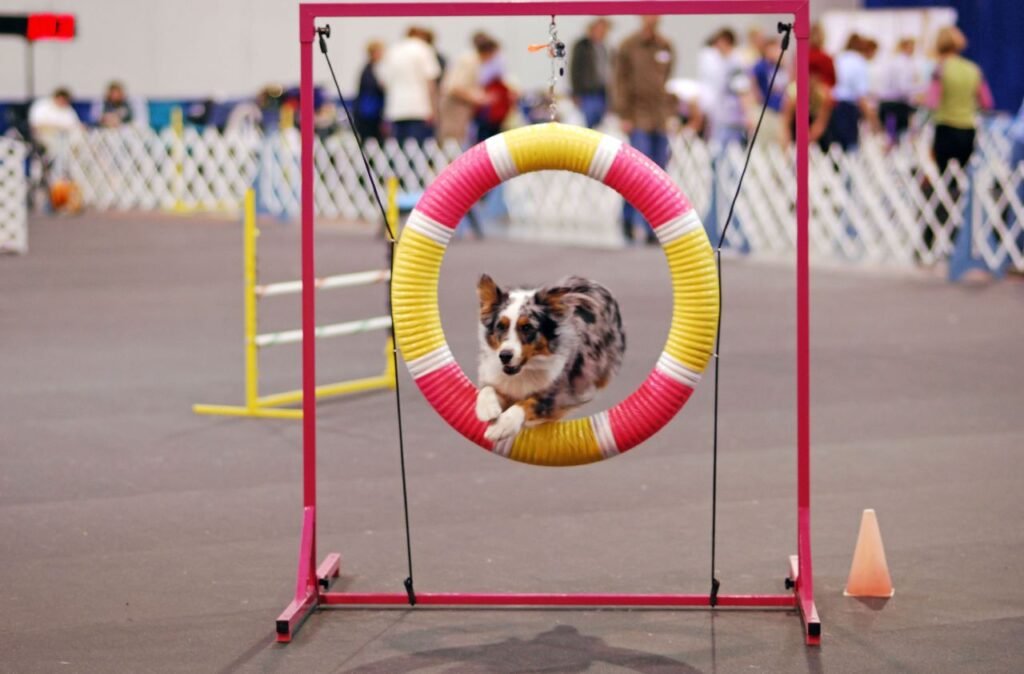
The Australian Shepherd, or “Aussie” for short, is a high-drive herding dog with a brain that rarely clocks out. These are warm, people-focused dogs that want to be wherever their family is.
So here is the real question. Are Australian Shepherds good apartment dogs?
Australian Shepherds are not the ideal dogs for apartment living. But Aussies can adapt well to apartment life with an active person or family who can provide high physical activity and mental stimulation they need.
Herding breeds tend to get judged the same way for apartment life, and Aussies aren’t the only ones, border collies face the exact same energy-and-space tradeoff. Our full apartment dog breed roundup has more on where high-drive breeds tend to succeed or struggle.
Answering that honestly means understanding the breed, what it needs every single day, and what your life looks like once one moves in.
What You Should Know About Living with an Australian Shepherd
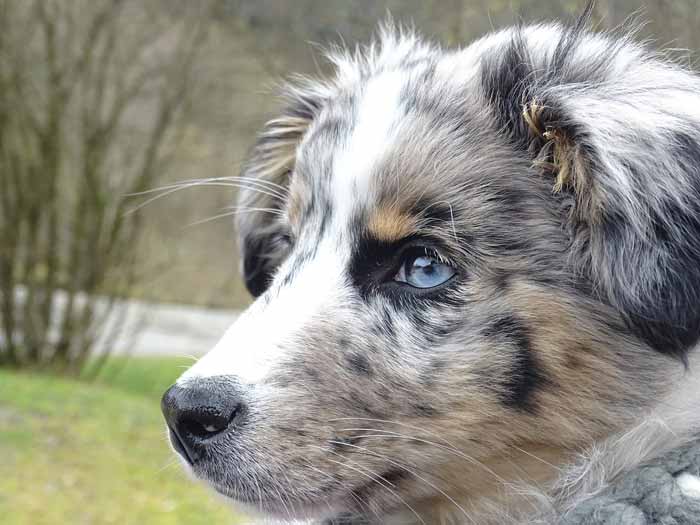
Aussies are athletic, quick-witted dogs, and they sit near the top of almost every list of the smartest breeds.
They bond hard. A well-treated Aussie is loyal to the point of velcro and keeps a quiet eye on the people he loves.
Is an Australian Shepherd a Good Family Dog?
Yes, in the right home. These dogs crave human company and want a seat at every family activity, from breakfast to the evening walk.
They were bred to work, so they thrive with families who like to move. Households that run, hike, or spend weekends outdoors suit them best.
With kids, an Aussie can be a great playmate. They have stamina to burn and they play rough, which usually fits older children better than toddlers.
One catch. The herding instinct runs deep, and some Aussies will try to herd children by circling or nipping at heels. Teach him early that the kids are not livestock and the problem mostly disappears.
Do Australian Shepherds Need a Lot of Exercise?
A lot. This is a working breed that needs both its body and its mind worked every day to feel settled.
Plan on two solid sessions of roughly 40 to 60 minutes each. Make them count: a hard run, fetch, a frisbee chase, something with real intensity.
Physical effort is only half of it. An Aussie this sharp gets restless without a mental job to chew on.
Give him things to figure out and he learns fast and stays content. A dog with a task is a happy dog.
Skip the exercise and you will see it. Bored Aussies chew furniture, dig at the carpet, and bark at nothing for an hour.
Meet the need, though, and the same dog is calm and easy to live with indoors.
Australian Shepherds Need a Lot of Grooming?
All that coat fools people into expecting hours of upkeep. The reality is lighter than it looks.
A regular brushing pulls out the dead undercoat before it ends up on your couch, and baths only need to happen when he is genuinely dirty.
Aussies shed year round, with two heavier blowouts in spring and fall.
During those few weeks, brush more often and bathe as needed to stay ahead of the loose hair.
The rest is basic. Trim his nails if they are not wearing down on their own, and brush his teeth a few times a week to keep his breath fresh and his gums healthy.
Are Australian Shepherds Easy to Train?
Few breeds take to training like this one. Aussies are eager, attentive, and they genuinely enjoy learning what you ask of them.
That intelligence cuts both ways.
The upside is obvious: they pick up commands quickly and always seem ready for the next one. The downside shows up if you are inconsistent. An Aussie who senses no clear leadership will start testing boundaries to see what he can get away with.
Stay consistent and make it clear that you set the rules.
Keep his body and mind busy while you train, and the lessons stick far better.
Start young, hold the line on discipline, and the payoff is a dog that is a pleasure to handle.
Are Australian Shepherds Hard to Potty Train?
Housetraining usually goes smoothly. They are smart, and with patience and a steady routine you will see progress within days.
The tricky part of potty training a dog in an apartment is that he cannot just trot out to a yard whenever nature calls. Apartment living means a set schedule and getting him outside on time, every time.
Start the day your Aussie comes home. Plan to give the first couple of weeks over almost entirely to training.
Pick a potty spot outside first, ideally a patch of grass close to your door.
Early on, the whole game is opportunity and reward. Get him to the right spot often, and praise him the second he goes.
Puppies usually need to go every hour or two. So at the start, walk him to that spot every hour and reward every success.
Take him out right when he wakes up, after every nap, after meals, and last thing before bed.
Learn his tells. Circling, sniffing, and sudden restlessness all mean it is time to move.
Accidents will happen indoors. Clean them with an enzymatic pet cleaner so no scent lingers to mark the spot.
Do not scold him for it. It teaches nothing and only makes him nervous around you.
Give an Aussie enough wins and rewards, and before long he will be the one telling you he needs to go out.
Do Australian Shepherds Bark a Lot?
Yes, they tend to be vocal.
They were bred to move livestock, and a loud, insistent bark was part of how they kept the herd in line.
A few common triggers:
- Anything he reads as a threat near his territory, whether a stranger at the door or another animal outside.
- A sudden loud noise that startles him.
- Stretches of boredom or feeling ignored.
- Pent-up energy with no outlet, which the barking helps release.
In an apartment, that constant noise turns into complaints from neighbors and awkward talks with your landlord. Living this close to others, keeping the barking in check matters.
Can Australian Shepherds Be Left Alone?
Not happily. This is a smart, busy dog that does best with a job to do and his people nearby.
He needs heavy exercise and a steady stream of mental work, and without it boredom sets in fast.
Put those traits together and long stretches of solitude become hard for him, sometimes tipping into real separation anxiety.
Left alone too long, an Aussie invents his own entertainment. Usually that means shredded cushions and barking that carries down the hall.
Is an Australian Shepherd a Good Apartment Dog?

The honest answer is no, not by default. Still, an Aussie can adjust to apartment life when he gets plenty of hard exercise and real mental stimulation every day.
This is not a beginner’s breed, and first-time owners often struggle. But if you are active and willing to give an Australian Shepherd the time and attention he demands, he will repay it as a devoted, affectionate member of the household.
Tips for Raising an Australian Shepherd in an Apartment
Provide Plenty of Physical Activity
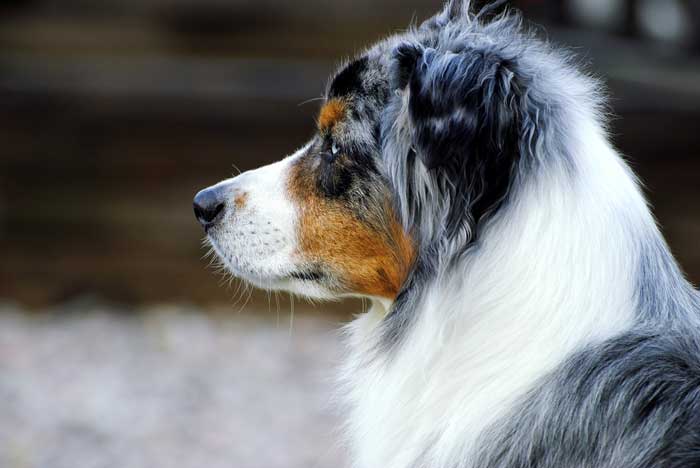
Aussies are built to go. They are playful, almost relentless, and best matched with people who actually want a dog that keeps up on every adventure.
Daily exercise keeps him sound in body and mind. Shortchange it and you get the familiar mix of destruction and nonstop barking.
Aim for around two hours of activity a day, weighted toward the high-energy stuff.
A few ways to burn that energy:
Daily Walks
Every dog needs walks. They drain energy, yes, but they also feed the mind through new smells, sounds, and sights along the way.
Do not mistake a slow loop around the block for enough. An Aussie wants at least a couple of brisk, purposeful walks a day.
For extra challenge, strap on a dog backpack and let him carry a little weight.
Running or Biking
Like any good working dog, an Aussie seems to run on a bottomless tank. He can cover real distance without flagging.
Running and biking suit him perfectly and double as some of the best exercise you can give him.
Just build up the distance and pace slowly so you do not risk a joint or muscle injury.
Dog Parks
Aussies need room to open up and run flat out on a regular basis.
No backyard with your apartment? A good dog park fills the gap.
There he can run and roughhouse with other dogs. And since chasing and fetching are wired into the breed, it is a perfect spot for a ball or frisbee session.
Keep Your Australian Shepherd Mentally Stimulated
For a dog this clever, a tired mind matters as much as tired legs.
Mental work wears him out as fast as a run does. With an Aussie, physical exercise alone will not get him to settle. His brain needs a challenge too.
There are a few easy ways to give him that.
Allow Your Dog to Explore the Environment
A walk, a run, even a quick potty trip is a chance to feed his head as well as his body.
Let him stop and sniff. Give him a few minutes to read the ground and check out whatever caught his nose.
A walk where he gets to investigate tires him out far more than one where you march him straight through.
Provide Dog Puzzle Toys
Aussies love a problem to solve and a puzzle to crack.
Puzzle toys are one of the best ways to keep one focused and occupied indoors, which counts double in an apartment.
Train Your Australian Shepherd
Training does more than one job. It gives you a polite, obedient dog and tightens the bond between the two of you.
It is also one of the sharpest mental workouts you can hand an Australian Shepherd.
The strongest start is a professional obedience class. You build on solid fundamentals that pay off for both of you.
It also leaves you with the know-how to keep training him on your own afterward.
Aussies never stop wanting to learn. Once the basics click, yours will happily take on harder, more involved tasks.
Teach Your Dog to Control His Barking
Most Aussies are talkers, and that habit gets old fast behind thin apartment walls.
You cannot switch off a dog’s bark. You can teach him to manage it.
Enough mental work and daily exercise already cut down the excess barking. On top of that, you can train him to start and stop on cue.
The trick is teaching both the “Speak” and “Quiet” commands:
- Do something that gets him barking in the first place.
- The moment he barks, hold a treat near him, say “Speak” in a calm, firm voice, and give the treat right away.
- Let him stop, then repeat until he barks on the “Speak” cue every time.
- Once that is solid, prompt a bark with “Speak”.
- While he is barking, bring a treat close and say “Quiet” in that same firm, calm voice.
- Wait until he is fully quiet, reward him, and run it again until he has it down.
- As he gets it, stretch out the gap between the moment he goes quiet and the moment the treat arrives.
Seek Help If You Have to Leave Your Aussie Alone for Long Periods
Aussies do not do well on their own. They get bored the second there is nothing to do, and they want their people around almost constantly.
Even so, there are days he will have to be alone. A few things take the edge off:
- A long, hard workout before you leave settles him and helps him rest while you are gone.
- Leave out his puzzle and chew toys so he has somewhere to point his focus and energy.
- For a longer absence, ask a friend to swing by and walk him, which shortens his alone time and adds exercise.
- Hire a dog walker or pet sitter to walk him and keep him company.
- Doggie daycare is a great fit if you are regularly out for long hours.
And be honest with yourself. If your week means leaving a dog alone for long stretches on the regular, the Australian Shepherd is the wrong breed for you.
Are Mini Australian Shepherds Good Apartment Dogs?
Final Thoughts
An active person or family with time to spend and energy to match will find the Australian Shepherd a loyal, affectionate companion, and a great medium-sized dog breed for apartment living.
Be clear-eyed about it, though. The Aussie is not the right dog for just anyone.
He needs a home that matches his pace. Someone who stays active and genuinely wants a dog in the thick of every run, game, and outing.
Resources
- Australian Shepherd Temperament and Personality by Canna-Pet
- The Australian Shepherd Temperament Guide & Personality by The Smart Canine
Frequently asked questions
Can big dogs really live in an apartment?
Yes. Energy level matters far more than size. A calm Great Dane settles into a flat better than a wound-up terrier, as long as it gets a proper walk twice a day.
Which dog breeds bark the least in apartments?
Greyhounds, Basenjis, Bulldogs and Cavaliers are among the quietest. Any dog can learn to be calm, but these simply start at a lower volume.
How much exercise does an apartment dog need?
Most do well on 30 to 60 minutes a day split into two walks, plus a little indoor play. Cut that short and the barking and chewing usually start.
Google lets you pick which sites come up first in your own results.