


A quick note: a few links below are affiliate links. Buy through one and we may earn a small commission. It never costs you more, and we only point to gear we'd actually put in front of our own dogs. As an Amazon Associate I earn from qualifying purchases.
The Goldendoodle is a newer cross, born from a Golden Retriever and a Standard Poodle. You will also hear them called Groodles, Doodles, or Goldenpoos depending on who you ask.
Most people picture the Standard, which can hit 100 pounds. But the breed actually comes in three sizes, and that matters a lot if you live in a small space:
- The Miniature Goldendoodle usually stands 13 to 20 inches tall and weighs 15 to 35 pounds.
- The Medium Goldendoodle runs about 17 to 20 inches and 40 to 50 pounds.
- The Standard Goldendoodle is roughly 20 to 24 inches tall and 50 to 100 pounds.
They have climbed the popularity charts fast, mostly on the strength of one thing: that easy, goofy, people-loving personality.
So, are Goldendoodles good apartment dogs?
Goldendoodles are good apartment dogs. They adapt quickly to different situations and environments. They make great indoor and hypoallergenic companions, with a low to non-shedding coat and a friendly, fun, social personality that is hard to beat.
That said, this dog comes with specific needs you want to think through first. The real question is whether your daily routine can cover those needs, and whether the breed fits the way you actually live.
Personality Traits and Temperament
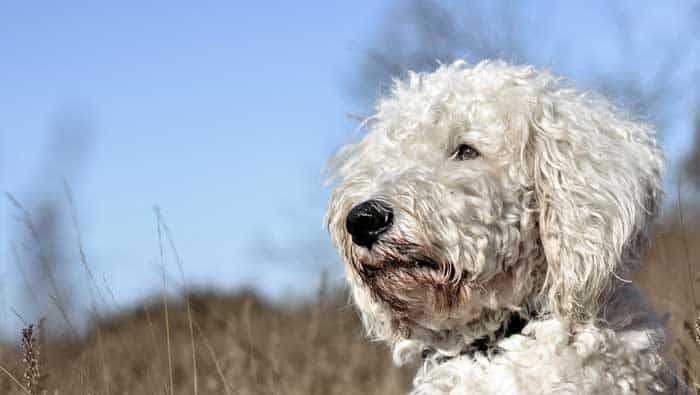
The first thing you notice is how friendly they are. A Goldendoodle wants to be near you, and most are gentle, loving, and patient by nature.
There is a clown in there too. They are playful, sometimes a little mischievous, and they read people well. Expect a dog that watches your face and tries to figure out what you want.
That steady temperament is exactly why they show up so often as service and therapy dogs, not just family pets.
Are Goldendoodles Good With Kids?
Yes, and with kids of pretty much any age. They are patient and gentle, which is half the reason families pick them in the first place. Most warm up to children fast.
The energy helps here. Older kids who want to throw a ball for an hour will find a willing partner. Just supervise the little ones, since a happy 60-pound Standard can knock a toddler over without meaning any harm.
Can Goldendoodles Be Left Alone?
Not for long, honestly. These are smart, social dogs that want company, and being on their own all day wears on them.
Leave one alone for hours on end and separation anxiety often follows. That is where the chewed baseboards and the upset downstairs neighbor come from.
If you work a long shift away from home with nobody to break up the day, this is probably not the breed for you.
Are Goldendoodles Easy to Train?
They are about as trainable as dogs get, which is good news if this is your first dog. With steady work they turn into genuinely obedient companions.
Positive reinforcement is the way. Reward the behavior you want with treats and praise, and they catch on fast.
Heavy-handed corrections backfire. Push too hard and you dent the confidence of a sensitive dog, which sets you back further than you started.
They also shine in obedience and agility classes. An agility course burns that energy, builds the bond between the two of you, and gives the dog time around others of its kind. Win on all three counts.
Do Goldendoodles Bark a Lot?
Not usually. Like any dog it varies from one to the next, but as a rule they are on the quieter side.
When a Goldendoodle does speak up, there is normally a reason behind it.
The usual triggers:
- Someone at the door. He will sound the alarm, then greet the stranger like a long-lost friend two seconds later.
- A bid for attention. These are energetic dogs that want to play, and if they feel ignored they will keep barking until you give in.
- Anxiety from being left alone too long. Separation stress often comes out as steady barking when nobody is home.
- Boredom from too little exercise. An under-exercised Goldendoodle gets frustrated, and that frustration has to go somewhere.
Are Goldendoodles Good Guard Dogs?
No, and you should not expect them to be. Their parents, the Golden Retriever and the Standard Poodle, are not guarding breeds, and the cross keeps that easygoing streak.
Upbringing shapes a lot, but aggression simply is not in the typical Goldendoodle playbook.
He might bark when someone reaches the door. Then he will wag, lean in for a scratch, and try to make the intruder his new best friend.
The Goldendoodle Exercise Needs
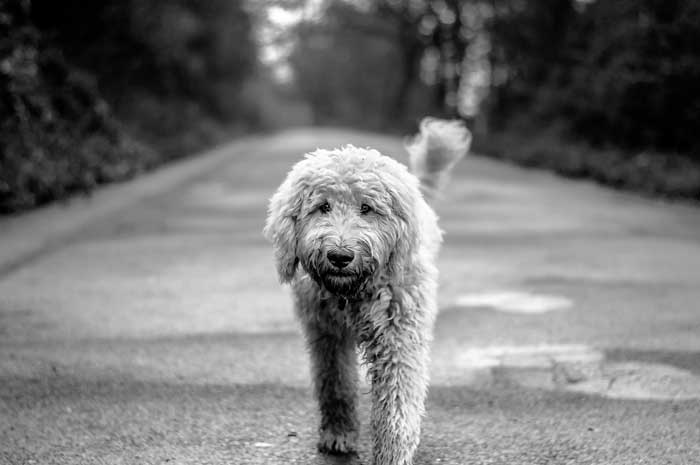
Most Goldendoodle behavior problems trace back to one thing. Not enough exercise.
These are natural athletes. Energetic, playful, built to move.
They will happily flop on the couch with you in the evening, sure, but only after they have worked their body and their brain during the day. Skip that part and you get a restless dog.
Plan on three walks a day, 30 minutes each at a minimum.
They also need room to run flat out. If you live in the city, a weekly trip to the dog park lets him sprint and socialize at the same time. A secure fenced yard, if you can find access to one, gives him that extra outlet where he can tear around with the kids.
One word of caution. These dogs are curious and forever hunting for a new friend, so a Goldendoodle should never be off leash anywhere that is not fenced. They will follow their nose right out of sight.
They also love water. Take one swimming when you can and you have handed him another way to burn energy doing something he genuinely enjoys.
The Goldendoodle Grooming Needs
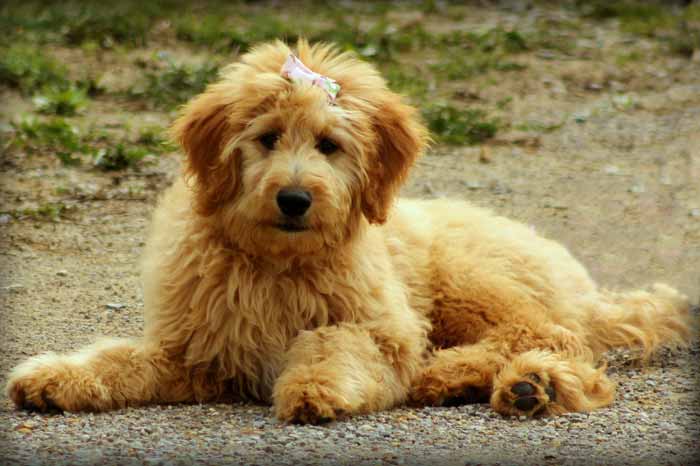
Here is the trade-off nobody warns you about. Most Goldendoodles shed very little, but that low-shed coat needs real upkeep to stay healthy. Less hair on your floor, more time with a brush.
Plenty of owners keep the coat clipped short to make life easier. If you let the natural fur grow out, brush it weekly or it mats, and mats are no fun to deal with.
A professional groom roughly once a month keeps the coat trimmed and in shape.
Bathe only when he truly needs it. Wash too often and you strip the oils that keep his skin and coat healthy, which leaves you worse off than a little dirt would.
Teeth need brushing at least twice a week. Daily is better, and it heads off bad breath and dental disease down the road.
Nails are the part people forget. If he does not wear them down on his own, trim them once or twice a month so they do not split or throw off his gait.
Nail trims are fiddly, and it is easy to nick the quick and hurt him. If you are not sure of yourself, hand the job to a vet or a groomer and watch how they do it.
Goldendoodle and Socialization
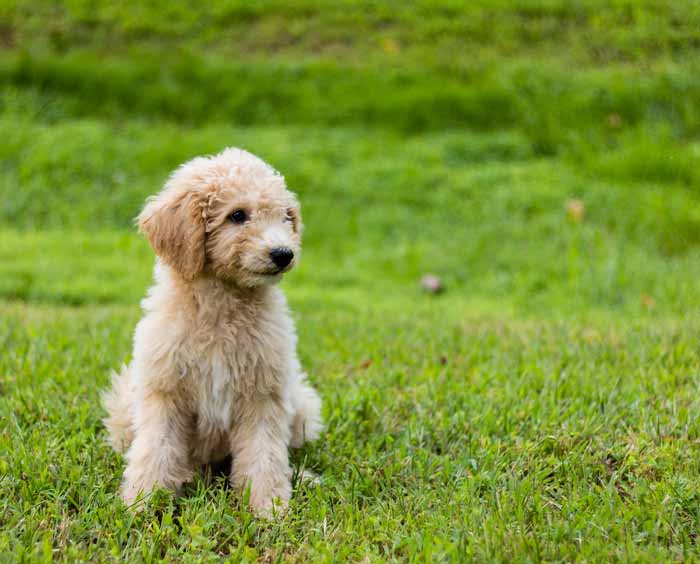
Like every dog, a Goldendoodle needs socializing early to grow into a steady, well-mannered adult.
In an apartment, this stops being optional.
Apartment life means close, frequent run-ins with neighbors and their pets. Shared hallways, elevators, the lobby at 7am. Your dog has to handle all of it, with all sorts of people and animals, without losing his cool.
From puppyhood, get him out around different people and let him take in new sights, sounds, and situations on a regular basis.
Puppy kindergarten classes are worth it. He learns dog-to-dog manners, picks up the body language, and sharpens his social skills in a setting built for it.
Are Goldendoodles Good Apartment Dogs?

They are. Goldendoodles settle into apartment life well, staying calm and quiet indoors with that warm, social streak intact.
Do not mistake them for low-maintenance, though. The light shedding is a real plus in a small space. The high energy is the thing that trips people up.
This is a dog for an active owner or family, the kind who already spend time outdoors and want a partner to bring along.
Tips for Raising a Goldendoodle in an Apartment
1. Have a Daily Exercise Routine
Exercise is the foundation for a healthy Goldendoodle, body and mind. Shortchange a high-energy dog on daily activity and the behavior problems start showing up.
The usual suspects:
- Nonstop barking.
- Chewing the couch, your shoes, whatever is in reach.
- Bolting out the door the moment it cracks open.
With no yard and limited square footage, the daily routine has to do the heavy lifting.
Like I said earlier, aim for three walks a day at 30 minutes apiece.
Walking around the same times each day helps him spread his energy out instead of dumping it all at once. The predictability settles him too. A dog that knows what comes next is a calmer dog.
Always walk him before you leave him alone. A tired dog naps while you are gone. A fresh one goes looking for trouble.
Give him time to run and play off the leash too, somewhere safe, to drain that surplus energy.
Dog parks are great for this. Once or twice a week lets him run with other dogs and stacks on extra exercise, and you get a tired, content dog at the end of it.
A regular doggy daycare works well too, with more play and more socializing built in.
2. Provide Stimulating Toys and Activities
A brain this busy needs a job. Leave a Goldendoodle understimulated and he gets bored fast, then he invents his own entertainment, often starring one of your shoes.
Nothing beats playing with him yourself. These dogs live for play and for time with their people, so a few rounds of fetch or tug keeps the mind switched on.
Dog toys are also very helpful in entertaining and stimulating a Goldendoodle, and they earn their keep most when your dog is home alone for a stretch.
A couple worth keeping around:
- Chew toys
- Puzzle toys
Rotate the toys instead of leaving them all out. Put a few away, swap them in later, and an old toy feels new again.
3. Stay on Top of What He Does When You’re Not Home
Alone time is hard on this breed, yet it is going to happen sometimes. No way around it.
Start young. Train him to handle short absences, then stretch them out little by little so he learns being alone is no big deal.
As a rough guide, how long a dog can hold out on his own tracks with age:
- 8 to 10 weeks: an hour at most.
- 10 to 12 weeks: about two hours.
- 3 to 6 months: three to six hours.
- Over 6 months: six to eight hours.
My articles on leaving your dog home alone while you’re at work and leaving a puppy home alone for the first time walk you through this in more detail.
Watching how he copes when he is by himself is the other half of it. See a problem early and you can fix it before it hardens into a habit.
That is where the Pet Cams are of great help. You set one up at home and check in on your dog from your phone or laptop. Some even let you talk to him, and a few will toss him a treat from across the room.
4. A Potty Routine Is Essential
Housebreaking a Goldendoodle is not hard. They are smart and eager to please, which makes potty training in an apartment go smoother than you would expect.
Two things carry the whole process: consistency and patience. Start early and you get there faster, with fewer accidents along the way.
An apartment dog has no yard to slip out to, so a set bathroom schedule does the work for him. Take him out at the same times every day and his body learns the rhythm.
Pick the potty spot first, somewhere close, ideally on grass. Dogs latch onto the surface they first learn on, so start him on grass and you save yourself trouble later.
Puppies go far more often than adults. Figure every two to four hours for a pup, while a grown dog holds it four to six hours, and some stretch to eight.
With a young puppy, take him out often, close to every hour. You learn his timing and he learns the route to his spot at the same time.
Stretch the gaps out gradually as he ages and his bladder catches up.
The two reliable anchors: take him out after every meal, and right before you leave, so he is empty while you are gone.
Grass or pee pads are the other apartment fix. Dog grass pads earn their spot when he has to be alone longer than usual, and for senior dogs or any dog dealing with incontinence.
Are Mini Goldendoodles Good for Apartments?
Yes. Mini Goldendoodles are a strong pick for apartment living. They bring the same smarts and friendliness in a smaller frame, and they tend to be the least shedding, most hypoallergenic of the three sizes.
The catch stays the same. You still have to meet their exercise and grooming needs, small dog or not.
Final Thoughts
A Goldendoodle can absolutely thrive in an apartment. The whole thing hinges on whether you can meet his needs, the physical ones and the mental ones both.
A dog is a years-long commitment. Know the temperament and the needs going in, so you can be honest about whether you can give him a full, healthy life.
Cover the exercise, keep him company, stay on top of grooming, and a Goldendoodle will reward you with about the most cheerful roommate a small home can hold.
Resources
- 12 Facts About the Goldendoodle in The Spruce Pets
- Goldendoodle Dog Breed Information in Dogtime
Frequently asked questions
Can big dogs really live in an apartment?
Yes. Energy level matters far more than size. A calm Great Dane settles into a flat better than a wound-up terrier, as long as it gets a proper walk twice a day.
Which dog breeds bark the least in apartments?
Greyhounds, Basenjis, Bulldogs and Cavaliers are among the quietest. Any dog can learn to be calm, but these simply start at a lower volume.
How much exercise does an apartment dog need?
Most do well on 30 to 60 minutes a day split into two walks, plus a little indoor play. Cut that short and the barking and chewing usually start.
Google lets you pick which sites come up first in your own results.