


A quick note: a few links below are affiliate links. Buy through one and we may earn a small commission. It never costs you more, and we only point to gear we'd actually put in front of our own dogs. As an Amazon Associate I earn from qualifying purchases.
A Goldendoodle is a Golden Retriever crossed with a Standard Poodle. Because it is a hybrid, you get more variation from one puppy to the next than you would with a purebred. Two littermates can end up looking and acting fairly different. Still, most share the same broad traits.
They tend to be smart, affectionate, and goofy, with coats that turn heads at the dog park. That mix is a big reason the breed exploded in popularity over the last twenty years. Before you fall for the face, though, it helps to see the whole picture.
Here are the real goldendoodle pros and cons, the good and the annoying.
The Pros of Owning a Goldendoodle

There is a long list of reasons people keep choosing this mix. Start with the upside.
1. They Are Wonderful Family Companions
If you want a dog that folds into family life, few breeds do it better. Goldendoodles like people. They are easy with kids, and they read a room well.
Keep their size in mind. A standard can hit 50 to 70 pounds and still think it is a lap dog, so supervise toddlers the way you would around any big, bouncy dog. The temperament itself is patient and gentle. That combination is what makes them such good companions for a busy household.
These are not dogs that sit in another room. Yours will park itself in the middle of every gathering, follow you to the mailbox, and lean on your leg during movie night. If you actually want a dog that behaves like a family member, this one delivers.
2. They Get Along with Other Pets
Aggression is rare in this breed. Most Goldendoodles roll right into a multi-pet house and treat the other dog like a new best friend. Cats usually get a pass too, once everyone settles in.
You can take one to a dog park and trust it to play nicely. Bringing it home to a resident dog still calls for a proper introduction on neutral ground. Do that part right and they tend to be inseparable within a week or two.
3. They Come in Three Coat Types
One perk of the Golden Retriever and Standard Poodle cross is the coat. You can end up with straight hair, tight curls, or a wavy coat that sits between the two. Wavy is the one most buyers picture when they think Goldendoodle.
The hybrid usually sheds and triggers allergies less than a purebred Golden, whatever coat your dog lands. Grooming demands shift with the coat type, though. Curlier coats mat faster and need more upkeep, so the look you pick has real consequences down the line.
Color is just as varied. You will see them in:
- White
- Cream
- Gray
- Gold
- Red
- Brown
- Black
Having that range of coats and colors to pick from is a nice bonus when you are choosing a dog you will live with for a decade.
4. They Come in Different Sizes
Size is another place you get options. Breeders use different Poodles to hit different targets. A mini, bred from a smaller Poodle, often lands around 15 to 30 pounds and fits an apartment without much trouble.
On the other end, a standard can run 50 pounds and up if you want a bigger dog to hike or roughhouse with. Mediums fill the gap in between. Few breeds let you dial in size the way this one does.
5. They Are a Lot of Fun
This is a playful, up-for-anything kind of dog. Yours will want to hike, swim, and chase whatever you throw. Both parent breeds love water, so most Goldendoodles take to a lake or the ocean on the first try.
The energy cuts both ways, and that is the charm. Your dog will keep pace on a long trail and then flop next to you while you read. Few breeds switch between adventure buddy and couch companion this easily.
6. They Bark Less Than Many Breeds
Plenty of breeds bark for sport. Goldendoodles usually do not. Most save it for moments when they feel nervous or genuinely startled, and they often ignore the neighbor’s dog sounding off down the street.
If quiet matters to you, that is a real point in their favor. Expect a few barks when someone knocks. You will not get the dog that barks just to hear itself.
7. They Are Easy to Train
Both parent breeds rank among the smartest dogs going, and it shows. Goldendoodles pick things up fast and stay with you as long as the session feels like a game. Bored is the only time they tune out.
Sign up for a basic obedience class while your dog is young. Keep the lessons short and varied and they will soak up everything you throw at them. The hours you put in early pay you back for years.
8. They Love to Play Fetch
Retrieving is in the blood on both sides. You can throw a ball until your arm gives out and your dog will still beg for one more. Heads up, though. A Goldendoodle that does not get enough attention will retrieve on its own, hauling your socks and the TV remote across the house just to carry something.
9. They Make Great Therapy Dogs
Social, sharp, and loyal is a strong combination for therapy work. Goldendoodles bond hard with their people and stay calm in new settings, which is exactly what the job asks for. Many pass therapy certification with little trouble.
They shine as emotional support dogs too. A Goldendoodle reads your mood and wants to fix it, leaning in close on a rough day. For someone who needs a steady, gentle presence, that instinct is worth a lot.
The Cons of Owning a Goldendoodle
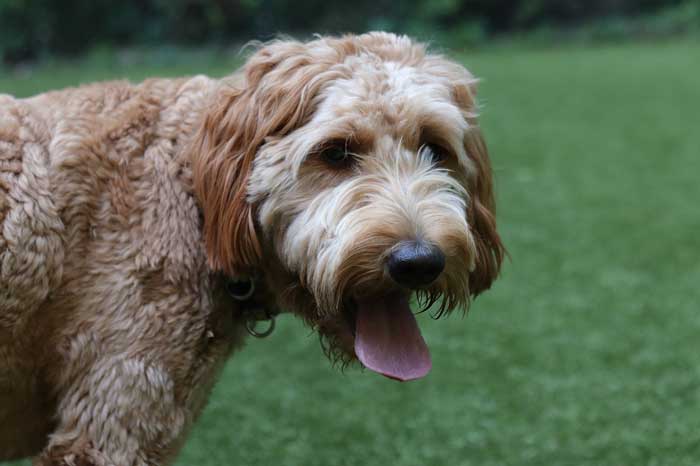
The upside is real, but so are the headaches. Look at both sides before you put down a deposit.
1. They Require Serious Grooming
This is the cost most new owners underestimate. Whatever the coat, the hair keeps growing and it mats if you ignore it. Skip a couple of weeks of brushing and you can end up at the groomer paying for a full shave-down.
Plan on brushing most days with a sturdy slicker brush, plus a professional trim roughly every six to eight weeks. Add baths in between. Compared with a short-haired dog, the grooming bill and the time are both a step up, so budget for both.
2. They Have a Lot of Energy
That fun-loving streak comes with a fuel requirement. A Goldendoodle needs real exercise, think a solid walk or hard play in the yard most days. Skip it and the energy comes out sideways.
A cooped-up Goldendoodle gets restless and finds its own entertainment, usually at the expense of your stuff. Meet the daily exercise and you get a relaxed, easy housemate instead.
3. They Get Overexcited
The flip side of friendly is a dog that loses its mind a little when people show up. Yours will be thrilled to see you, and just as thrilled to see a stranger it met once. Watch them around small kids, since a happy 60-pound dog can knock a toddler flat without meaning any harm.
The fix is training, started early and kept consistent. Teach a solid “off” and reward four paws on the floor. Stick with it and your dog learns to greet people without launching at them.
4. They Can Be Chewers
Retrievers carry things in their mouths, and these dogs are not fussy about what. Left to their own devices they will grab whatever is lying around. Obedience training is how you teach the difference between a toy and your good shoes.
Puppies make it worse during teething. Every pup chews to ease sore gums as the adult teeth push through, usually for a few months. Keep a basket of safe chew toys within reach and your furniture, baseboards, and shoes stand a much better chance.
5. They Can Be Messy
That cute beard has a downside. It works like a sponge. Your dog dunks its face in the water bowl, then trails a wet line across the kitchen floor on the way out.
Some owners shrug it off and keep a towel by the bowl. If puddles on your floor would drive you up the wall, factor that in now. It is a small thing that never fully goes away.
6. They Struggle When Left Alone Too Long
This breed wants company. If you leave them home alone for long periods of time, a Goldendoodle can slide into anxiety. Some get withdrawn. Others go looking for a project, which is how the sofa cushions and your favorite shoes end up shredded.
Be honest about your schedule before you commit. If you work long days, line up a dog walker or a sitter to break up the alone time. This is a people-loving dog, and long stretches by itself are where most of the destructive habits start.
7. They Can Get Hip Dysplasia
Good breeders work to screen it out, but hip dysplasia still shows up in the breed. Both Poodles and Golden Retrievers carry it in their lines, so a hybrid is not automatically clear of the risk. This is where the breeder you choose matters most.
Ask to see the parents’ OFA or PennHIP results before you pay anything. A responsible breeder hands those over without hesitation. If you get a runaround instead, walk away and find someone else.
8. Some People Will Still React to Them
Low-shedding is not the same as no-shedding. A Goldendoodle drops less hair and dander than a Golden Retriever, but it does shed some, and the allergen is in the dander and saliva as much as the hair. If someone in your home has a real dog allergy, spend time around the breed before you commit. Plenty of so-called hypoallergenic dogs still set people off.
9. They Are an Expensive Mixed Breed
Price tracks popularity more than pedigree, and this breed is in heavy demand. A well-bred Goldendoodle from a reputable breeder commonly runs anywhere from $2,000 to $4,000, sometimes more for sought-after colors or sizes. Bargain listings are usually a red flag for skipped health testing.
The purchase price is only the opening payment. After that come quality food, bowls, toys, grooming gear or grooming appointments, and routine vet care, and those add up fast over a 12 to 15 year lifespan. Run the math before you bring a dog home.
It is one more reason to insist on a vet check and a clean bill of health up front. Surprise medical bills are brutal, and the cheapest way to avoid them is starting with a healthy puppy.
Final Thoughts
The Goldendoodle pairs a Golden Retriever with a Standard Poodle, and the result comes in a range of sizes, colors, and three coat types. The personality is the constant. Friendly, smart, and loyal, these dogs make fast friends with the whole household, pets included.
The catch is the maintenance. This breed wants exercise, regular grooming, and company, and it does not do well filed away alone all day. Match that energy and you have an adaptable dog that fits city apartments and country yards alike.
If you can keep up with the brush and the daily walk, the rest is easy. Quiet for a big dog, quick to train, and happy to play or nap on cue. That balance is why the goldendoodle keeps landing on so many families’ shortlists.
Resources
- 12 Facts About the Goldendoodle by The Spruce Pets
- Goldendoodle Temperament, The Perfect Friendly Pet? by The Happy Puppy Site
Frequently asked questions
How do I know whether a breed really fits my life?
Be honest about three numbers: hours the dog will be alone, what you will tolerate in shedding and noise, and your monthly budget for grooming and vet care. Breed traits only matter after that.
What cost do new owners underestimate the most?
Grooming and unplanned vet visits. Food is predictable; a poodle coat every six weeks or one emergency X-ray is what actually breaks the budget.
Is a mixed breed healthier than a purebred?
On average yes, mixes avoid some of the inherited problems concentrated in closed gene pools. The trade-off is that adult size and temperament are harder to predict.
Google lets you pick which sites come up first in your own results.