

A quick note: a few links below are affiliate links. Buy through one and we may earn a small commission. It never costs you more, and we only point to gear we'd actually put in front of our own dogs. As an Amazon Associate I earn from qualifying purchases.
The holiday hazards that matter most for dogs are food (fatty scraps, bones, chocolate, raisins and grapes, anything sugar-free), tinsel and electrical cords, mistletoe and holly, and the water in a tree stand. Poinsettias get a bad reputation, and the ASPCA lists them as a mild to moderate stomach irritant, not a deadly plant. Here is how the main sources sort it out, room by room, for a small apartment where the tree is within a dog’s reach.
Food on the table and the floor
The ASPCA’s holiday safety tips warn that fatty, sweet and spicy foods are dangerous for pets, along with turkey and chicken bones. In a small kitchen, the practical risk is the plate left on the coffee table and the trash bag by the door. A dog that gets into either is the one most likely to end up on the phone with a vet.
The ASPCA’s list of people foods to avoid feeding pets adds specifics worth knowing. Grapes and raisins can lead to kidney damage, and the page says tartaric acid is speculated to be the toxic component because dogs cannot process it. Xylitol, a sweetener in many sugar-free products, can cause low blood sugar and potentially liver damage depending on the amount. Both turn up around the holidays in baked goods, candy and gum. For the Thanksgiving table in particular, see what is safe and what to skip at Thanksgiving.
Chocolate
Chocolate is the classic holiday exposure. The FDA explains that it contains theobromine and caffeine, and that dogs break them down more slowly than people, so the effects last longer. Signs can appear within a few hours: vomiting, diarrhea, rapid heart rate, restlessness, hyperactivity, increased urination and thirst, muscle spasms and seizures. Severe cases may cause death or pancreatitis.
The ASPCA’s food page groups chocolate with coffee and caffeine, saying methylxanthines can cause vomiting and diarrhea, panting, excessive thirst and urination, hyperactivity, abnormal heart rhythm, tremors, seizures and even death. The FDA’s advice in its chocolate article is to store chocolate out of reach and to contact a vet or animal poison control center immediately after ingestion. A stocking or a box under the tree is not out of reach for a dog that can sniff it out.
Plants
The ASPCA page names several seasonal plants. Mistletoe and holly can cause gastrointestinal upset and cardiovascular problems. Poinsettias cause mild to moderate gastrointestinal irritation. That difference is useful when you are choosing what to keep in the living room: a poinsettia is still not something to leave in a dog’s reach, but holly and mistletoe are the ones with a heart-related warning.
The page also mentions lilies, but the lily warning there concerns cats, so it should not be read as a dog hazard.
Trees, tinsel, wires and candles
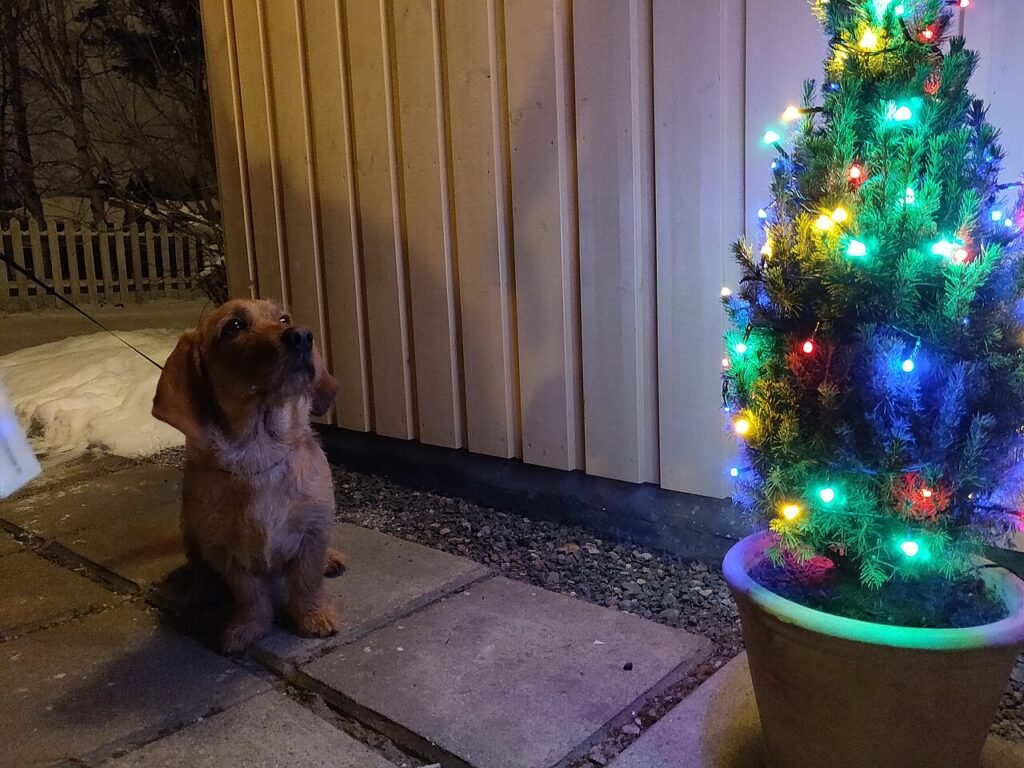
The tree itself is a collection of small risks. The ASPCA says bacteria in the water of a tree stand can cause nausea, diarrhea or stomach upset if a dog drinks it. Tinsel is the heavier warning: it can cause severe vomiting, an obstructed digestive tract and dehydration, and could even require surgery. If you have a dog that carries things around the apartment, skip it.
Electrical wires are listed as dangerous because a wire can deliver a lethal shock. Candles are a simple matter of physics, since a dog’s tail or paw can knock them over. A lit candle on a low table in a small apartment is a risk for the dog and the building.
Arranging a small apartment
Space is the real constraint in a city home, so the fixes are about height and doors. Put the tree where a dog cannot get behind it to the outlet, and run cords along the wall instead of across the floor. Keep ornaments that look like food, or that smell like it, off the lowest branches. A baby gate or a closed door for the kitchen during a party costs nothing.
Guests are the other variable. Coats on a bed, bags on the floor and a plate set down for a minute are how a dog meets gum, candy or chocolate. Tell visitors where to put things, and give the dog a place that is its own, with something safe to chew, before the doorbell rings.
None of this is in the sources as a rule. It is what follows from the hazards they list: the dog can reach what is low, and a small apartment keeps everything low.
Ornaments and the snow outside
Two items on the ASPCA list catch people off guard. Snow globes can contain ethylene glycol, which the page calls the same chemical used in antifreeze. And ice melt and salt-dough ornaments can cause life-threatening imbalances in electrolytes. The second one matters for city owners twice over: the sidewalk salt on the walk home and a homemade ornament on a low branch are the same kind of hazard. For something to keep ready at home, see what to keep in a home first aid kit for dogs.
| Item | What the ASPCA says it can cause |
|---|---|
| Mistletoe and holly | Gastrointestinal upset and cardiovascular problems |
| Poinsettias | Mild to moderate gastrointestinal irritation |
| Tree stand water | Nausea, diarrhea or stomach upset from bacteria |
| Tinsel | Severe vomiting, blocked digestive tract, dehydration, possible surgery |
| Snow globes | Possible ethylene glycol, the chemical used in antifreeze |
| Ice melt and salt-dough ornaments | Life-threatening electrolyte imbalances |
When to call
If your dog may have eaten something on this list, call your veterinarian or an emergency clinic. The ASPCA Animal Poison Control Center is at (888) 426-4435, and its poison control page says it is available 24 hours a day, every day of the year. A one-time consultation fee applies. The FDA says to contact a vet or animal poison control center immediately after chocolate ingestion,. Vomiting that does not stop, seizures, or any sign of a blocked digestive tract after a holiday meal or a chewed decoration are red flags that call for the clinic now.
Common questions about holiday hazards for dogs
Are poinsettias poisonous to dogs?
The ASPCA says poinsettias cause mild to moderate gastrointestinal irritation. Mistletoe and holly are listed with gastrointestinal upset and cardiovascular problems.
Is tree water dangerous for dogs?
The ASPCA says bacteria in tree water can cause nausea, diarrhea or stomach upset. Covering the stand or blocking access to it keeps dogs from drinking it.
What should I do if my dog eats chocolate over the holidays?
The FDA says to contact a vet or animal poison control center immediately. The ASPCA Animal Poison Control Center is at (888) 426-4435 and is staffed every day of the year, with a one-time consultation fee.
Why is tinsel such a problem?
The ASPCA says tinsel can cause severe vomiting, an obstructed digestive tract and dehydration, and could even require surgery.
Google lets you pick which sites come up first in your own results.