

A quick note: a few links below are affiliate links. Buy through one and we may earn a small commission. It never costs you more, and we only point to gear we'd actually put in front of our own dogs. As an Amazon Associate I earn from qualifying purchases.
The first night with a new puppy is the one nobody warns you about properly. You spend weeks reading up on food and vaccines and crate sizes, then you carry this small creature through the door, the sun goes down, and around 11 p.m. it starts screaming like you have done something unforgivable. You have not. The puppy is eight weeks old, it left its mother and littermates this morning, and it has never once slept alone in its life. Of course it is falling apart. A related question we tackle on the blog is choosing puppy food without falling for marketing tricks.
The first night rattles even seasoned owners. Here is the reassuring part: it is almost always the worst night you will have. Things turn around fast, usually inside a week. The trick is getting through it without making the choices you will regret at 3 a.m.
Set up before the puppy is tired and cranky
Handle the boring logistics in daylight, because you will not be thinking clearly later. Decide where the puppy sleeps and commit to it. The setup most trainers point you toward, and the one that tends to work, is a crate or playpen right next to your bed for the first week or two. Not the kitchen. Not a closed-off laundry room. A puppy alone in a far room cries because it is genuinely scared, while a puppy two feet from your face usually settles much faster, because it can hear you breathe.
Get all of this ready before dark:
- A crate sized so the pup can stand and turn around, no bigger
- A soft, washable blanket or bed inside
- An enzyme cleaner and paper towels within reach, because nighttime accidents are normal
- Shoes and a leash by the door for the inevitable middle-of-the-night potty trip
The “smells like home” trick
If the breeder or shelter let you take a blanket or soft toy that carries the litter’s smell, use it tonight. That scent does real work on a panicking puppy. No blanket? A worn t-shirt you slept in for a night helps too, because by tomorrow your smell becomes the safe one. Some owners swear by a ticking clock or a low heat pad tucked under half the bedding, mimicking the warmth and rhythm of littermates. It is old advice, and it holds up.
The evening run-up matters more than the bedtime itself
A puppy that has napped all evening will be wired at midnight. In the last couple of hours before bed you want gentle activity, not a wrestling match that cranks them up. A short play session. A little training with a few treats. A final small meal a couple of hours before sleep so digestion is not happening at 2 a.m. Then lift the water maybe an hour before bed. Not all night, just an hour. A young puppy still needs water overall, but a full bladder is your enemy tonight.
The last thing before lights-out is a potty trip. Carry them out, stand in the cold, wait for the deed, praise quietly, and bring them straight back in. No play. Bed.
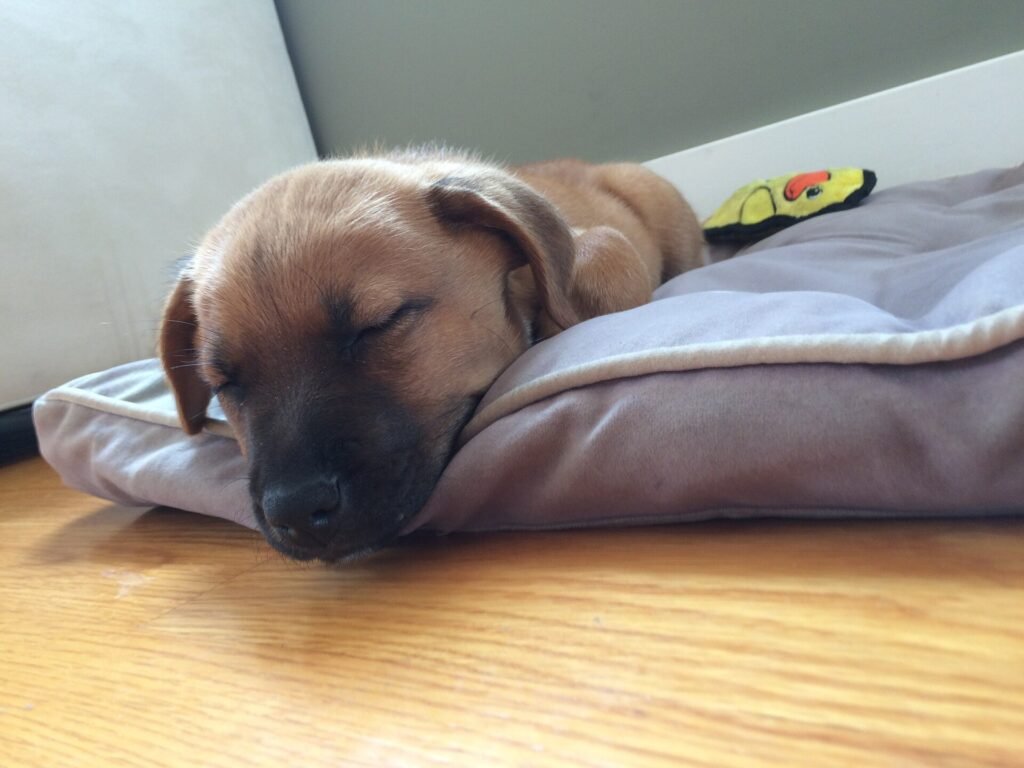
When the crying starts, and it will
This is the part that breaks people. The puppy goes in the crate, you cut the light, and within five minutes there is a sound like a smoke alarm with feelings. Here is the line you walk: you want to comfort a frightened baby, but you do not want to teach that screaming summons you for a party.
What works for most puppies the first few nights is simple. Keep the crate right by the bed, and when it cries, let it know you are there without making an event of it. A hand resting on the crate. A low “shhh.” Sometimes a finger through the bars. No bright lights, no chatting, no lifting them out to cuddle on the bed unless you have already decided the bed is the long-term plan. The message is “I am here, you are safe,” not “great, you yelled, now we have fun.”
Crying versus needing to potty
You have to learn the difference, and you will get it wrong once or twice. A puppy that was quiet and suddenly wakes restless and whining, often after a couple of hours, usually needs to pee. An eight-week-old cannot hold it all night. Take that one out, on leash, business only, then back to bed. A puppy that has cried nonstop since you set it down is usually lonely, not bursting. You will read it better with time. Early on, when in doubt, a quick potty trip costs you nothing and saves you a crate accident.
What about expecting one or two night wakings
For the first week or two, plan to get up once, maybe twice, for a potty break. Set a quiet alarm if you sleep like a rock, because a missed trip becomes a crate accident, and a puppy left sitting in a mess is harder to housetrain later. The rough math: a young puppy holds it about one hour per month of age, stretched a little overnight because it is asleep. A two-month-old might make four or five hours, not eight. By three to four months, most sleep clean through.
Keep the night trips dull on purpose. Dim light, leash on, outside, “go potty,” back in the crate. Turn the 3 a.m. trip into playtime and your puppy will start booking playtime at 3 a.m. nightly, and that is a habit you will come to hate.
Mistakes that make night two worse
A few things genuinely backfire. Stashing the puppy in a distant room so you cannot hear it usually means a more frantic puppy and a soiled crate by morning. Caving and hauling a screaming puppy into bed every time it yells teaches it that yelling works, though plenty of people choose co-sleeping on purpose, and that is fine if it is a real decision and not a 2 a.m. surrender. Punishing the crying does nothing but make the crate scary, the opposite of the goal. And skipping the crate entirely to give the puppy “freedom” tends to produce accidents and a chewed shoe, because an unsupervised baby animal goes looking for trouble and finds it.
It really does get better
Most puppies cry hard the first night, less the second, and by night four or five many settle within a few minutes of lights-out. If you are a week or two in and the puppy still panics every single night, ramping up rather than calming down, it is worth looking at separation-related anxiety with a trainer or your vet, because that is a different problem than ordinary first-night nerves. For the daytime side of settling a new dog into apartment life, our pieces on housetraining and daily routines are worth a read once you have slept.
One last thing. Snap a photo on day one even though you are exhausted, because the puppy screaming at you tonight is this tiny for about four weeks and then never again.
FAQ
Should I let my puppy cry it out the first night?
No, not in the harsh sense. Keep the crate next to your bed and reassure the puppy with a calm voice or a hand on the crate, without turning it into play. A puppy this young is genuinely frightened, not being manipulative, and full “cry it out” tends to make night anxiety worse.
Where should a new puppy sleep on the first night?
In a crate or playpen right beside your bed for the first week or two. Being close enough to hear and smell you settles most puppies far faster than an isolated room, and it lets you hear when they need a potty trip.
How many times will a puppy wake up at night?
Expect one or two wakings for the first couple of weeks, mostly for potty trips, since a young puppy can’t hold its bladder all night. Most puppies start sleeping through by around three to four months of age.
Should I take water away at night?
Lifting the water bowl about an hour before bed helps reduce overnight accidents without dehydrating a young puppy. During the day, keep water freely available.
Why is my puppy crying in the crate?
Usually because it has never slept alone before and feels isolated, not because the crate hurts. Moving the crate next to your bed, adding a blanket that smells like its littermates, and a gentle heat source under part of the bedding all help it feel less alone.
Frequently asked questions
When can my puppy go outside safely?
For walks in public areas, wait until about a week after the final vaccine round, usually around 16 weeks. You can still socialize earlier in safe, clean spaces.
How do I potty train a puppy with no yard?
Use a consistent indoor pad or a balcony grass pad, take them out on a fixed schedule, and reward the moment they finish in the right spot.
How long can a puppy hold its bladder?
Roughly one hour per month of age. A three-month-old needs a break about every three hours, including overnight at first.
Google lets you pick which sites come up first in your own results.