

A quick note: a few links below are affiliate links. Buy through one and we may earn a small commission. It never costs you more, and we only point to gear we'd actually put in front of our own dogs. As an Amazon Associate I earn from qualifying purchases.
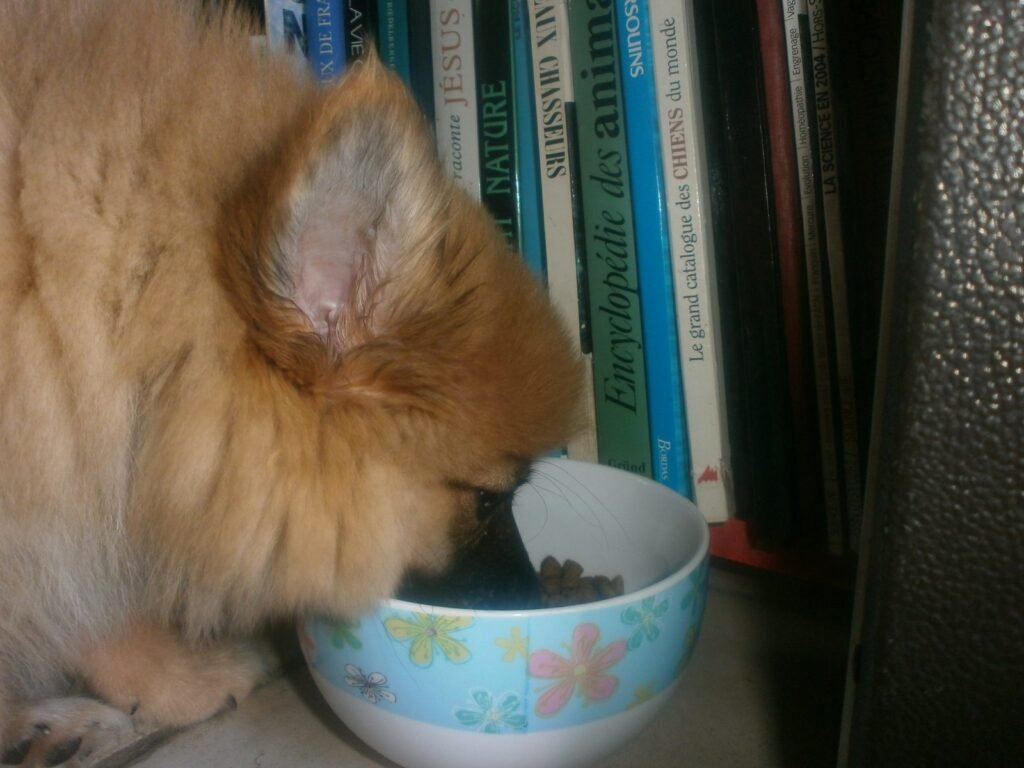
Some dogs do not eat their dinner so much as inhale it. Bowl down, gone in twenty seconds, then they stand there looking at you like you forgot to feed them. It is easy to read as a good appetite and leave it alone, but a dog that eats that fast is swallowing a lot of air with the food, and in deep-chested breeds especially that is the setup for bloat, which is a genuine emergency that kills dogs within hours. Even in a small apartment mutt with no bloat risk, the gulping causes the other thing everyone knows, the ten-minutes-later vomit of a barely chewed pile of kibble back onto the rug.
The good news is this is one of the easier problems to actually fix, and the fix is mechanical rather than behavioral, so it works on day one instead of after weeks of training.
Why the speed is a real problem, not a quirk
When a dog eats fast it gulps air along with the food. That air expands the stomach, and in a large or deep-chested dog the distended stomach can twist on itself, cutting off blood flow. That is gastric dilatation-volvulus, and it is the reason vets tell Great Dane and Standard Poodle owners to take feeding speed seriously. Smaller dogs rarely twist, but they still get the reflux, the choking, and the regurgitation. Slowing the meal down solves all of it because the dog physically cannot swallow the same volume of air.
A slow feeder bowl is the ten-dollar fix
The simplest tool is a bowl with ridges and channels molded into the bottom so the food is spread out and the dog has to work the kibble out of the grooves instead of scooping a mouthful. A decent slow feeder dog bowl turns a twenty-second meal into a five-minute one, which is exactly what you want. Match the maze difficulty to the snout, a flat-faced dog like a pug needs shallow, wide ridges or it just gets frustrated and gives up. Wash it properly, the grooves trap grease and most people rinse them badly.
Puzzle feeders do double duty
If your dog is a fast eater and also bored during the day, which describes half the apartment dogs in the country, a puzzle feeder solves two problems with one object. Instead of a bowl, the dog nudges, paws, or rolls a toy that dispenses a few pieces of kibble at a time, so the meal becomes twenty minutes of mental work. A treat-dispensing puzzle feeder is especially good for the crate-and-work-from-home crowd, and we go deeper on this in the piece on the best puzzle toys to keep an apartment dog busy.
No-cost tricks if you do not want to buy anything
You can slow a dog down without spending a dollar. Spread the kibble across a large baking sheet so it is a single layer the dog has to hunt across. Put a clean, dog-safe object in the middle of a normal bowl, a tennis ball or an upturned smaller bowl, so they have to eat around it. Or feed by hand in scattered small portions if you have the patience. These all work, they are just less convenient than a bowl you can fill and walk away from.
Split the meals if the gulping is severe
A dog that is frantic at mealtime is often just too hungry because it is being fed one big meal a day. Splitting the same daily amount into two or three smaller meals takes the desperation out of it, and for any dog with real bloat risk, several small meals is the standard advice regardless of speed. If your dog has suddenly started bolting food when it never used to, or is acting hungry all the time, that is worth a mention to your vet rather than only a hardware fix, because a change in appetite can point at something medical.
What the evidence actually says about eating speed and bloat
Fast eating gets linked to bloat constantly, and the link is real, but it is not the kind of link most articles imply. The Merck Veterinary Manual chapter on gastric dilation and volvulus draws a line between two categories of risk, and the line is worth respecting.
On one side: “Genetics are a proven risk factor for GDV, including deep/narrow thoracic conformation and a first-degree relative with a history of the problem.” Proven. Deep chest, affected parent or sibling.
On the other side, a longer list of things that have only been associated with it: “lean body condition, stress, aggressive or fearful behavior, once-daily feeding, feeding only dry kibble, rapid consumption of food, previous splenectomy, and increased gastric ligament laxity.”
Rapid consumption of food sits in the second group. So slowing your dog down is a sensible thing to do, and it is not a shield. A Great Dane whose father bloated is still a Great Dane whose father bloated, slow feeder or not. Conversely, a beagle who inhales dinner is not on the edge of a surgical emergency, because the shape of the chest is doing most of the work in that risk calculation.
Two items on Merck’s prevention list that contradict common advice
The recommendations Merck lists for owners of high-risk breeds are: feeding multiple small meals rather than one large meal, restricting exercise before and after meals, decreasing stress at mealtime, avoiding elevated feed bowls, and not breeding dogs with a first-degree relative that has a history of GDV.
Two of those cut against what gets repeated in pet stores.
Avoiding elevated feed bowls. Raised bowls are sold to large-breed owners as the responsible choice, frequently with bloat named as the thing they prevent. Merck lists avoiding them as the preventive measure. If you bought a stand for a deep-chested dog specifically to reduce bloat risk, that purchase was working against you.
Stress at mealtime is on the list, and competition is stress. If two dogs eat within sight of each other and one bolts food to protect it, the slow feeder addresses the symptom while the room arrangement causes it. Feed them apart.
A note on what surgery does and does not fix
Gastropexy, the procedure that tacks the stomach to the body wall and is often done during a spay or neuter for at-risk breeds, is precise in what it buys you. Merck: a gastropexy “has not been shown to prevent bloat (gastric dilation) but should prevent the life-threatening volvulus.” The stomach can still fill with gas. What it should not do afterwards is twist, and the twist is the part that kills.
The signs that mean go now
Three things, and none of them look like an emergency for the first few minutes: “nonproductive retching, hypersalivation, and restlessness.” Retching that brings nothing up. Drooling. A dog that cannot settle, gets up, lies down, gets up again. Merck adds that the abdomen may distend acutely or progressively, and that some dogs are simply found lying down and depressed with an enlarged belly.
The restlessness is the one people wait out, because a pacing dog does not read as a dog in danger.
Here is the number that should end the waiting. Merck puts overall mortality from GDV at roughly 25 to 30 percent, and the first risk factor it names for short-term death is “duration of clinical signs > 6 hours before examination.” Six hours. Everything else on that list, hypotension, peritonitis, sepsis, is something that happens to your dog in a hospital. The clock is the only item on it you control.
One point of honesty about the source, since we are quoting figures from it: the same Merck chapter gives mortality as 20% in treated animals in one summary and 20 to 45% in another, alongside the 25 to 30% overall figure. We have quoted the overall figure. The spread across those statements is itself informative, because outcome depends heavily on how fast the dog reached a table.
And if a dog is decompressed but not operated on, recurrence is, in Merck’s words, extremely high.
Source: Merck Veterinary Manual, Gastric Dilation and Volvulus in Small Animals, read 30 August 2026. If you are reading this because your dog is retching right now, stop reading and call a vet.
Google lets you pick which sites come up first in your own results.