

A quick note: a few links below are affiliate links. Buy through one and we may earn a small commission. It never costs you more, and we only point to gear we'd actually put in front of our own dogs. As an Amazon Associate I earn from qualifying purchases.
How long you can leave a dog alone is one of those questions with a neat answer everyone repeats and a messy real one that depends on the actual dog standing in front of you. The number that gets tossed around is no more than six to eight hours for an adult. Fine as a starting point. Useless for a four-month-old puppy, a senior with a leaky bladder, or a year-old Vizsla who treats your absence as a personal betrayal.
So let’s go past the headline. The real question is not only how long a dog can physically hold its bladder. It is how long a particular dog can be alone before it gets bored, anxious, or desperate, because those three are what drive the shredded couch cushions and the noise complaints. Not the bladder.
The bladder limits, since that’s what people ask first
Healthy adult dogs can usually hold it for six to eight hours, and plenty go longer overnight without trouble, because they are asleep and not drinking. Daytime is a different story. A dog that is awake, drinking, and moving around needs to go more often than one snoozing through the small hours.
If the answer for your dog is not very long, the barking usually shows up first, here’s what to do about a dog who barks the second you leave. Most of this comes down to routine: how you structure the hours while you’re actually at work, and whether he has enough to do, a rotation of boredom-busting toys makes a bigger difference than most people expect.
Puppies sit in their own category. The rough rule is one hour per month of age. A three-month-old tops out near three hours, four months near four, and so on, reaching adult limits somewhere around eight or nine months. Asking a young puppy to hold it through a full workday is not a training failure on the puppy’s end. It is biology. They cannot.
Seniors slide back the other way. An older dog, especially one on certain medications or with kidney changes, may need a break every four to six hours even after years of managing eight. When a previously reliable adult suddenly cannot make it, that is a vet conversation, not a discipline one.
A quick reality check by life stage
- Puppy under 6 months: 2 to 4 hours, tops, and they need a midday person
- Healthy adult, 1 to 7 years: 6 to 8 hours occasionally, ideally with a midday break
- Senior or dog with health issues: often 4 to 6 hours
- Any dog, day after day, with no break: that’s where problems start
Bladders aside, boredom is the bigger threat
Here is the part the standard answer skips. Most of the wreckage people chalk up to spite is boredom or pent-up energy. Leave a dog eight hours with nothing to do, no walk first, no puzzle, no window with anything happening, and it will find itself a job. Usually that job is taking apart something you liked.
Breed matters enormously here. A retired greyhound is famously happy to sleep eighteen hours and barely clock that you left. A Border Collie, a young Lab, a husky, left alone and under-exercised, is a completely different animal, and no amount of but the rule says eight hours changes the fact that this dog needs work. Working and sporting breeds were not built to lie around a one-bedroom all day.
How to leave a dog alone without it falling apart
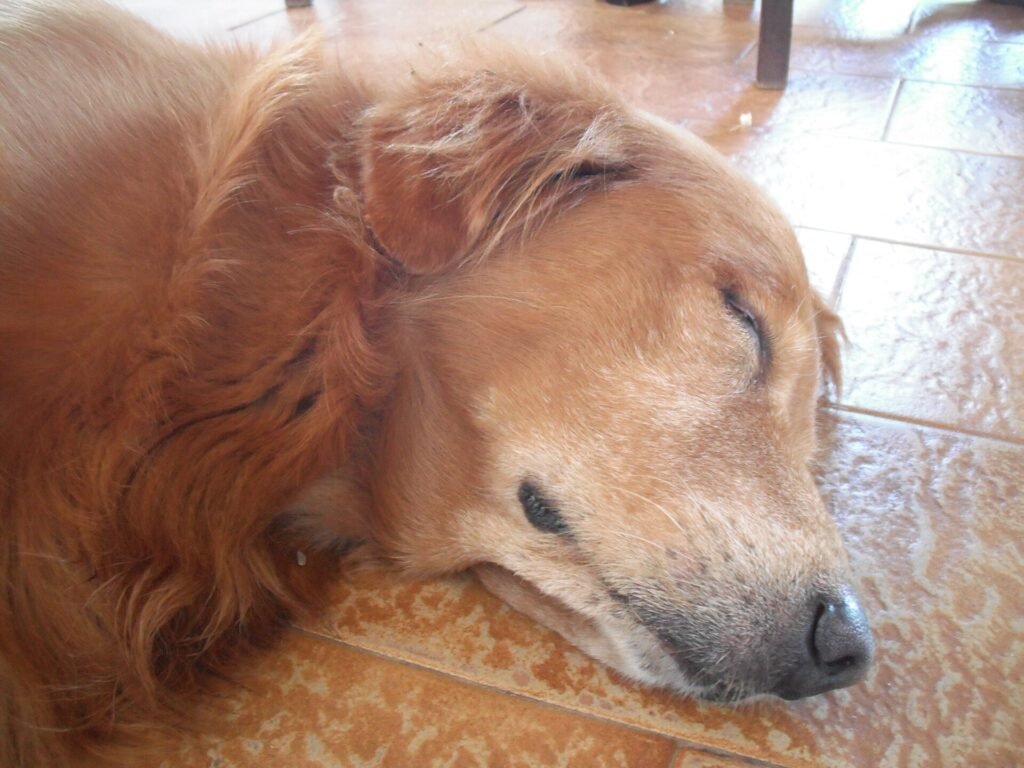
The single most effective thing is a real walk before you head out. A tired dog sleeps. A dog that has been around the block for twenty or thirty minutes, gotten to sniff things and burn energy, is far more likely to nap through your absence than one let out for a quick pee and left to vibrate by the window. Exercise before you go beats anything you can buy.
Past that, a handful of things genuinely help:
- A stuffed food toy, frozen, that takes twenty or thirty minutes to empty. It turns the moment you leave into something good instead of something scary.
- A safe spot. Some dogs settle with the run of the apartment, others feel calmer shut into one room or a crate they like. Do not crate a dog all day, though. A crate is for naps and short stints, not a nine-hour box.
- Background noise. A radio or TV on low covers the hallway sounds that set off barking, which counts for a lot in an apartment.
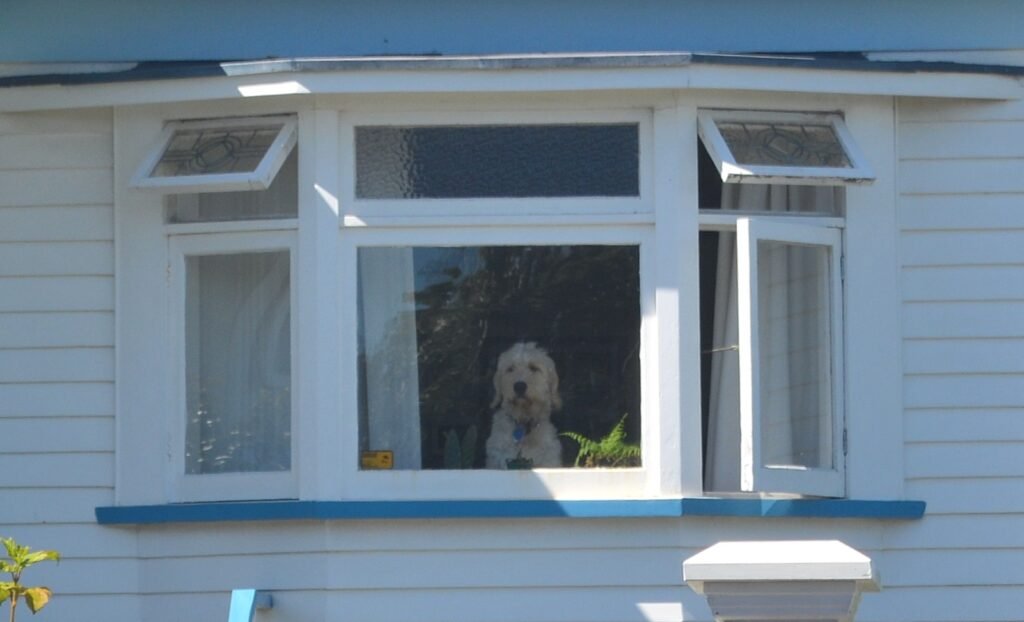
- A window with a view, if your dog watches the world rather than reacting to it. For some dogs the street is entertainment. For reactive ones it is the opposite, so read your own dog.
When the workday is just too long
Gone nine or ten hours? You need a break in the middle. A dog walker for a midday loop runs roughly $20 to $30 a visit in most US cities, and it knocks out the bladder problem and half the boredom problem in one stop. Daycare costs more, often $30 to $45 a day, but for a high-energy young dog it can be the line between a happy animal and a wrecked apartment. A neighbor or family member who likes your dog is the cheapest fix going, if you have one.
The anxiety question
Some dogs are not bored. They are panicking. Separation anxiety is a real and fairly common condition, and it looks nothing like boredom. A bored dog chews a shoe, then sleeps. An anxious dog often starts stressing before you are even out the door, drools, paces, barks or howls steadily the whole time, may potty despite being house-trained, and sometimes hurts itself trying to escape, scratching at doors until its nails bleed. That dog is not being naughty, and a chew toy will not fix it.
If that is your dog, the fix is gradual desensitization, building up alone time in small steps, sometimes with help from a vet or a behaviorist. A camera tells you which problem you actually have, and a cheap indoor pet cam earns its twenty or thirty dollars on that diagnosis alone. Do not guess. Watch.
So what’s the honest answer
An adult dog in good health can handle six to eight hours alone now and then, ideally with a walk before and a break partway through. Doing it every single weekday with no enrichment and no midday relief is technically survivable and quietly miserable for a social animal. Match the plan to your real dog’s age, breed, and temperament, give it a way to spend the hours, and the how long question mostly sorts itself out. For more on building a workable weekday rhythm, our daily care and apartment-living articles go deeper.
FAQ
Can I leave my dog alone for 8 hours every day?
A healthy adult dog can physically manage eight hours, but doing it daily with no walk or midday break tends to breed boredom, anxiety, or destructive habits over time. A walk before you leave and a dog walker or daycare partway through makes a real difference.
How long can a puppy be left alone?
Roughly one hour per month of age, so a three-month-old tops out around three hours. Puppies under six months really do need someone to check in midday, because they cannot hold their bladder through a full workday.
Is it cruel to leave a dog alone while I work?
Not if you set it up well. Plenty of working people keep happy, well-adjusted dogs by exercising them first, leaving enrichment, and arranging a midday break. It tips into a welfare problem when a dog is left long hours every day with nothing to do and no relief.
How do I know if my dog has separation anxiety or is just bored?
Set up a camera. A bored dog usually chews something, then sleeps. An anxious dog paces, drools, barks or howls steadily, and may try to escape or potty indoors despite being trained. The two problems need different solutions, so it is worth confirming which one you have.
Should I crate my dog while I’m at work all day?
A crate is fine for naps and shorter stretches, but it should not be a dog’s home for eight or nine hours straight. If you will be gone that long, a dog-proofed room plus a midday break is kinder than all-day crating.
Frequently asked questions
How long can I leave my dog home alone?
An adult dog can manage about 6 to 8 hours. Puppies need a break every 2 to 4 hours. Beyond that, plan a walker or daycare.
How do I keep my dog busy while I am at work?
Leave a stuffed puzzle feeder or a long-lasting chew, a comfortable spot by a window, and some background sound. A real walk first helps them settle.
Is it separation anxiety or just boredom?
Boredom looks like chewing and mess. True separation anxiety shows panic, drooling and distress within minutes of you leaving, and needs a gradual desensitizing plan.
Google lets you pick which sites come up first in your own results.