

A quick note: a few links below are affiliate links. Buy through one and we may earn a small commission. It never costs you more, and we only point to gear we'd actually put in front of our own dogs. As an Amazon Associate I earn from qualifying purchases.
Nobody asks whether a Chihuahua physically fits in an apartment. A four-pound dog fits anywhere. The question people are actually asking, whether or not they phrase it that way, is whether the breed’s reputation is deserved: the barking, the snapping at strangers, the dog that terrorises the building from inside a handbag.
The reputation is real. It is also almost entirely made by owners rather than by the breed, and that distinction decides how the next fifteen years go.
What You Should Know About Owning a Chihuahua
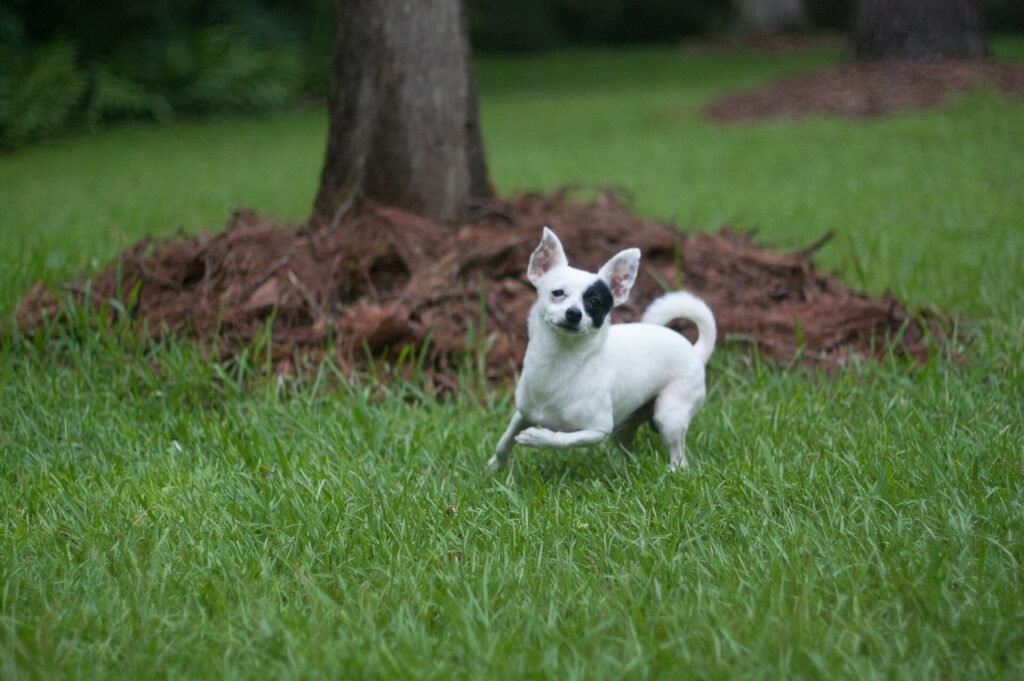
Chihuahuas stand 5 to 8 inches at the shoulder and weigh 2 to 6 pounds. The breed standard has no minimum, only a maximum of 6 pounds, which is part of why unscrupulous breeders push them smaller and smaller. A dog advertised as a “teacup” is not a variety; it is an undersized animal, often from a line selected for problems, and it comes with fragility and vet bills to match.
They come in two coats, smooth and long, and in two head shapes: the round apple head of the breed standard, and the longer-muzzled deer head that is common, popular and perfectly healthy even though it does not win shows. Colours run to just about everything.
The breed traces to Mexico, and specifically to the state it is named after. That heritage shows up daily in one very practical way: Chihuahuas are heat-seekers. They burrow under blankets, sit on radiators, and shiver in a room you find comfortable. A single-coated four-pound dog loses heat fast.
Lifespan is long: 14 to 16 years is normal and many go further. This is a two-decade decision in all but name.
Health worth knowing before you buy: luxating patella is very common, as is collapsing trachea, which is why a Chihuahua should walk on a harness and never a collar. Dental disease is close to universal without daily brushing, because the teeth are crowded into a tiny jaw. Hydrocephalus appears in the breed, and puppies are prone to hypoglycaemia and need frequent small meals early on. Many Chihuahuas also have a molera, a soft spot in the skull that never fully closes; it is normal for the breed, but it means head knocks matter more than they would in another dog.
Are Chihuahuas Good Family Dogs?
For adults, couples and households with older children, they are wonderful. For a family with a toddler in a small flat, this is the wrong dog, and it is worth saying plainly rather than hedging.
The reason is not temperament. It is that a three-pound dog in a shared living space gets stepped on, sat on and dropped, and a Chihuahua that has been hurt twice by a small child very reasonably concludes that small children are dangerous. The snapping that follows is defensive, predictable, and entirely the adults’ fault.
With people they trust, Chihuahuas are affectionate to a degree that surprises people who only know the stereotype. They are also famously one-person dogs. The bond tends to be intense and specific, and everyone else in the household ranks somewhere below.
They are wary of strangers by default. That is normal for a small guarding-adjacent breed, and it becomes a problem only when it is never worked on, which in an apartment, where the dog meets unfamiliar people in the lift every day, it needs to be.
Do Chihuahuas Bark a Lot?
Yes, and in a flat this is the thing that decides whether it works.
Chihuahuas are alert, reactive and vocal. Footsteps in the corridor, the lift arriving, a neighbour’s door, a delivery, another dog anywhere in earshot. The bark is high and sharp and travels through walls far more effectively than a large dog’s does. The Chihuahua on the third floor is the one that generates complaints, not the Great Dane on the second.
Two things drive it. The first is ordinary terrier-style alerting, and that is trainable. The second is fear, and that one is on the owner. A small dog that is picked up every time something approaches learns that approaching things are threats, and that being loud makes them go away, because they usually do, since the owner walks off. That is the “yappy Chihuahua” everybody complains about, manufactured in about six weeks.
What works: teaching the dog to come to you rather than announce, rewarding quiet, controlling what it can see and hear from the front door, and, crucially, letting it walk on its own feet and meet the world at ground level. What does not work: shouting, or scooping the dog up to make the barking stop. Our guide to stopping a dog barking in an apartment goes through the sequence, and if it has already reached the complaint stage, soundproofing against a barking dog covers the physical fixes.
Can a Chihuahua Be Left Alone?
Four to six hours for a properly conditioned adult. Less if nobody did the conditioning, and that is the common case.
The intense one-person bond that makes Chihuahuas such good company is the same trait that makes them prone to separation distress. A dog that has spent every waking hour on someone’s lap and is then left for a full working day will not cope, and the way that manifests (sustained high-pitched barking) is the version your neighbours notice fastest.
Build it deliberately from the start: short absences while the dog is calm, extended slowly, with the departure cues shuffled so that picking up keys stops meaning anything. Do the work before you need it.
Two flat-specific points. A Chihuahua bladder does not last eight hours, so a full workday needs an indoor option or a midday visit, no exceptions. And the settle spot belongs away from the front door: a bed within earshot of the corridor turns every passing neighbour into an event that gets barked at, all day, while you are out. If distress is already established it will not fade on its own, and our guide to calming an anxious dog covers what actually helps.
Are Chihuahuas Good Indoor Dogs?
About as good as it gets, on the practical measures.
They take up no floor space. They eat very little, which shows up in the monthly budget more than people expect. Smooth coats shed a fine hair steadily but the total volume is trivial; long coats shed a bit more and need brushing but still nothing like a double-coated breed. There is almost no doggy odour. They are content to spend the day asleep somewhere warm.
The indoor issues are all temperature and fragility. A Chihuahua genuinely needs a coat outdoors in winter: this is not dressing the dog up, it is a single-coated animal with a poor surface-area-to-volume ratio losing heat quickly. Indoors, expect it to seek out heat sources and to burrow into blankets, and check before you sit down on a pile of throws, which is not a joke.
Furniture is the other one. Jumping down from a sofa is a long drop for a six-inch dog and it is a leading cause of injured knees and broken legs in the breed. Pet steps cost almost nothing and prevent a genuinely common emergency.
Chihuahua Exercise Needs
Twenty to thirty minutes a day, comfortably split into two short walks. Many will happily do more; almost none need it.
That low number is the breed’s real apartment advantage, and it is also the trap. Owners read “low exercise needs” as “no exercise needs” and end up with a dog that never leaves the flat except in a bag. That dog is under-stimulated, unsocialised, and reactive to everything, which is the whole reputation in one sentence.
Walk the dog. On the ground, on a harness, at its own pace. The walk is not really about the calories, it is about the dog seeing the world regularly enough to find it boring, which is exactly what you want from a breed that meets strangers in a lift every day.
Indoors, give the brain something. Scent games with food hidden around the flat, a puzzle feeder, five minutes of training. A Chihuahua is a clever dog and a bored clever dog barks.
Harness always, collar never. The trachea in this breed is fragile and lead pressure on the throat does cumulative damage.
Chihuahua Grooming Needs
The easiest of any breed on our apartment lists, with one non-negotiable exception.
Smooth coats need a rubber brush once a week and essentially nothing else. Long coats need a proper brush two or three times a week to stop tangles behind the ears and on the trousers. Neither needs a professional groomer on a standing appointment, and neither needs clipping. Baths are occasional. Total grooming cost over a year: close to nothing.
Nails matter more than in a big dog, because a two-pound animal walking on carpet wears down nothing and overgrown nails change how it stands.
The exception is teeth, and it is a serious one. Chihuahuas have a full set of teeth crammed into a jaw that is far too small for them, and periodontal disease in the breed is close to inevitable without daily brushing. It is not cosmetic: infected teeth are painful, they cause tooth loss, and extractions under general anaesthetic in a twelve-year-old three-pound dog are exactly the vet visit you want to avoid. Two minutes a day, from puppyhood, saves a great deal later.
Are Chihuahuas Easy to Train?
They learn quickly. Whether they are easy to train depends almost entirely on whether you actually train them.
Chihuahuas are bright, food-motivated and perfectly capable of learning everything a large dog learns. The problem is that nobody asks them to. A dog this small can be physically moved wherever you want it, so the rules that would be enforced with a Labrador (do not jump up, do not guard the sofa, wait at the door, do not scream at guests) quietly never get enforced at all. Fifteen years later that is described as a breed trait.
They are also sensitive. Harsh handling produces a defensive, snappy dog rather than a compliant one, which is worth remembering given how often small dogs get manhandled instead of taught.
Housetraining is the genuinely difficult part, and it is worth being honest: Chihuahuas are among the hardest breeds to house-train reliably. Tiny bladder, tiny accidents that go unnoticed and therefore get repeated in the same spot, and a dog that has entirely reasonable objections to standing in the rain when it weighs four pounds. Put four flights of stairs or a slow lift between the dog and the pavement and the timing simply stops working.
The realistic answer in a flat is a strict routine plus a permanent indoor option, certainly through puppyhood and winter. Our guides to apartment puppy potty training and indoor dog potty options cover doing that without teaching the dog that everywhere qualifies.
Is a Chihuahua a Good Apartment Dog?
Yes. On the practical measures, one of the best there is. But the answer comes with a condition that is not really about the flat at all.
Look at the fundamentals. No space requirement worth mentioning. Twenty minutes of exercise. Almost no grooming cost. Small enough to pass any weight-limited lease. Cheap to feed. Fourteen to sixteen years of company. Nothing on that list argues against a studio.
The condition is that a Chihuahua in an apartment meets more strangers, more dogs, more lifts and more corridor noise than a Chihuahua in a suburban house ever does. That daily exposure will either produce a dog that finds all of it boring, or a dog that has decided the world is hostile and says so loudly. Which one you get is settled in the first four months, by whether you walked it on the ground and let it meet things, or carried it past everything.
So: excellent apartment dog, poor choice for someone who wants a small dog precisely because they do not want to walk it. And not the right dog for a household with a toddler, in a flat or anywhere else.
Tips for Raising a Chihuahua in an Apartment
1. Put the dog on the ground and leave it there
The single highest-value habit. Walk to the bins, ride the lift, pass the neighbours, all on four feet on a harness. Carrying a Chihuahua past every perceived threat is how the breed’s entire reputation gets built, one lift ride at a time. If it is genuinely unsafe, carry it, but the default should be walking.
2. Set up the indoor toilet permanently, in one place
Four pounds of bladder, four flights of stairs and a rainy Tuesday do not reconcile. Choose the spot, keep it forever, and reward heavily. Moving the pad around is what teaches a dog that the whole floor is an option.
3. Harness, steps, and a coat
Three cheap purchases that prevent the three most common problems. The harness protects the trachea, the steps protect the knees on the way down from the sofa, and the coat means a winter walk actually happens instead of being skipped, which is how the socialisation quietly stops.
4. Brush the teeth every day, from the first week
Boring, skipped by almost everyone, and the reason so many elderly Chihuahuas end up with a mouthful of extractions. Two minutes daily while the puppy still finds it novel is the whole intervention.
5. Enforce real rules, the ones you would enforce on a big dog
Four feet on the floor when guests arrive. No guarding the sofa or your lap. Wait at the door. It feels unnecessary with a dog you can pick up with one hand, which is exactly why it never happens, and why so many Chihuahuas end up as the neighbour everyone avoids.
Final Thoughts
The Chihuahua has the smallest practical footprint of any dog you can keep, and on paper that makes it the perfect flat dog: no space, minimal exercise, no grooming bills, cheap to feed, and around for fifteen years.
What decides it in practice is not the flat. It is whether the dog was walked on its own feet through a building full of strangers until strangers became boring, whether the barking was addressed in month one, and whether the housetraining was finished properly. The stereotype exists because those three things are skipped more often in small dogs than in large ones, not because the dog is small.
Related Content
- The dog-friendly apartment checklist
- How to stop a dog barking in an apartment
- Indoor dog potty options for apartments
- Apartment puppy potty training
- How to calm down a dog with anxiety
Frequently asked questions
Can big dogs really live in an apartment?
Yes. Energy level matters far more than size. A calm Great Dane settles into a flat better than a wound-up terrier, as long as it gets a proper walk twice a day.
Which dog breeds bark the least in apartments?
Greyhounds, Basenjis, Bulldogs and Cavaliers are among the quietest. Any dog can learn to be calm, but these simply start at a lower volume.
How much exercise does an apartment dog need?
Most do well on 30 to 60 minutes a day split into two walks, plus a little indoor play. Cut that short and the barking and chewing usually start.
Google lets you pick which sites come up first in your own results.