

A quick note: a few links below are affiliate links. Buy through one and we may earn a small commission. It never costs you more, and we only point to gear we'd actually put in front of our own dogs. As an Amazon Associate I earn from qualifying purchases.
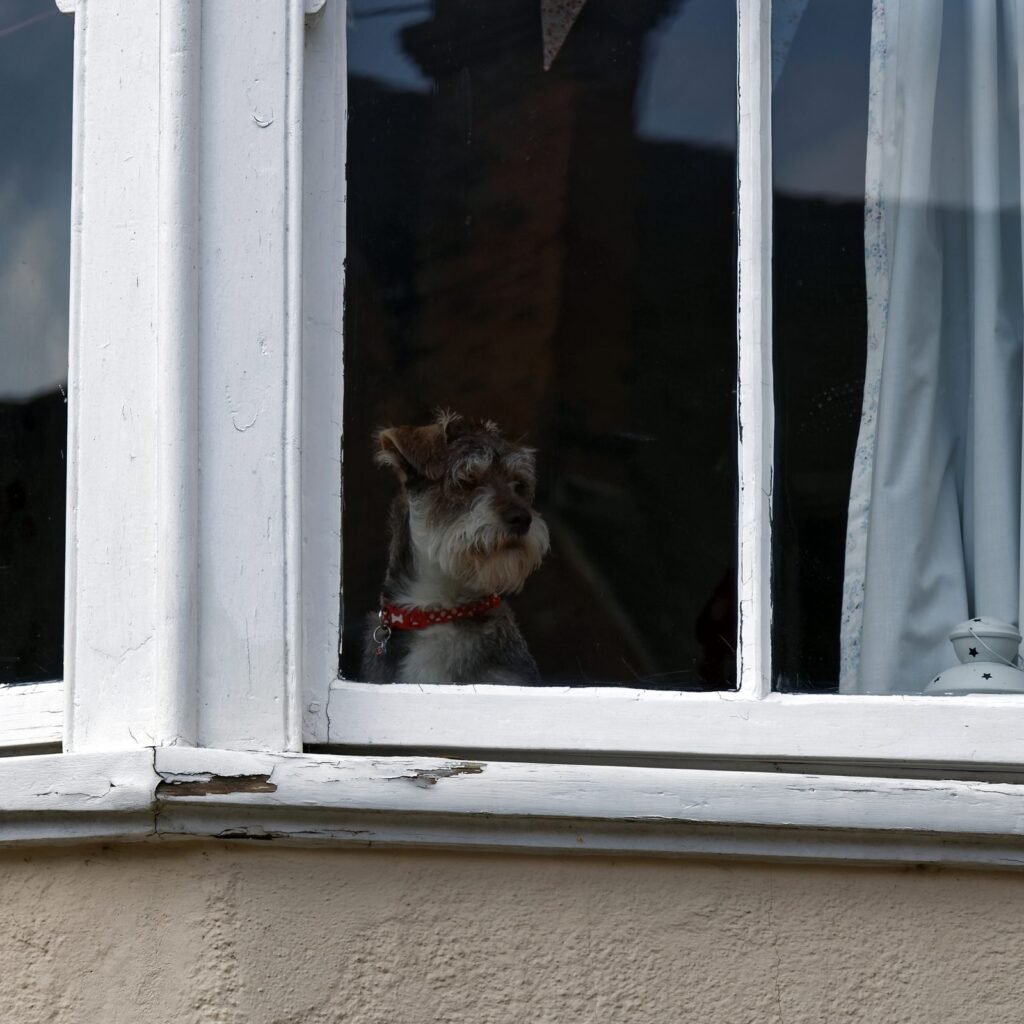
The safest apartment window for a dog is a closed one, or one open only a few inches. A screen is not a barrier: the Animal Medical Center of New York says all pets, and especially those home alone, should have windows closed or, if left open, covered by a well secured screen, and DoveLewis, an emergency animal hospital in Portland, adds that many pets treated there for fall injuries had broken through a screen. Balconies need the same suspicion. If you live above the ground floor, plan on the assumption that a dog who really wants something outside will find the gap.
Veterinarians call a fall from a tall building high-rise syndrome. It is mostly discussed in connection with cats, but dogs fall too, and the people who treat them say dogs do worse. This guide covers why dogs go over, what to change in the apartment, and what to do if one falls.
Why dogs fall
AMC’s explanation is not complicated. Animals reach open windows or ledges, and the jump is often set off by something outside. AMC reports that in its research a majority of dogs jumped off the building, and the jump was often incited by a bird or a squirrel. Young animals under a year old are described as especially curious about ledges.
That matches how a dog behaves. A dog who ignores the window for six months can still lunge when a pigeon lands on the rail. The risk is a moment, not a habit, so it is not enough to say your dog has never gone near the balcony.
DoveLewis also notes that dogs typically sustain worse injuries than cats, and that injuries from falls like this are more common in the summer, when windows and balcony doors are open. In a city, that lines up with the weeks when you are most tempted to leave a window cracked for airflow. If heat is the reason, our guide to keeping a dog cool in an apartment covers ways to cool the room that do not involve an open window.
Windows
- Close them when you leave. AMC’s advice for pets home alone is the strictest in its list, and I would follow it to the letter.
- If you want air, open a window only slightly, or use one where the opening is too narrow for your dog’s head and shoulders. AMC lists tight-fitting screens or windows opened only slightly as the options.
- Do not count on the child window guards you can buy at a hardware store. AMC says the spacing on window guards made for children is too wide for cats and small dogs.
- Move furniture away from window ledges so your dog has no staircase to the sill. A couch under a window is a ramp.
- Do not feed birds or squirrels on a windowsill, terrace or fire escape. That is AMC’s advice, and it follows from the finding above: you are training a trigger to show up at the exact place you are trying to keep your dog away from.
If you rent, ask the landlord before you install anything in a window frame. Some leases forbid it, and I cannot tell you what yours allows.
Balconies
DoveLewis tells owners to watch pets at all times when they are on balconies, on patios or near open windows, and to move patio furniture away from railings. Furniture gives a jumper a step up, the same way a couch does at a window.
Beyond that, the sources I checked give little on balconies specifically, so here is my own reasoning, flagged as such. Railing slats that a small dog’s body can slip between are a different hazard from a railing a dog can climb over. If your balcony has gaps, you can see them for yourself by watching how your dog fits his head against the bars. A balcony can still serve as a place for your dog, but only while you are standing there. I would not leave a dog alone out there at all, and I would keep the door shut when you are out. If that sounds strict, remember that the injuries are the ones listed below.
Walk the balcony on a leash or harness the first few times, if your dog is new to it, so you see how he reacts to a bird before it matters. Our collar versus harness comparison explains why a harness is the better choice for a dog who may lunge.
What a fall does
The veterinary literature AMC cites describes three patterns:
- Chest trauma, including bruised lungs that may need oxygen support.
- Broken bones, most often in the forearms, ankles and legs.
- Head injuries: skull fractures, broken teeth and jaw fractures.
Dogs do not always look hurt afterward, and this matters more than anything else in this article. DoveLewis’s emergency doctor says animals may not look like they are in pain initially after a fall, but they can sustain serious internal injuries. So a dog who got up and shook himself off still needs to be seen.
If your dog falls
DoveLewis’s instruction is to bring the pet to your regular vet or an emergency hospital immediately. It does not recommend waiting to see whether symptoms appear. Handle the dog as little as you can, since you do not know what is broken. If you can reach him, call the clinic on the way so they can prepare. A first aid kit will not treat internal injuries, but it is worth having ready for the cuts and scrapes that come with the rest of apartment life.
Cracked windows and cooler weather
The risk does not vanish when summer ends. A window left open an inch in October is still a window, and a dog who has watched the same pigeon every morning for weeks will still go for it. The same goes for the first warm day in spring after a winter of closed glass: the room smells different, the sounds are louder, and a dog who had stopped noticing the window notices it again. Check the setup each time you open anything.
A short checklist for your own place
- Stand at each window and balcony door and look at what a dog could climb.
- Pull furniture back from every sill and rail.
- Close windows when you leave, no exceptions for a cool day.
- Stop feeding birds and squirrels outside anything your dog can reach.
- Keep the balcony door shut unless you are out there with him.
None of this costs much. The cost is some stuffiness in July and a rearranged living room, against the injuries on the list above.
Sources
The Animal Medical Center, High Rise Syndrome in Dogs and Cats. DoveLewis Emergency Animal Hospital, High-Rise Syndrome is a Risk for Portland Pets.
This is general information, not veterinary advice. If your dog has fallen, call a veterinarian or emergency animal hospital right away.
Frequently asked questions
Can big dogs really live in an apartment?
Yes. Energy level matters far more than size. A calm Great Dane settles into a flat better than a wound-up terrier, as long as it gets a proper walk twice a day.
Which dog breeds bark the least in apartments?
Greyhounds, Basenjis, Bulldogs and Cavaliers are among the quietest. Any dog can learn to be calm, but these simply start at a lower volume.
How much exercise does an apartment dog need?
Most do well on 30 to 60 minutes a day split into two walks, plus a little indoor play. Cut that short and the barking and chewing usually start.
Google lets you pick which sites come up first in your own results.