

A quick note: a few links below are affiliate links. Buy through one and we may earn a small commission. It never costs you more, and we only point to gear we'd actually put in front of our own dogs. As an Amazon Associate I earn from qualifying purchases.
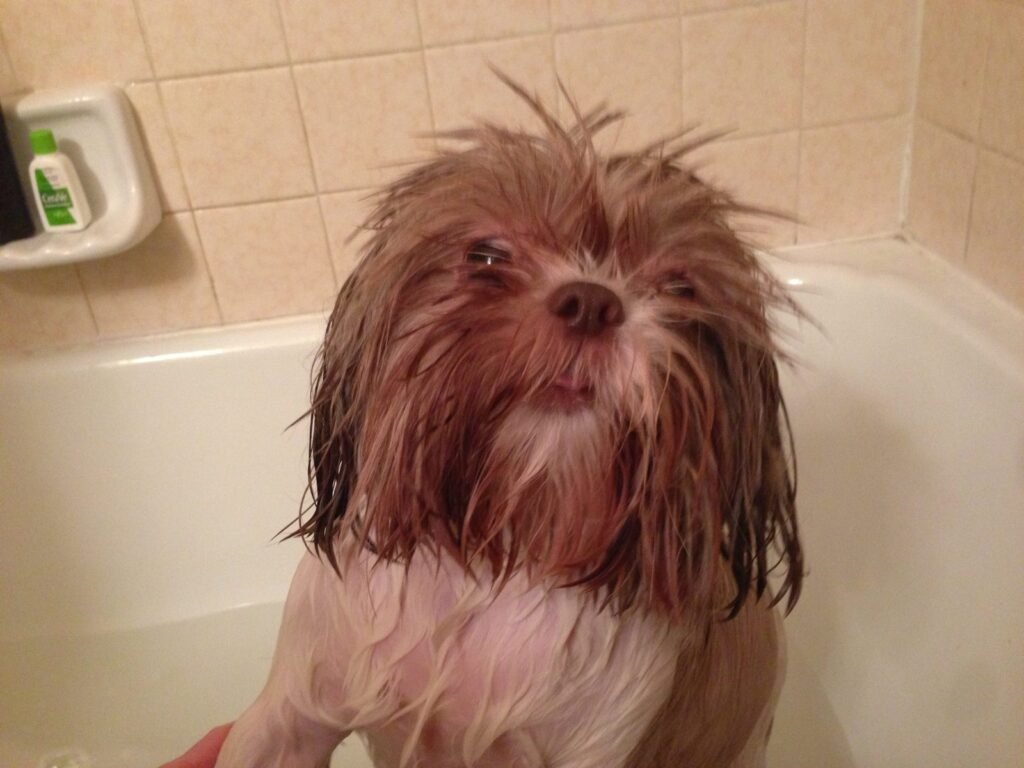
Bathing a dog in an apartment is a different job than bathing one at a house with a yard and a hose. You have one bathroom, a tub that was built for a person, no drain outside, and a downstairs neighbor who does not want to hear a sixty-pound dog scrambling on porcelain at nine at night. Do it wrong and you end up with fur clogging the drain, water up the walls, and a wet dog that bolts down the hallway and shakes off against the couch. None of that is necessary. With a little setup the whole thing is calm and takes fifteen minutes.
First, a reality check on how often you even need to. Most dogs need a bath every four to eight weeks at most, and over-bathing strips the coat oils and leaves the skin itchy and flaky, which is a bigger apartment problem than a slightly doggy smell. If the issue is smell more than dirt, the fix is often the air rather than the dog, and we cover that in the guide on the best air purifiers for dog odor in a small apartment.
Catch the fur before it hits the drain
The single thing that saves you a plumber’s visit is a drain trap. Apartment pipes are older and narrower than you think, and a bath’s worth of dog hair mats into a plug within a couple of washes. Drop a cheap silicone hair catcher over the drain, or in a pinch stuff a bit of steel wool in the strainer, before the dog gets in. Brush the dog out thoroughly before the bath too, because dry loose fur comes out far easier with a brush than wet fur does with your fingers.
A handheld sprayer changes everything
Trying to rinse a dog with a cup and a faucet is where most of the mess and most of the time goes. A dog shower sprayer attachment that screws onto the tub faucet or the showerhead lets you get water down to the skin, which is the part that actually needs rinsing, and clears the soap out fast. Cheap shampoo left in the coat is a leading cause of the itchy, flaky skin people blame on the food. Rinse until the water runs completely clear, then rinse once more, dogs almost always have soap left in when the owner thinks they are done.
Traction is not optional
A dog that slips on a wet tub once will fight you every bath after. A rubber bath mat with suction cups gives them a stable footing and instantly drops the panic level, because half of what looks like hating the bath is actually fear of sliding. Warm water, not hot, and keep the sprayer low and close so the sound does not startle them. Talk to them the whole time. A dog reads a tense, silent handler as a sign something is wrong.
Dry them before they leave the bathroom
The famous full-body shake sprays water three feet in every direction, and a dog will do it the second it is out of the tub, so get ahead of it. A quick-dry microfiber dog towel pulls far more water than a regular bath towel and means the dog is damp rather than soaked when it heads for the living room. Towel the legs and belly well, those hold water and drip on the floor for an hour otherwise. If your dog tolerates a hair dryer on the lowest heat and held well back, it finishes the job, but plenty of dogs never accept the noise and that is fine.
Make it a good experience or you pay for it later
Every bath teaches the dog something about the next one. Treats before, treats during, treats after, and a calm voice the whole time turns bath night from a wrestling match into a routine the dog tolerates. It is the same principle as any handling a dog is nervous about, small good associations stacked up over time. Rush it or fight through a scared dog and you build a dog that hears the tub fill and hides under the bed, and then you are back to paying the groomer.
The part of the bath that sends dogs to the vet
Everything above is about the bathroom. This is about the dog. The Merck Veterinary Manual lists what makes a dog prone to otitis externa, the outer ear infection that is one of the most common reasons dogs are seen at all, and one item on that list is a bath problem: “excessive moisture in the ears (from the environment or swimming).”
The instruction is direct. “Ear canals should be kept dry and well ventilated. Ear-canal maceration can be minimized by using topical astringents in dogs that swim frequently and by preventing water from entering the ear canals during bathing. Chronic maceration impairs the barrier function of the skin, which predisposes the skin to opportunistic infection.”
Maceration is what softened, waterlogged skin does. It stops being a barrier. Then the bacteria and yeast that live on every healthy ear get an opening they did not have before.
A city bathroom makes this worse rather than better. A handheld sprayer held at head height, in a tub too small to back away in, sends water straight down into canals that a hose in a garden would have missed. Wash the head last, keep the spray below the ear line, and tilt the muzzle up rather than aiming down at it. A dry cotton ball in each ear before the water starts is a two-second habit that removes most of the problem.
Two things not to do afterwards
The first is cleaning the ears every time. Merck lists overcleaning among the secondary causes of otitis externa, in the same list as bacterial infection, yeast, and medication reactions. A weekly ritual with a bottle of cleaner and a cotton bud is not neutral maintenance. It is a listed cause of the disease it is meant to prevent. If a vet has prescribed cleaning, do it on their schedule. Otherwise dry the outer ear and stop there.
The second is plucking. Hair in the canal gets pulled routinely by some groomers on the theory that it traps moisture. Merck’s position is narrower: clipping hair from the concave side of the pinna and around the opening improves ventilation, but “hair should not routinely be removed from the ear canal if it is not causing a problem, because doing so can induce an acute inflammatory reaction.”
And if your vet has asked you to clean, the method Merck describes for dogs that hate having liquid squeezed into the canal is worth knowing: soak a cotton ball, place it at the opening so it can still be retrieved, massage the canal, then take it out, repeating until the cotton comes back clean.
How shampoo is meant to be used, according to the manual
Most of us pour, rub, rinse, and hope. The dermatology chapter is more specific, and the specifics change the result.
Comb first. “The hair should first be thoroughly combed to remove loose hairs and undercoat.” That is the same step that saves your drain, doing double duty: shampoo cannot reach skin it cannot get to, and Merck says good grooming practice “can help markedly shorten the course of disease.”
Dilute it. The instruction is to predilute shampoo in a bucket or container rather than squeeze it neat onto the coat, which reduces irritation and, just as usefully in a flat, makes the coat rinse out faster.
Then leave it on. The animal should be “fully lathered and its skin and hair massaged during the contact time,” and the manual puts that time at three to five minutes. A thirty-second lather-and-rinse is a wash, not a treatment.
There is one line in that paragraph written as if the author had seen a tiled bathroom in February: “The animal should never be left standing with lather in a tub shivering.” Contact time and a cold dog are in direct conflict. If your bathroom is cold, warm the room before the dog comes in, or keep a hand on them and keep the water running warm over the shoulders while the clock runs.
One thing worth flagging so you do not misread the source. The same paragraph ends with “Animals should be bathed 3 times a week.” That is the frequency for an animal under active dermatological treatment, not a schedule for a healthy dog. Read it as what a prescribed course looks like, not as a target.
Which bottle you are actually holding
Merck sorts dog shampoos into cleansing, antiparasitic, and medicated. Cleansing products, which is nearly everything sold in a pet aisle, “remove dirt and excess oils from the coat” and “lather well and must be rinsed from the coat.” That is their whole job, and for a dog whose skin is fine, it is the right job.
Flea shampoos are the ones oversold. The manual is unusually plain: “the amount of insecticide in these products is not adequate to kill all fleas in a severe infestation. However, these products are excellent routine cleansing products.” A good bath, then. Not a treatment.
If a vet has put your dog on a medicated shampoo, note that Merck asks for a prewash with an ordinary cleansing shampoo first to clear the debris, then the medicated one on clean skin. Skipping the first wash is why some courses do nothing.
Sources: Merck Veterinary Manual, Principles of Topical Treatment in Animals (full review May 2025) and Otitis Externa in Animals, both read 30 August 2026. Quoted passages are from those pages. Anything about your own dog’s ears is a question for your vet, not for us.
Frequently asked questions
Can big dogs really live in an apartment?
Yes. Energy level matters far more than size. A calm Great Dane settles into a flat better than a wound-up terrier, as long as it gets a proper walk twice a day.
Which dog breeds bark the least in apartments?
Greyhounds, Basenjis, Bulldogs and Cavaliers are among the quietest. Any dog can learn to be calm, but these simply start at a lower volume.
How much exercise does an apartment dog need?
Most do well on 30 to 60 minutes a day split into two walks, plus a little indoor play. Cut that short and the barking and chewing usually start.
Google lets you pick which sites come up first in your own results.