

A quick note: a few links below are affiliate links. Buy through one and we may earn a small commission. It never costs you more, and we only point to gear we'd actually put in front of our own dogs. As an Amazon Associate I earn from qualifying purchases.
The phrase “dog-friendly hotel” covers at least four different policies, and the gap between them is where people’s trips go wrong. Some properties mean your dog is welcome anywhere except the restaurant. Some mean a 25-pound limit, one dog, on the ground floor, never alone in the room. The booking page rarely says which.
Apartment dogs actually travel well, better than most house dogs, because they already ride elevators, walk past strangers in corridors and sleep through neighbors slamming doors. The hotel is a smaller adjustment for them than it is for a dog that has spent five years in a fenced yard in a cul-de-sac. What trips people up is the paperwork, not the dog.
Fees are three different things
A pet fee is non-refundable and pays for the extra cleaning. Expect 50 to 100 dollars per stay at mid-range US chains, though some charge per night, which turns a five-night stay into 375 dollars if the nightly rate is 75. Read which one it is. This is the single most expensive misreading in the category.
A pet deposit is refundable and comes back if the room is undamaged. Less common now than it was.
A pet-friendly room surcharge is neither, and it is a higher nightly rate on a specific subset of rooms. Some properties stack a surcharge and a cleaning fee.
Kimpton takes no pet fee at all and no size limit, which is the standout in the US market and has been for years. Motel 6 also charges nothing at most locations. Red Roof, La Quinta and Best Western sit at the cheap end. The upscale chains are where the per-night fees live.
Limits to check before booking: weight caps, usually 50 or 75 pounds, and a maximum of two dogs. A 90-pound dog rules out a surprising share of otherwise pet-friendly properties.
The rule that ruins dinner plans
Most chains forbid leaving a dog unattended in the room, or permit it only if the dog is crated. This is in the pet policy, nobody reads it, and it is the thing that changes your entire itinerary.
The reason is barking. A dog alone in a strange room with unfamiliar footsteps passing the door barks, housekeeping cannot enter, and the front desk gets a complaint from the room next door at 9 p.m. Hotels have written the rule because they have lived it.
Two ways to work with it. Bring a crate the dog already treats as its own space and use it exactly as it is used at home, which for most apartment dogs is a routine that is already running. Or plan meals as takeout and patio seating, which is not a hardship in most cities in summer.
What does not work is deciding on the night that the dog will be fine for two hours because it is fine at home for eight. Home is quiet and smells like the dog. A hotel corridor produces a footstep every ninety seconds, all night, all of them strangers.
Ask for the room, do not hope for it
Ground floor, near an exit, away from the elevator and the ice machine. That combination cuts the number of 6 a.m. relief trips that involve a lobby, and it removes the two loudest recurring noises in any hotel from directly outside your door.
Call the property itself rather than the central reservation line or a booking site. The property knows its own current policy; chain-level pages and third-party listings go stale, and “the app said you allow dogs” is not a winning argument at check-in. While you have someone on the phone, confirm the fee structure, the weight limit, the unattended-dog rule and whether there is grass anywhere on the site. That last one sounds trivial until you are at a highway hotel at midnight surrounded by parking lot and a dog that will only go on grass.
What to actually pack
The bed from home, and this is the highest-value item on the list by a wide margin. A dog dropped into a room with no familiar scent takes hours to settle. The same dog with its own bed on the floor circles it twice and lies down. Bring the bed it actually sleeps on rather than a clean travel one, because the smell is the point. This is also the argument for owning a bed whose cover comes off and washes instead of a bulky one you cannot move.
The crate, if your dog uses one. Collapsible wire folds to a few inches. A soft-sided crate travels better and only suits a dog that does not test it.
An enzymatic cleaner in a travel bottle. An accident on a hotel carpet that gets blotted with water becomes a stain the property charges you for; the same accident treated properly within ten minutes usually leaves nothing. This is the same product doing the same job it does at home, and it fits in a wash bag.
A sheet or old towel for the furniture, because hair on a duvet is a cleaning charge in several chains’ fine print.
The dog’s normal food, measured out. Switching food and travel stress arrive together and produce diarrhea, in a hotel room, at 3 a.m. Bring the food it eats, and skip the local pet store improvisation.
Vaccination records on your phone. Rarely asked for at hotels, often asked for by a daycare if you end up needing one for an afternoon.
The drive matters more than the room
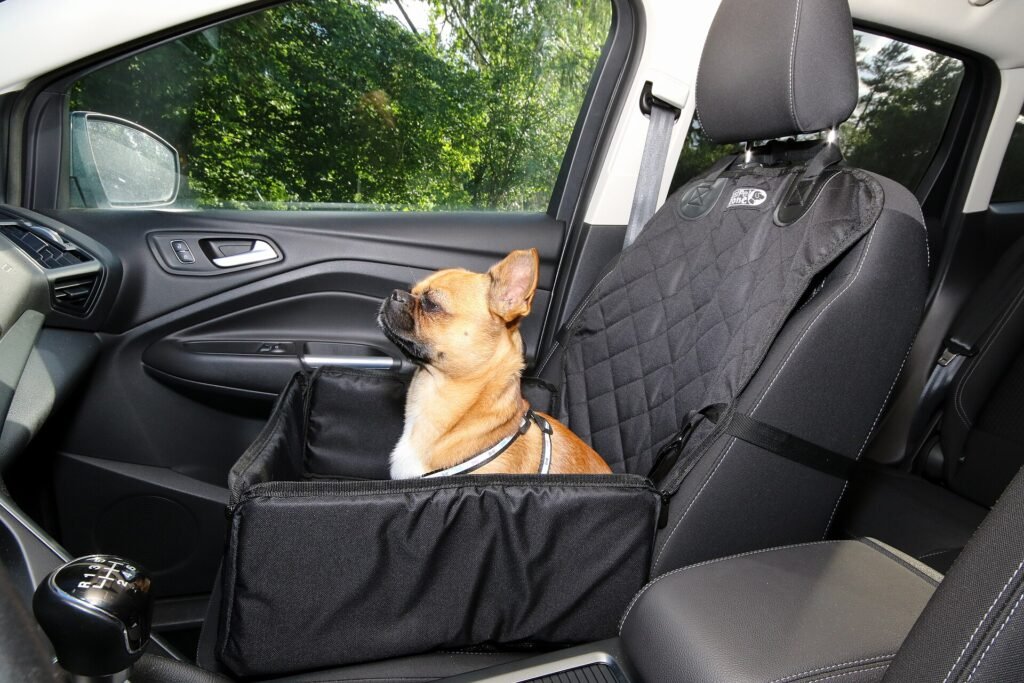
An unrestrained dog in a car is a projectile in a crash and a distraction before one. A crash-tested harness anchored to a seat belt, or a crate strapped down in the cargo area, are the two real options. Most “safety harnesses” on the market have never been crash tested at all, so look for a specific claim about it rather than the word safety on the packaging.
Head out the window is the one people defend and should not. Grit at 60 miles an hour hits an eye harder than you would think, and dogs come back from road trips with corneal scratches every summer.
Stop every two to three hours. Never leave the dog in a parked car, including in the shade, including for ten minutes, including with the window cracked. A car at 70 degrees outside reaches 100 inside within twenty minutes and keeps climbing.
Check-in and the first hour
Walk the dog before you go inside. A dog that has emptied out and burned twenty minutes of energy handles a lobby far better than one that has been in a crate since lunch.
In the room, put the bed down first, in a corner away from the door, and let the dog investigate at its own pace before you start unpacking. Feed it in the room on its normal schedule. If it will not eat the first night, that is normal and it is not a reason to change anything.
And expect the door noise to be the problem. A dog that has never barked at your neighbors will bark at a hotel corridor for the first evening, because at home it has learned which footsteps mean nothing. A white noise app on a phone masks most of it, and it is the same trick that works on a dog reacting to hallway sounds in an apartment building.
The trip is mostly logistics. The dog part is easy.
Frequently asked questions
How much do hotels charge for a dog?
A pet fee is non-refundable and runs 50 to 100 dollars per stay at mid-range US chains, but some properties charge it per night, which turns five nights into several hundred dollars. A pet deposit is refundable. A pet-room surcharge is a higher nightly rate. Some properties stack a surcharge and a cleaning fee, so read which one you are agreeing to.
Can I leave my dog alone in a hotel room?
Usually not. Most chains forbid it outright or allow it only if the dog is crated, because a dog alone in a strange room with unfamiliar footsteps outside barks and housekeeping cannot enter. Plan on crate use exactly as at home, or on takeout and patio seating. A dog that is fine alone for eight hours at home is not the same dog in a hotel corridor.
What should I pack for a dog staying in a hotel?
The bed it actually sleeps on, unwashed, because the familiar smell is what makes it settle in minutes instead of hours. Its crate if it uses one, an enzymatic cleaner in a travel bottle, a sheet for the furniture, its normal food measured out, and vaccination records on your phone. Switching food and travel stress together produce diarrhea at 3 a.m.
Which room should I ask for when travelling with a dog?
Ground floor, near an exit, away from the elevator and the ice machine. Call the property directly rather than the central line or a booking site, since chain-level pages go stale and the front desk knows its own current policy. While you have them, confirm the fee structure, the weight limit and whether there is any grass on the property.
Google lets you pick which sites come up first in your own results.