

A quick note: a few links below are affiliate links. Buy through one and we may earn a small commission. It never costs you more, and we only point to gear we'd actually put in front of our own dogs. As an Amazon Associate I earn from qualifying purchases.
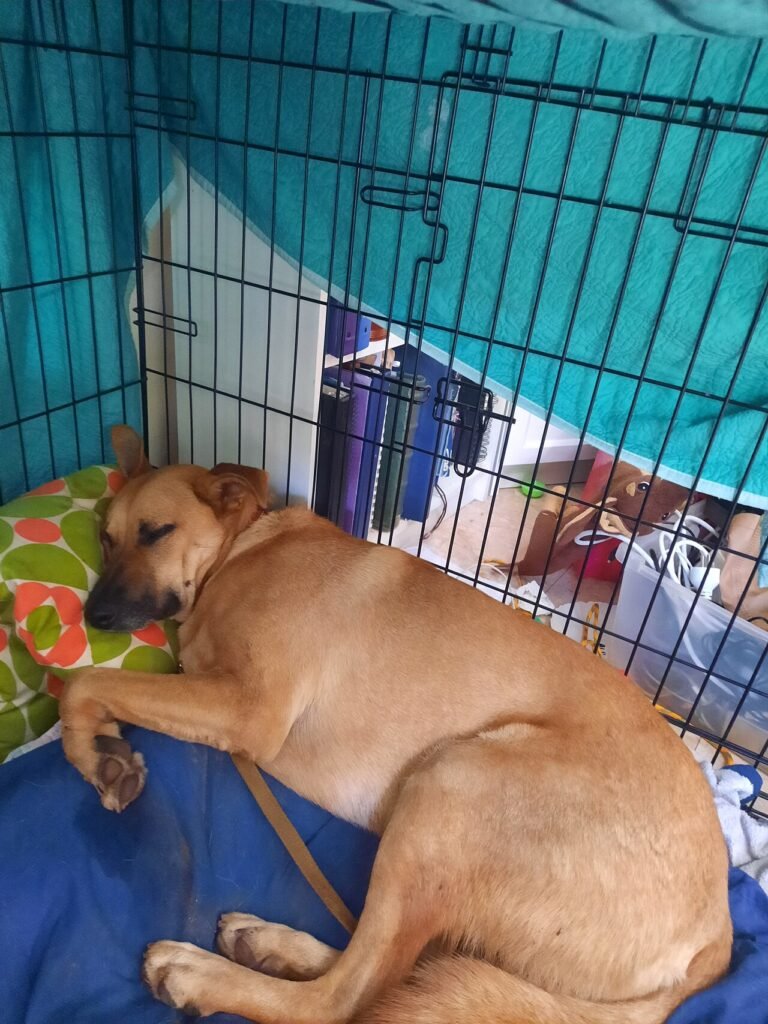
For an anxious dog, the first question is not which crate to buy but whether a crate helps at all. The ASPCA says crate training can help some dogs if they learn the crate is their safe place, while for others it adds stress and anxiety. If your dog does take to one, a sturdy wire crate sized correctly is the usual starting point. If your dog panics in it, a baby-gated room is the alternative the ASPCA suggests.
Test whether a crate helps first
The ASPCA gives a clear test. Monitor your dog’s behavior during crate training and when he is left in the crate while you are at home. If he shows signs of distress (heavy panting, excessive salivation, frantic escape attempts, persistent howling or barking), crate confinement is not the best option for him. Instead, you can try confining your dog to one room behind a baby gate.
Short on time? Jump straight to the Double-door wire crate
The reason this matters is injury. The ASPCA warns that dogs with separation anxiety can make extreme escape attempts, and that a confined dog may dig and chew at doors or windows, causing broken teeth, cut and scraped front paws and damaged nails. The same page notes that if the cause is separation anxiety, this does not happen when the owner is present. So the useful trial is one where you are home, watching.
The AAHA sample case on canine separation anxiety says the same thing in clinical terms: determine whether the dog can safely be crated. If the dog panics in the crate or resists entering it, by freezing, destroying the crate or injuring itself, consider pet sitters, home day care or boarding. That is a decision for you and your vet together, and a better crate is not the answer to a dog that is hurting itself.
What crate types do for a nervous dog
The American Kennel Club sorts crates by material, and the differences matter more for an anxious dog than for a calm one, since a dog that pushes and chews needs something that will hold.
| Type | What the AKC says | Fit for an anxious dog |
|---|---|---|
| Metal (wire) | Best for dogs who chew through other materials; the sturdiest, with good air circulation and visibility; fabric covers add privacy | Strongest option on paper, but see the injury warning above |
| Plastic | Durable, well ventilated, easy to clean; airline-approved crates can double as a travel carrier | More enclosed, which some dogs like |
| Wood | Most attractive and priciest, furniture-like, heavy, harder to clean | Looks good, harder to clean after accidents |
| Soft or fabric | Economical for small dogs that do not chew, lightweight, harder to clean | Not for dogs that chew or escape |
The last column is our reading of the AKC’s descriptions, not a rating from the AKC. The AKC itself says to choose by budget, whether the dog is a chewer, and how the crate will be used, and the crate must be secure enough to prevent an escape.
Size: not too big, not too small
The AKC says the dog needs room to sit, stand and lie down comfortably. It should not be too large, because a dog may eliminate in a crate if it can sit away from the mess. Measure standing height (top of the head to the bottom of the feet) and length (nose tip to tail tip), then add 3 to 4 inches to each. For a puppy, an expandable crate with a divider is an option.
All crates need ventilation holes or mesh, the AKC adds, and a washable bed or mat suits dogs that do not chew fabric. For an anxious dog that does chew, skip the bedding until you know it will not be shredded and swallowed, which is a practical precaution and not an AKC point. If you are choosing between models, our roundup of the best dog crates for apartments covers products and space.
Where and when to use it
A crate in the room where the family spends the evening is a different experience from one in a back bedroom. For the training itself, crate training an adult rescue dog in an apartment covers the steps in more detail than this article does.
The AAHA sample case adds practical guidance for the days when you do leave: stay calm at departures and minimize departure cues. It also describes food toys as a way to read your dog’s state. If the dog can eat food from the toy, anxiety is lessening, and the case adds that “dogs that are extremely distressed cannot eat.” A dog that ignores a favorite treat in the crate is telling you the setup is not working.
Before you commit to any crate, it helps to see what actually happens while you are out. The sample case suggests keeping a log and short videos of your dog’s behavior when alone, which gives your vet something concrete to work from. A few clips of a dog settling, or of a dog pawing at the door, will say more than a description from memory. If the clips show distress, the next step is the vet and a behavior plan, with the crate decision revisited afterward.
Exercise and the vet
The ASPCA recommends at least 30 minutes of aerobic activity daily, with exercise right before leaving, and food puzzle toys. It also says to see the veterinarian first, to rule out medical issues before attempting behavior modification. Triggers it lists include a change of guardian or family, a schedule change such as 6 or more hours alone, a move or a change in household membership. If any of these apply, a new crate will not address the cause. The plan in how to help a dog with separation anxiety goes through what does.
Common questions about crates and anxious dogs
Should I crate a dog with separation anxiety?
Only if your dog learns to see the crate as a safe place. The ASPCA says it helps some dogs and adds stress for others, so watch your dog in the crate while you are home first.
What signs mean a crate is not working?
The ASPCA lists heavy panting, excessive salivation, frantic escape attempts and persistent howling or barking.
What type of crate is best for a dog that chews?
The AKC says metal (wire) crates are best for dogs who chew through other materials, with the best air circulation and visibility.
How big should the crate be?
Add 3 to 4 inches to your dog’s standing height and nose-to-tail length, according to the AKC. The dog should be able to sit, stand and lie down comfortably.
What can I use instead of a crate?
The ASPCA suggests confining the dog to one room behind a baby gate. The AAHA sample case also mentions pet sitters, home day care or boarding for dogs that panic in a crate.
Frequently asked questions
Where should the crate go in the house?
A quiet corner of a room the family actually uses. Isolating the crate in a spare room is what turns it into a punishment; dogs settle faster where they can still hear you.
Should I cover the crate?
Covering three sides helps most dogs switch off, especially in a flat with street light and movement. Leave the door side open so it stays a den and not a box.
How long can a dog stay in a crate?
Four to five hours for an adult, one hour per month of age for a puppy. Beyond that the crate stops being a resting place and starts being containment.
Google lets you pick which sites come up first in your own results.