

A quick note: a few links below are affiliate links. Buy through one and we may earn a small commission. It never costs you more, and we only point to gear we'd actually put in front of our own dogs. As an Amazon Associate I earn from qualifying purchases.
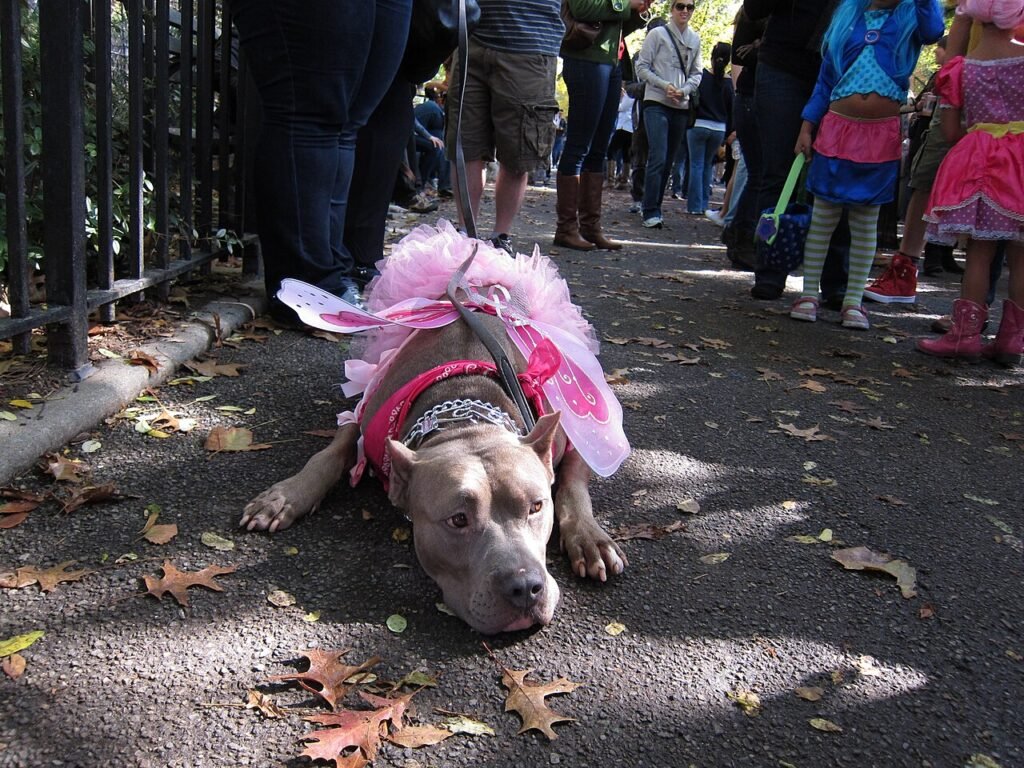
Most dogs do not need a costume to get through Halloween, and the costume is rarely the biggest risk of the night. The real trouble is candy within sniffing range, a front door that keeps opening, and a leash held loosely while a stranger in a mask walks past. If you do dress your dog, the ASPCA sets a short list of conditions: the dog must love it, and the outfit must not get in the way of moving, seeing, breathing or barking.
Should your dog wear a costume at all?
The ASPCA’s own advice is to skip the outfit unless you know your dog enjoys it. A dog that freezes, flattens its ears or tries to back out of a tutu is telling you the answer. In that case the ASPCA says a bandana, or nothing at all, is the better choice.
If your dog is a willing model, try the costume on well before the night itself. Not in the elevator at six in the evening, with a bag of candy in your other hand. A trial run shows whether the fit is right, because an ill-fitting costume can twist around the body, and it shows how the dog reacts when the outfit is moving with him.
| What to check | What the ASPCA says |
|---|---|
| Movement and sight | The costume must not limit either one |
| Breathing and barking | The dog must still be able to do both |
| Small or dangling pieces | Check for anything that can be chewed off |
| Fit | An ill-fitting outfit can twist, so try it on beforehand |
| The dog’s mood | If he seems distressed, use a bandana or nothing |
One more detail from the same page: human costume accessories and small toys are a choking hazard, and some plastic can be toxic. Keep the pile of props off the floor where a curious nose can reach it.
Candy: what is actually dangerous
Dogs find even well-hidden candy by smell, so a bowl on a low table or a bag by the door is not hidden. Two things matter most in that bowl: chocolate and anything sugar-free.
Chocolate
The ASPCA calls chocolate in all forms very dangerous, especially dark and baking chocolate. The reason is in the Merck Veterinary Manual: the toxic principles are theobromine and caffeine, and chocolate types differ enormously in how much of them they carry.
| Type | Methylxanthines per gram |
|---|---|
| Cocoa powder | 28.5 mg |
| Unsweetened baker’s chocolate | 15.5 mg |
| Semisweet and dark chocolate | 5.3 to 5.6 mg |
| Milk chocolate | 2.3 mg |
| White chocolate | 0.04 mg |
Merck lists mild signs such as vomiting, diarrhea and thirst at about 20 mg per kilogram of body weight, heart effects at 40 to 50 mg per kilogram, and seizures at 60 mg per kilogram or more. It also notes that milk chocolate at about one ounce per pound of body weight is potentially lethal. You do not need to do that arithmetic at 9 p.m. with a wrapper on the floor. The point of the table is that a fun-size milk chocolate and a handful of dark squares are not the same problem, and the percentage printed on a bar indicates its unsweetened chocolate content.
Sugar-free candy and xylitol
Xylitol is the one people forget. The ASPCA explains that in dogs it triggers a sudden release of insulin, followed by low blood sugar. Signs include vomiting, lethargy and weakness, and sometimes seizures. Treatment can mean intravenous dextrose at a veterinary hospital for 12 to 24 hours or longer, and elevated liver enzymes are common. Large doses can cause liver failure. Cats and people are not affected, which is part of why the danger is easy to underestimate.
Sugarless gum is the most common source, but the same page lists sugar-free peanut butter, candy, pudding, ice cream, energy bars, protein powder, gummy vitamins, toothpaste and mouth rinse among the products that can contain it. Check the label on anything sugar-free that ends up in a trick-or-treat bag.
If your dog eats candy
The FDA is direct: if a pet has eaten chocolate or xylitol, consider it an emergency and call your veterinarian immediately. The ASPCA adds a practical rule. If the dog seems fine, call the Animal Poison Control Center at 888-426-4435 anyway. If the dog already has symptoms, go to a vet right away and bring the packaging with you, so the clinic can see what was in it and how much was eaten.
Do not wait for signs to appear. Xylitol symptoms come on quickly, according to the FDA, starting with vomiting and moving to decreased activity, weakness, staggering, collapse and seizures.
The door, the doorbell and the hallway
Apartment dogs have a particular problem on Halloween. The knocking does not stay outside. In a building, children and adults in masks can come right up to your door, and a dog that already reacts to hallway noise gets a night of it.
According to the ASPCA, visitors at the door and strangers in creepy costumes can frighten pets, and all but the most social dogs and cats should wait in a separate, comfortable room away from the front door during peak trick-or-treating hours. Give the dog something to do in there. The ASPCA suggests a favorite chew or a food puzzle toy. A bedroom with the door closed is the obvious choice.
If your dog already struggles with sounds and movement in the corridor, our piece on elevator and hallway manners covers the everyday version of the same problem.
Bolting and ID
Extra people and strange costumes can spook a dog into bolting. After dark, the ASPCA recommends a reflective collar, a secure leash and ID. If your dog slips a collar when startled, the comparison in collar versus harness for apartment dogs is worth a look before the evening walk.
Smaller hazards around the apartment
A lit jack-o-lantern can be knocked over by a tail or a paw and start a fire, so use a battery light if the dog will be loose. Keep wires out of reach too. Glow sticks have a bitter taste, and a bite typically causes drooling and racing around. The ASPCA guide says a treat or a sip of milk usually stops it, though a dog that keeps drooling or seems unwell deserves a call to the vet. Pumpkin-based pet treats, on the other hand, are fine.
Common questions about Halloween and dogs
Can dogs eat Halloween candy?
No. Chocolate and sugar-free candy containing xylitol are the two main dangers, and the ASPCA notes that dogs find even well-hidden candy by smell. If your dog eats some, call your vet or the Animal Poison Control Center at 888-426-4435.
Is white chocolate safe for dogs?
It carries far less theobromine and caffeine than other types, about 0.04 mg per gram according to Merck, but it is still candy. If your dog eats a lot of it, call your vet.
What should I do if my dog hates its costume?
Take it off. The ASPCA says to use a bandana or nothing if the dog is distressed, and a bandana is the simplest version of a Halloween outfit.
Where should my dog be during trick-or-treating?
In a separate, comfortable room away from the front door during the busy hours, with a chew or food puzzle toy, unless your dog is among the very social ones that enjoy visitors.
Are glow sticks poisonous to dogs?
The ASPCA describes the taste as bitter, which causes drooling and racing around, and says a treat or a sip of milk usually stops it. Call your vet if the signs continue.
Google lets you pick which sites come up first in your own results.