

A quick note: a few links below are affiliate links. Buy through one and we may earn a small commission. It never costs you more, and we only point to gear we'd actually put in front of our own dogs. As an Amazon Associate I earn from qualifying purchases.
Quick answer
That reddish stain is not blood; it is porphyrin, a pigment in saliva that discolors licked fur on light-coated dogs over time, and it tells you the licking has been going on a while. Constant moisture and rough licking break down the skin barrier, letting ordinary bacteria and yeast multiply into an angry red patch within days. If the redness shows up mainly after walks, check for a grass awn or cracked pad first; if it is steady regardless, an allergy or food reaction is more likely.
You glance down and one paw has gone pink, almost raw, the fur around it damp and stained a rusty brown. That color isn’t blood, by the way. Saliva carries a pigment called porphyrin, and on light-coated dogs it turns the licked fur reddish over time. So the stain tells you the licking has been going on a while, not that your dog is bleeding. It’s worth reading our post on telling apart allergy licking from boredom licking if this applies to your situation.
Red, irritated skin between the toes or across the pad means the surface has been worked over enough to inflame it. The job now is to figure out what started the cycle, because a dog rarely licks one paw raw for no reason.
What Turns a Paw Red From Licking
The licking itself does a lot of the damage. Constant moisture plus the rough scrape of a tongue breaks down the skin barrier, and once that happens, bacteria and yeast that normally sit on the skin harmlessly start to multiply. That’s how a mild itch becomes an angry red patch in a couple of days.
What kicks it off varies. Environmental allergies top the list, especially in spring and late summer. Food sensitivities run a close second. Then there’s the mechanical stuff: a grass awn wedged between the toes, a tiny cut, a cracked pad from hot pavement or winter salt. Yeast loves the warm space between the toes, and when it takes hold you’ll usually catch a faintly cheesy, musty smell off the paw.
One pattern worth noticing: if the redness shows up mostly after walks, look outdoors first. If it’s steady regardless of where your dog has been, an internal cause like a food reaction or anxiety is more likely. For the full rundown of triggers, our guide on how to stop a dog from licking his paws walks through every common cause.
What Actually Helps, Step by Step
Start by getting a clear look. Spread the toes under good light and check the webbing, the pads, and the base of each nail. You’re hunting for a foreign object, a split pad, a swollen red lump, or a dark spot that might be a wound.
If the paw is simply red and there’s no open wound, a lukewarm soak helps more than people expect. Plain water, or water with a little povidone-iodine until it looks like weak tea, for five minutes, then dry thoroughly between the toes. Damp skin keeps yeast happy, so the drying matters as much as the soak. A quick rinse after every walk also clears pollen and lawn chemicals before they have time to irritate. We covered the routine in how to clean your dog’s paws after a walk.
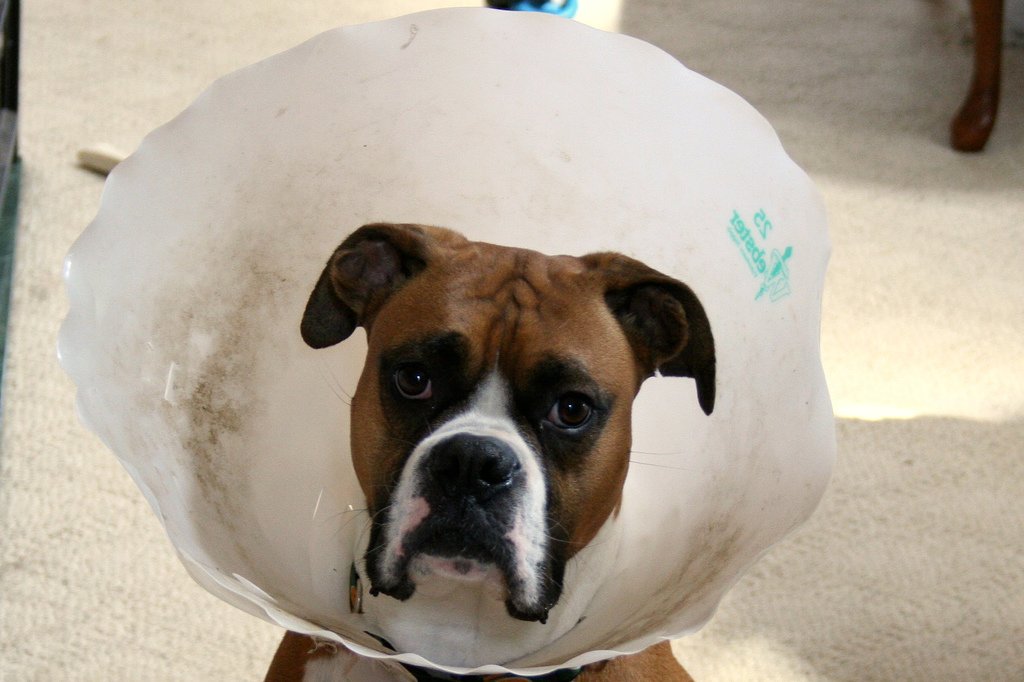
Breaking the licking habit is the other half. A soft recovery collar or a soft bootie for a few days gives the skin a chance to close. It feels mean, but a paw can’t heal while it’s being licked every twenty minutes. Plain coconut oil rubbed in once dry can ease the itch on intact skin, though skip anything with tea tree, which is toxic to dogs.
When the Redness Means a Vet Visit
Some of this you can manage at home. Some of it you shouldn’t. Call your vet if the redness spreads up the leg, if you see pus or a bad smell, if the paw is hot and swollen, if your dog flinches when you touch it, or if a few days of home care changes nothing.
A raw, red, hairless circle that appears fast is often a hot spot, and those tend to need a prescription to settle. Recurring redness that clears with antibiotics and then comes right back usually points to an underlying allergy that needs a proper workup rather than another round of cream. Your vet can run a skin cytology in a few minutes and tell you whether you’re dealing with bacteria, yeast, or both.
The thing to hold onto: a red paw is a symptom, not the problem. Soothe the skin so your dog gets relief, then chase down whatever lit the fuse. Treat only the redness and you’ll be back at this same spot next month.
Frequently asked questions
Why is my dog licking their paws so much?
Allergies come first, then irritants picked up on walks. The rust-colored stain on the fur is yeast fed by saliva, which means the licking has been going on for weeks, not days.
How often should dog nails be trimmed?
Every three to four weeks for most dogs. If you hear clicking on a hard floor, they are already long enough to push the toes out of alignment.
Do dogs need paw protection in winter?
In a salted city, yes. Either a balm before the walk or a rinse in lukewarm water after it, because road salt burns the pads and dogs then lick it off.
Google lets you pick which sites come up first in your own results.