

A quick note: a few links below are affiliate links. Buy through one and we may earn a small commission. It never costs you more, and we only point to gear we'd actually put in front of our own dogs. As an Amazon Associate I earn from qualifying purchases.
Quick answer
Allergic licking happens around the clock regardless of whether you are home, usually spreads past the paws to the belly, armpits or ears, and often comes with a yeasty smell or a seasonal pattern. Boredom-driven licking tends to show up when the dog is under-stimulated or left alone, and fixing it means more walks and puzzle toys, not a diet change. Get this distinction right first, since treating the wrong one wastes money and leaves the real problem untouched.
Allergy or boredom? It’s the question that decides everything, because the fixes pull in opposite directions. Treat an allergy with more walks and puzzle toys and you’ve done nothing for the itch. Treat boredom with a hypoallergenic diet and you’ve spent a fortune while a understimulated dog keeps chewing. Sorting which one you’ve got is step one, and most owners can get close before they ever reach the clinic.
I’ve watched both play out plenty of times. They look identical from across the room. Up close, they behave very differently.
The Tells That Point to Allergies
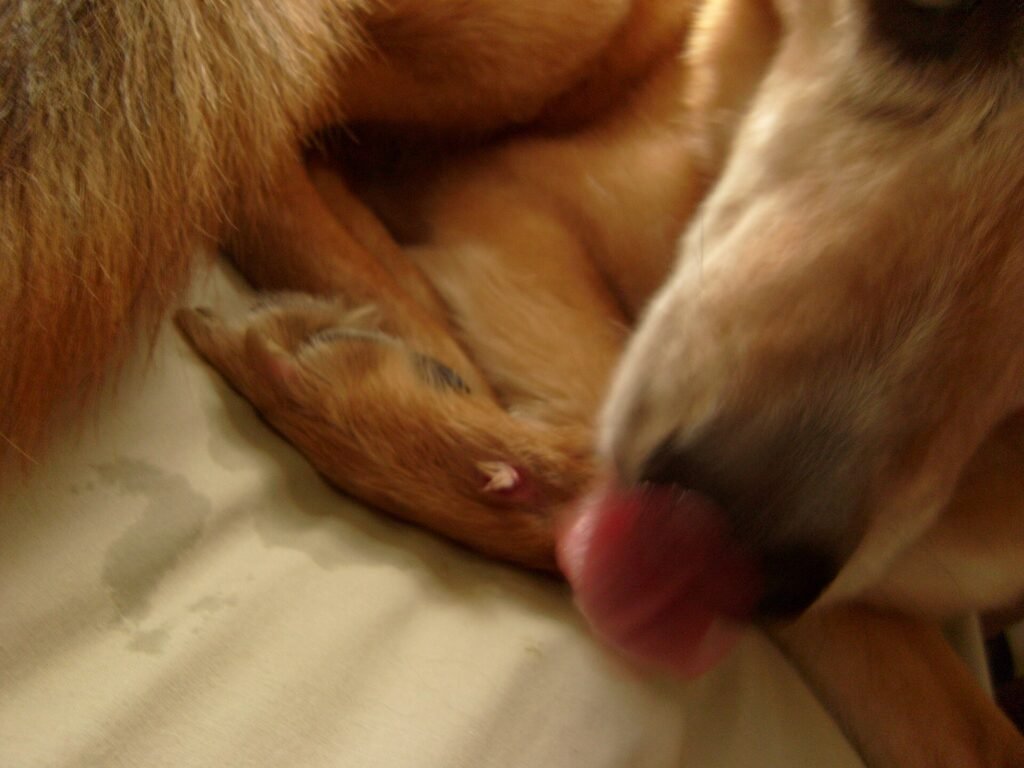
Allergic licking is about relief. The dog isn’t choosing to lick so much as it can’t stop, because the skin genuinely itches. A few signs that lean this way: We go deeper on what helps when paw licking turns raw in a separate guide.
- It happens with you home or out, at any hour.
- More than the paws are involved. Check the belly, the armpits, the ears, and around the muzzle. Allergic dogs tend to be itchy in several places at once.
- The skin looks angry, pink or red, sometimes with a yeasty smell or a greasy feel.
- There’s a season to it, worse in spring or fall, or it tracks with a food.
- Ear infections keep cropping up. Itchy ears and itchy paws together is a classic allergy combo.
Food and environmental allergies are the two big buckets, and they’re common. If this is sounding familiar, the causes section in our main guide on why dogs lick their paws and how to stop it goes deeper on each trigger.
The Tells That Point to Boredom or Stress
Behavioral licking is about filling a gap. The dog has time, energy, or worry it doesn’t know what to do with, and licking becomes the outlet, the same way some people bite their nails. The skin usually starts out fine and only gets irritated later, from the licking itself, not the other way around.
What tips you off:
- Timing lines up with being alone, or with quiet evenings when nothing’s going on.
- It’s rhythmic, almost trance-like. You can call the dog and the licking stops instantly, then resumes the moment attention drifts.
- It tends to settle on one favorite paw.
- The dog is under-exercised, left alone for long stretches, or recently went through a change like a move or a new schedule.
- Other restless habits show up too, pacing, whining, chewing the couch.
A dog left alone all day with nothing to do is a prime candidate. Giving it a job helps a lot, whether that’s a long morning walk or toys that keep a dog busy while you’re at work. If the licking spikes specifically around departures, you may be looking at anxiety rather than plain boredom, and our piece on calming a dog with anxiety is the better starting point.
A Simple Way to Test It Yourself
Here’s the trick I lean on. For three or four days, ramp up enrichment hard: a longer walk, a puzzle feeder, some training games, more company. If the licking drops off noticeably, boredom or stress was driving it. If your dog is just as itchy after all that extra stimulation, the cause is almost certainly physical, and it’s time to talk to your vet about allergies.
It’s worth saying the two overlap more than people like. An itchy, allergic dog that’s also bored will lick twice as much, because now it has both a reason and the spare time. Plenty of dogs need the itch treated and a better-filled day. Watching when the licking happens, and what else is going on, gets you most of the way to the answer before you spend a dollar at the clinic.
Frequently asked questions
Why is my dog licking their paws so much?
Allergies come first, then irritants picked up on walks. The rust-colored stain on the fur is yeast fed by saliva, which means the licking has been going on for weeks, not days.
How often should dog nails be trimmed?
Every three to four weeks for most dogs. If you hear clicking on a hard floor, they are already long enough to push the toes out of alignment.
Do dogs need paw protection in winter?
In a salted city, yes. Either a balm before the walk or a rinse in lukewarm water after it, because road salt burns the pads and dogs then lick it off.
Google lets you pick which sites come up first in your own results.